
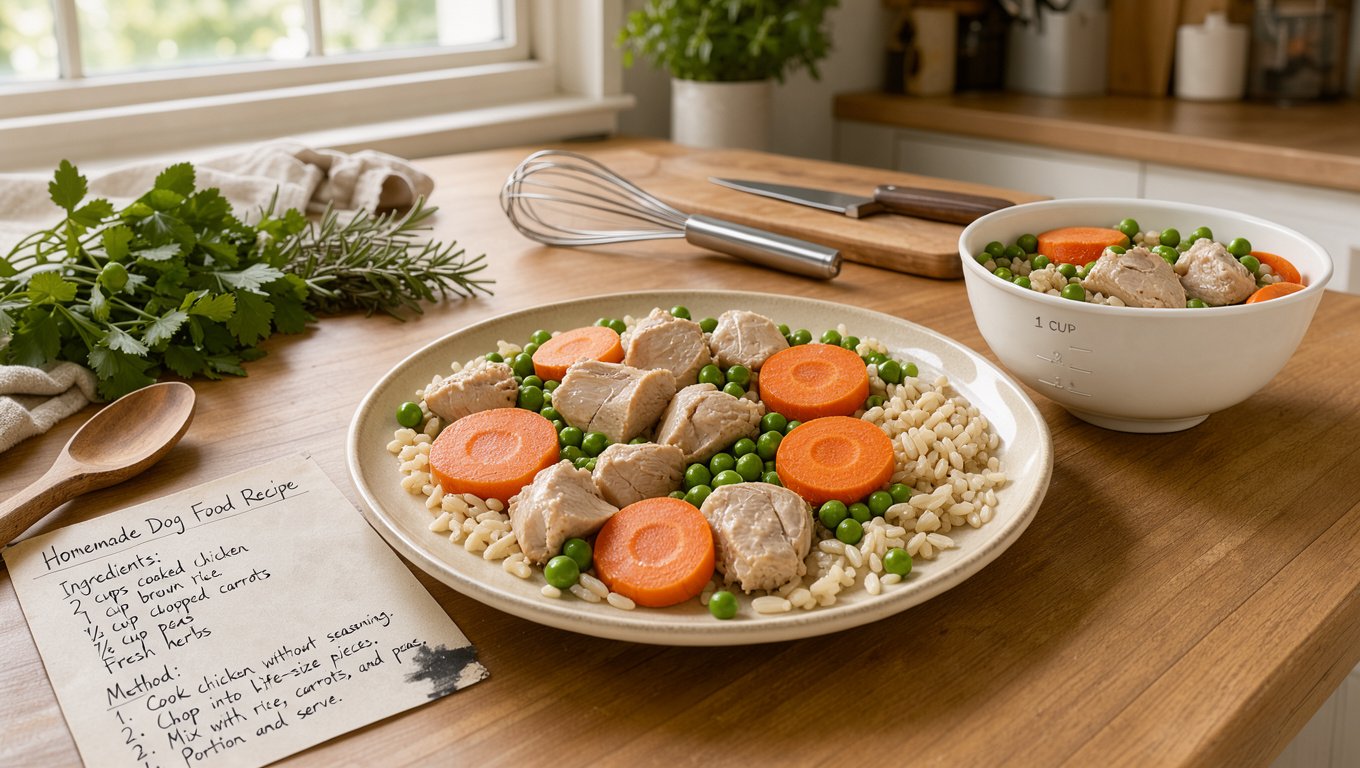
Homemade meals can be healthy for your dog, but only when a properly formulated recipe supplies every essential nutrient in the right amounts for your dog’s life stage. Homemade dog food needs more than meat and vegetables to meet your dog’s needs.
Preparing meals at home can feel rewarding because you choose each ingredient and know what goes into the bowl. Yet a simple meat-and-vegetable mix may leave serious gaps in canine nutrition, even when every ingredient looks wholesome. A complete and balanced diet is a diet that supplies the required nutrients in appropriate amounts for a specified life stage when fed as directed. The recipe must be made for your dog’s needs, then followed with care. Small changes can matter. A new ingredient or skipped supplement may change the diet’s nutrient balance. This article explains how to think about a home-cooked diet and when to get professional help. Treat a homemade meal as a carefully formulated diet, not as an assortment of healthy-looking ingredients.
Is Homemade Dog Food Right for Your Dog?
Cooking can work for you if you can follow a precise recipe consistently and your veterinarian agrees that it suits your dog. Ingredient control lets you know exactly what goes into each meal, but it also puts the measuring and planning on you.
A healthy adult dog may be a simpler candidate, but no dog should eat an unformulated diet long term. Home cooking takes time for shopping, weighing ingredients, preparing batches, and tracking changes. You must also use the right supplements and keep clear records of what your dog eats. A change in appetite, weight, or health may call for a recipe review.

Ask your veterinarian for guidance before changing the diet if your dog has any of these needs:
- A diagnosed illness
- Food allergy concerns
- Pregnancy or nursing
- Medication affected by food
These situations can change which nutrients, ingredients, or feeding schedule are suitable. Your veterinarian can help decide whether cooking is practical and whether a veterinary nutritionist should design the diet. You can also read PawsMilo’s general dog and cat care information, which is for education rather than individual medical advice.
Get veterinary input before changing a diet when illness, allergies, pregnancy, nursing, or food-sensitive medication is involved.
If your dog has a health condition or a special life-stage need, get an individualized plan before replacing the current diet.
What Makes a Dog’s Diet Complete and Balanced?
A diet is complete and balanced only when it provides all required nutrients in appropriate amounts for your dog’s particular life stage. Recognizable ingredients do not prove that the whole meal meets those needs.
Dogs need the right amounts and balance of nutrients, not just a list of familiar foods. A diet can include many ingredients yet still lack a key nutrient or contain too much of another. The full recipe must meet nutrient needs when fed as directed.
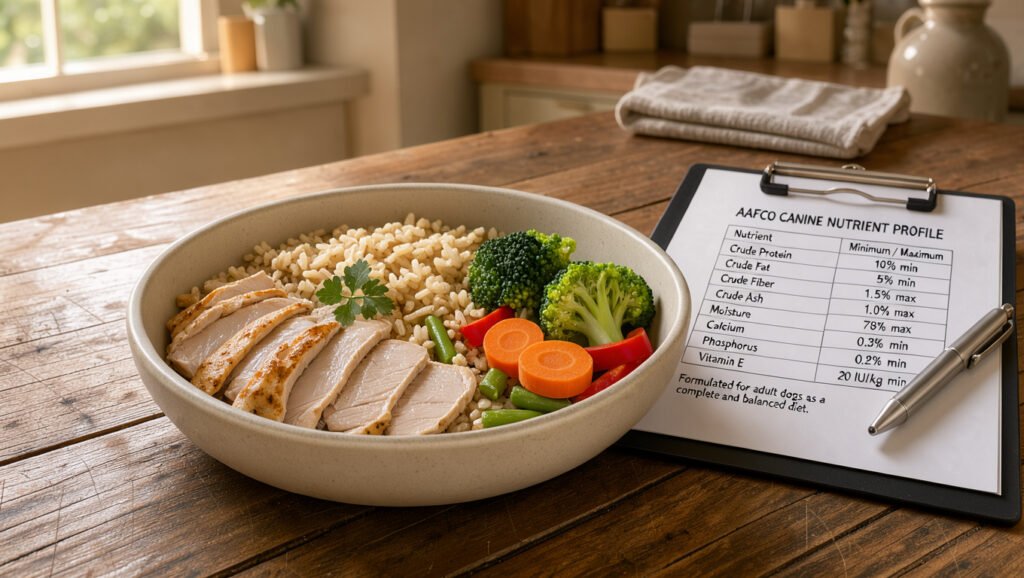
The nutrients every diet must supply
Canine nutrition covers six broad nutrient categories. Each has a role, and none can be judged by appearance alone.
- Water
- Protein
- Fat
- Carbohydrates
- Vitamins
- Minerals
AAFCO nutrient profiles set nutrient standards for two life stages, growth and reproduction, and adult maintenance. These profiles help assess nutrient adequacy, but they are standards, not recipes. AAFCO also recognizes feeding trials as a way to support nutritional adequacy. The AAFCO nutrient profile document describes those standards and methods.
For more everyday guidance on food and nutrition, see PawsMilo’s pet nutrition guides. They can help you understand general feeding ideas, but they do not replace a recipe made for your dog.
Why life stage changes the requirements
Growth and reproduction differ from adult maintenance. Puppies are building their bodies, and breeding dogs have needs that healthy adult dogs do not share. A formula made for adult maintenance may not suit a growing puppy or a dog that is pregnant or nursing.
Life stage also affects how you judge a diet’s adequacy. AAFCO’s profiles are tied to the stage named for the food, so a statement for adult maintenance does not establish that a diet meets growth needs. Check that any long-term diet is formulated for the life stage your dog is in now.
Which Protein Sources Can Dogs Eat?
Plain, thoroughly cooked chicken, turkey, beef, eggs, and fish are common protein sources, but the right choice depends on your dog and the recipe. Individual tolerance matters more than a food’s general reputation.
Use only the protein source and amount named in the formulated recipe. A dog may tolerate one meat but react to another. Allergies, fat content, and the finished recipe all affect the choice. A protein ingredient that seems suitable on its own can still change the full diet when swapped into a recipe.

Use these four checks when preparing the recipe’s animal ingredients:
- Choose the cut specified in the recipe.
- Remove seasoning, sauces, and added flavorings.
- Cook animal ingredients thoroughly.
- Avoid raw meat because it can carry pathogens such as Salmonella.
Raw animal foods can expose your dog and household to harmful germs. Cooking and careful handling lower that risk, but they do not make an unbalanced recipe nutritionally complete. Do not assume that a leaner cut is always a better fit. A recipe may depend on a certain amount of fat and calories from its chosen ingredients.
Watch how your dog responds when a veterinarian approves a change. Digestive upset or skin signs may point to a problem, even if the ingredient is often called dog-safe. Keep the protein source and preparation method consistent with the formulated recipe.
Which Vegetables, Carbohydrates, and Fats Belong in the Bowl?
Cooked rice, oats, carrots, green beans, and plain pumpkin can be useful ingredients when they fit your dog’s formulated recipe. Useful does not mean required in the same amounts for every dog.
Keep every non-meat ingredient in the amounts the recipe specifies. Vegetables and carbohydrates do not need to appear in one standard ratio for all dogs. Their role depends on the full diet, the individual dog, and the recipe’s design.
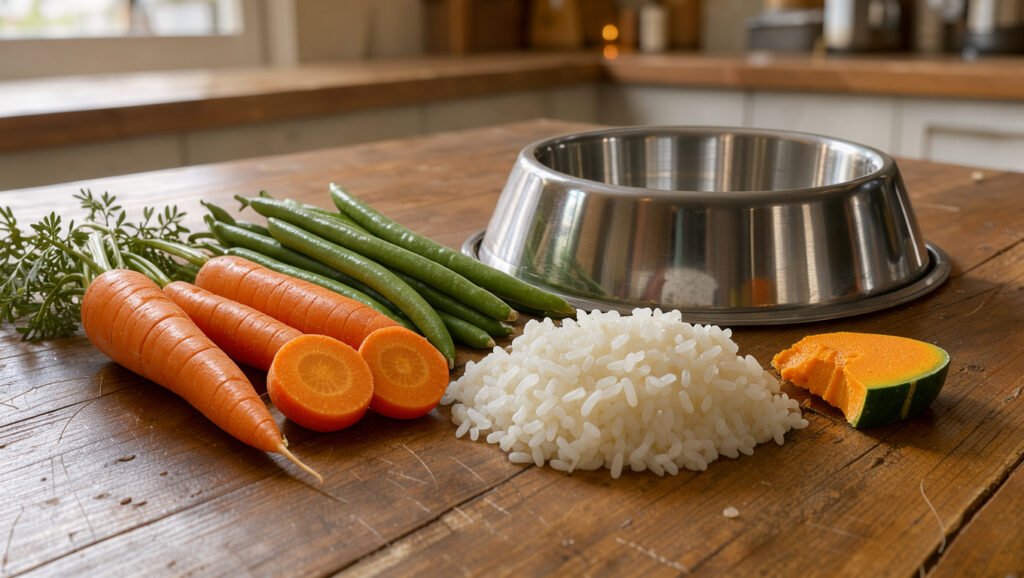
Starches and vegetables
Cooked rice or oats may provide carbohydrates in a formulated meal. Carrots and green beans can add other nutrients and texture, while plain pumpkin may suit some recipes. The name of an ingredient cannot tell you whether the recipe has the right balance.
Some foods should stay out of the bowl because they can harm dogs. Keep onions, garlic, grapes or raisins, and chocolate away from your dog’s meals. These foods are not safe choices for a home-cooked recipe, even in a small amount.
Fat sources and calorie balance
Dogs need suitable fats, including essential fatty acids, but fat is calorie-dense. One gram of fat provides about 9 calories, while one gram of protein or carbohydrate provides about 4 calories. That difference can change a meal’s calorie total quickly.
Fish oil or a plant oil named in the recipe may supply fat. Fats are healthy when their type and amount suit the individual diet. Adding oil without guidance can raise calories and alter the planned balance. Never add an oil or a new ingredient simply because it is described as healthy for dogs.
What Supplements Does a Home-Cooked Diet Need?
Most boneless home-cooked diets need carefully measured supplements because meat and vegetables do not supply every nutrient in the right balance. Guessing can create a new imbalance instead of fixing a gap.
Do not treat a generic multivitamin as proof that a recipe is complete. A supplement must match the whole recipe, including its ingredients and intended life stage.
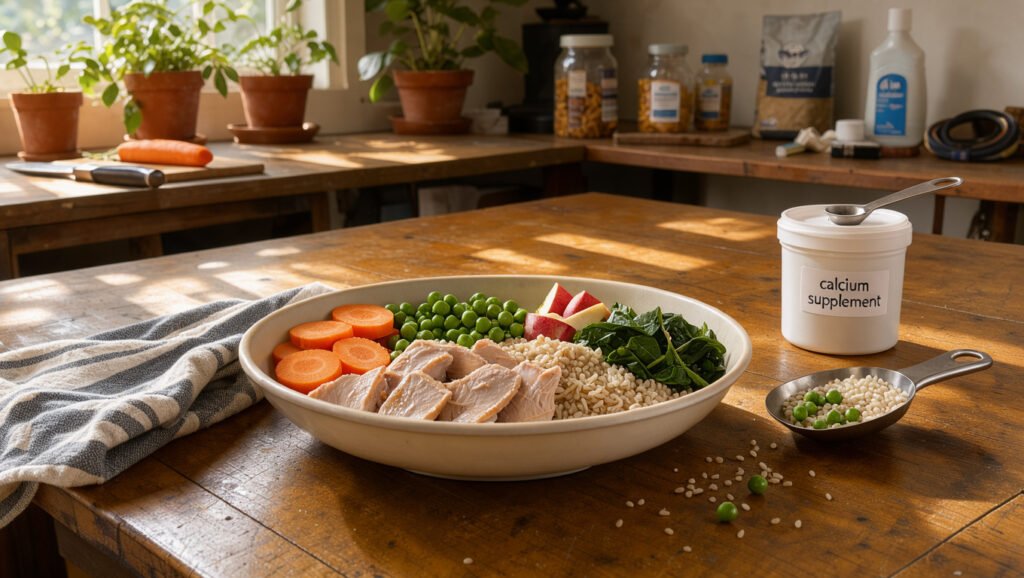
Calcium and the mineral balance
Boneless meat alone does not provide the mineral balance of a formulated diet. Removing bones also removes a natural calcium source, so the recipe may need calcium supplementation. Calcium and phosphorus must be balanced across the whole meal, not judged as separate add-ons.
AAFCO nutrient profiles set life-stage-specific minimums for calcium and phosphorus. A recipe must fit the right standard for the dog’s life stage. The needed amounts depend on the full formula, so one calcium source cannot serve as a universal fix.
Vitamins, minerals, and recipe-specific supplements
A veterinary nutritionist specifies the supplement ingredients and amounts for the recipe, the dog, and the intended life stage. That plan may include more than one supplement. Each amount must match the actual ingredients and preparation steps.
Changing an ingredient can change the supplement plan because the new food may add or remove nutrients. For example, switching the recipe’s meat or using a different product can affect its nutrient balance. Do not add crushed eggshell or a human multivitamin without a formulated dose.
Use only the supplements and amounts specified for your dog’s exact recipe. For general information about the limits of online pet-care advice, read PawsMilo’s pet-care disclaimer.
How Do You Formulate Homemade Dog Food?
The safest way to formulate a long-term homemade diet is to have a veterinary nutritionist create or review a recipe for your dog. Individual formulation accounts for needs that a standard ingredient ratio cannot capture.
A meat-to-vegetable ratio cannot show whether a diet is complete and balanced. Nutritional adequacy depends on every ingredient and supplement, in its exact amount, plus how the food is prepared and fed.

Get an individualized recipe
A veterinary nutritionist can formulate a diet for your dog’s life stage, health, body condition score, and ingredient tolerances. A body condition score is a visual assessment of fat and muscle. It helps describe your dog’s shape, but it does not replace a health review.
Vet-approved homemade dog food recipes should be individually formulated or reviewed for the dog who will eat them. Nutritionally complete homemade dog food recipes must state supplements as well as food ingredients. A recipe that names only meat and vegetables does not give you enough information to feed it as a long-term diet.
AAFCO nutritional adequacy can be supported by formulation to nutrient profiles or by feeding trials. The complete recipe matters, not a simple ratio or a popular ingredient list. PawsMilo’s dog care guides offer broader care information, while a custom diet still needs veterinary guidance.
Measure and follow every ingredient
Measure ingredients in the form the recipe names. A recipe that uses cooked weights cannot be followed accurately by weighing the same food raw. Cooking changes weight, and that difference affects how much of each ingredient enters the batch.
Substitutions can change calories, nutrients, and the supplement plan. A different cut of meat or a new starch may seem close, but the full formula may no longer match. Ask the recipe’s author before changing an ingredient, preparation state, or supplement amount.
Follow the recipe exactly and ask its author before making a substitution.
How Do You Cook Homemade Meals Safely?
Cook each ingredient as directed and keep raw meat separate from foods that are ready to serve. Clean handling helps protect your dog and household from foodborne germs.
Use a food thermometer rather than smell or color to judge whether meat is safely cooked. A piece of meat can look done before it reaches a safe temperature inside.
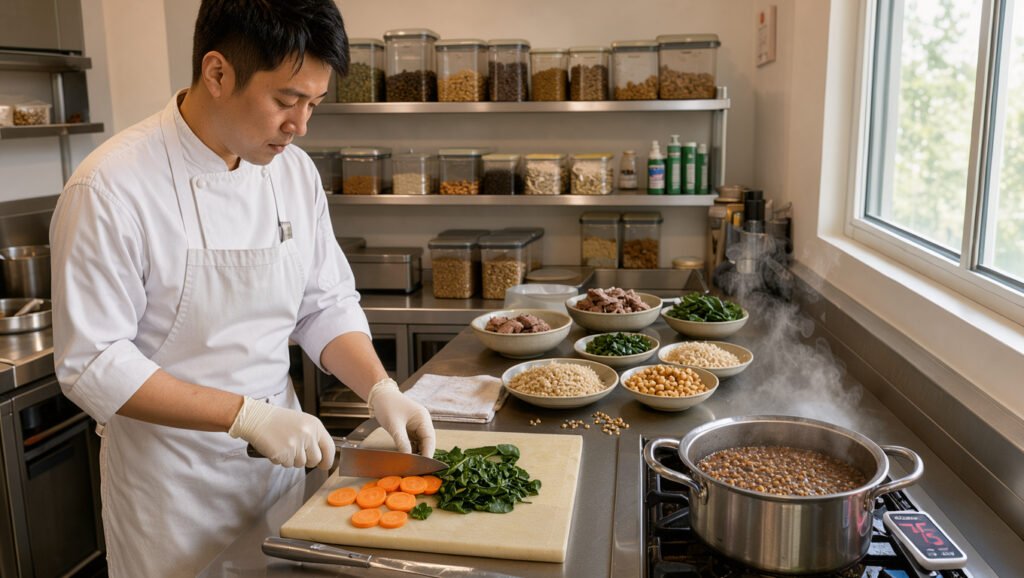
Cook ingredients and prevent cross-contamination
Wash your hands before and after handling raw meat. Clean knives, cutting boards, counters, and other tools between steps. Keep raw meat away from ingredients that are ready to eat, and use a thermometer to check cooking.
The USDA safe minimum temperature is 165°F for poultry and 160°F for ground beef. Follow the recipe’s directions for other ingredients. Do not rely on smell, color, or texture alone to decide that meat is safe.
Keep toxic foods out
Exclude these five foods from your dog’s meals:
- Onions
- Garlic
- Grapes
- Raisins
- Chocolate
Xylitol is another serious hazard for dogs. It may appear in products that are not meant for dogs, including some foods and household items. Check product labels and keep anything containing xylitol away from your dog.
Perishable food should not sit at room temperature for more than 2 hours, or more than 1 hour when the temperature is above 90°F. If you suspect your dog has eaten a toxic ingredient, contact a veterinarian promptly.
How Should You Serve and Portion Each Meal?
Serve the amount specified for your dog’s daily energy needs, divided into meals that suit your routine. A batch total is not a daily portion, so do not use the whole yield to judge one day’s food.
Use the recipe’s calorie information to work out the daily amount for your dog. Divide that amount among meals, rather than guessing from the size of the cooked batch. Many adult dogs eat two meals a day, but a veterinarian can help set a different schedule.
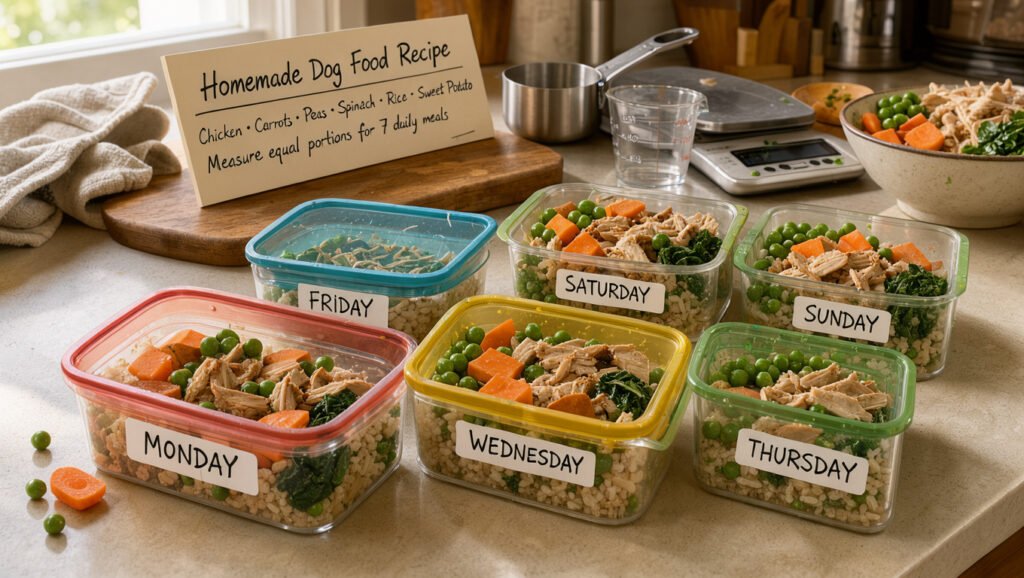
Introduce a new diet gradually over about 7-10 days as a common starting point. Mix increasing amounts of the new food with the current diet, adjusting the pace to your dog’s tolerance. Slow the change if your dog develops digestive upset.
Watch your dog’s appetite and stool during the change. Treats also add calories, so include them when you assess the full day’s intake. Keep notes on how much your dog eats and any changes you notice.
Use the dog’s body condition score along with weight to track whether the portion suits them. Changes may be gradual, so regular checks can help you spot a trend. Recheck your dog’s weight and body condition regularly and have your veterinarian adjust the portion if either changes.
How Should You Store and Reheat Homemade Meals?
Divide a cooled batch into individual servings so you can refrigerate or freeze only what you will use soon. Quick chilling helps keep prepared food safe and makes later meals easier to manage.
Refrigerated leftovers are generally safe for 3-4 days, while frozen portions are best used within 3-4 months for quality. These are USDA storage guidelines for leftovers.

Use these four steps to store each batch:
- Portion the food into clean containers.
- Refrigerate the portions you will use soon.
- Freeze the portions you will use later.
- Thaw frozen servings in the refrigerator.
Mark each container with the preparation date so you can track its age. Smell is not a reliable safety test; food can be unsafe even when it smells normal. Discard any portion that has been stored too long or handled in a way that raises concern.
Reheat a serving only when needed for your dog’s comfort. Let it cool to a safe temperature before feeding, and do not reheat and cool the same serving repeatedly. Label containers with the preparation date and discard portions that have been stored too long.
How Should You Adapt Meals for Puppies, Adults, and Seniors?
A puppy needs a growth-formulated diet, while an adult dog needs a diet formulated for maintenance. Age changes the target, so an adult recipe is not a safe starting point for a growing dog.
Choose a formula for your dog’s current life stage, not just a recipe that uses familiar foods. AAFCO distinguishes growth and reproduction from adult maintenance.

Puppies and dogs that are still growing
Puppies need a diet formulated for growth. Large-breed puppies need particular attention to growth nutrition because AAFCO standards include specific considerations for large-size-dog growth. Homemade puppy meals should be individually formulated, not adapted from an adult recipe.
Growth nutrition must stay in balance as the puppy develops. A recipe made for an adult dog may not supply the right amounts for a puppy. Ask a veterinarian to review any planned home-cooked diet before feeding it regularly.
Adult and senior dogs
Healthy adult dogs need maintenance nutrition. Senior status alone does not point to one diet for every older dog. Health, activity, and body condition help shape any needed changes.
Before changing a life-stage diet, check these three points:
- Confirm the life stage the recipe is intended to support.
- Review your dog’s health needs with a veterinarian.
- Use a recipe formulated for that life stage.
Do not feed a puppy an adult homemade recipe unless a veterinary professional has confirmed it meets growth requirements.
Do Small and Large Dogs Need Different Recipes?
A dog’s size affects how you measure a meal, but it does not make a one-size-fits-all recipe appropriate. Accurate portions matter for small and large dogs alike.
Size alone does not set an individual dog’s calorie needs. Weight, age, activity, and body condition all affect energy needs, so two dogs in the same size group may need different amounts.

Portioning for small dogs
Small dogs need small portions weighed accurately. A modest serving error can make up a larger share of a small dog’s daily intake. Use the recipe’s stated amount rather than estimating from a larger dog’s serving.
Vet-approved homemade dog food recipes for small dogs must be formulated for the individual dog, not just its size category. The recipe should match the dog’s needs and give clear portion instructions.
Portioning for large dogs
Large dogs need portions based on their own energy needs and body condition. Do not scale up a small-dog serving by size alone. A large dog with lower activity may need a different amount from a more active dog of similar weight.
Vet-approved homemade dog food recipes for large dogs must also be formulated for the individual dog, not just its size group. Weigh portions rather than relying on scoops when the recipe specifies weight.
How Can You Judge a Recipe Book or Online Recipe?
Judge a recipe by its nutritional formulation and precision, not by its title or ingredient photos. Popularity is not proof that a meal meets your dog’s needs.
A recipe that omits supplement amounts or serving instructions cannot establish that it is complete and balanced. Check the details before relying on a book or website for regular meals.

Check the author and nutritional formulation
Look for an author who is a veterinary nutritionist, or evidence that a qualified veterinary nutritionist reviewed the recipes. The best homemade dog food recipes are formulated for a stated life stage and the individual dog. The most popular or easiest option may not fit your dog.
AAFCO nutritional adequacy statements refer to a stated life stage. AAFCO explains how these statements help you tell whether a food is intended to be complete and balanced for that stage in its pet food selection guidance. A statement for one stage does not establish adequacy for another.
Look for precise instructions and limits
Check that the recipe states all four details:
- Exact amounts for every ingredient
- The supplement type and dose
- Whether weights are cooked or raw
- The intended life stage
A vet-approved homemade dog food recipe book is not proof that every recipe suits every dog. The book may include formulas for different needs, and a recipe may still require review for your dog’s health or ingredient tolerance. Have your veterinarian review a recipe before you use it as your dog’s regular diet.
What Problems Mean You Should Stop and Call Your Veterinarian?
Stop experimenting with the recipe and contact your veterinarian if your dog develops repeated digestive signs or a sudden change in health. Worsening symptoms need attention, not another ingredient swap.
Sudden or severe symptoms, weakness, or suspected toxin ingestion warrant prompt veterinary contact. Do not try to treat a serious reaction by changing ingredients alone.

Report these four signs to your veterinarian:
- Repeated vomiting
- Persistent diarrhea
- Loss of appetite
- Unexpected weight or body-condition change
A mild, one-time stool change during a diet transition may have a different urgency from repeated or worsening symptoms. Keep watching your dog and seek veterinary advice if the change continues. The FDA and ASPCA Animal Poison Control Center also provide pet-safety resources for suspected food hazards.
Do not manage a serious reaction by changing ingredients alone. Get prompt veterinary help for severe symptoms, weakness, or suspected toxin exposure.
Keep the recipe and ingredient labels available so your veterinarian can assess what your dog ate.
Conclusion
A safe homemade diet starts with a recipe designed for your dog, not a general mix of ingredients. It is suitable as a regular diet only when it is formulated for your dog and followed precisely.
Ask your veterinarian to review your dog’s current needs and help you find a veterinary nutritionist if a custom recipe is appropriate. A clear plan can help you decide whether home cooking fits your routine and your dog’s health. Before cooking your first regular batch, ask your veterinarian to review the recipe and its supplement instructions.