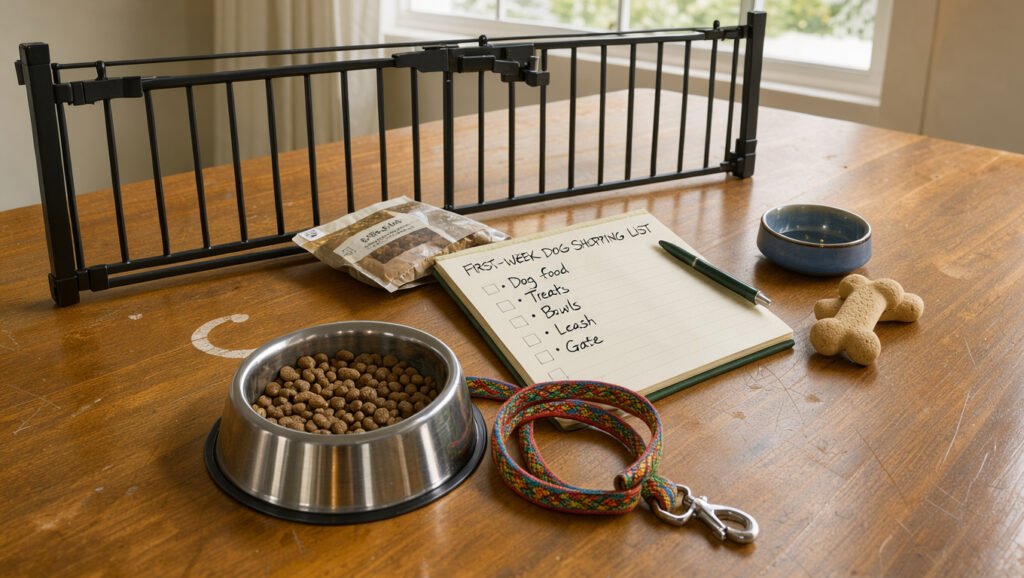
Before your dog arrives, have food, bowls, a safe resting place, identification and walking gear, cleanup supplies, and basic home-safety equipment ready. These things to buy before getting a dog give you a calm start when your new companion first walks through the door. The first days can feel busy, but a few practical choices make it easier to focus on getting to know each other.
The useful basics cover feeding, rest, identification, cleanup, and safe management. An enzymatic cleaner uses enzymes to break down organic residue and odor rather than simply masking the smell. You can tailor later purchases once you know your dog’s size, coat, age, and habits. A short pre-arrival checklist gives you a safe start without requiring you to guess every preference in advance.
Things to Buy Before Getting a Dog: Set First-Week Priorities
A focused first-week list covers 10 core purchase categories, while purchases based on your dog’s preferences can wait. Start small, and focus on what your dog needs to arrive safely and settle in.
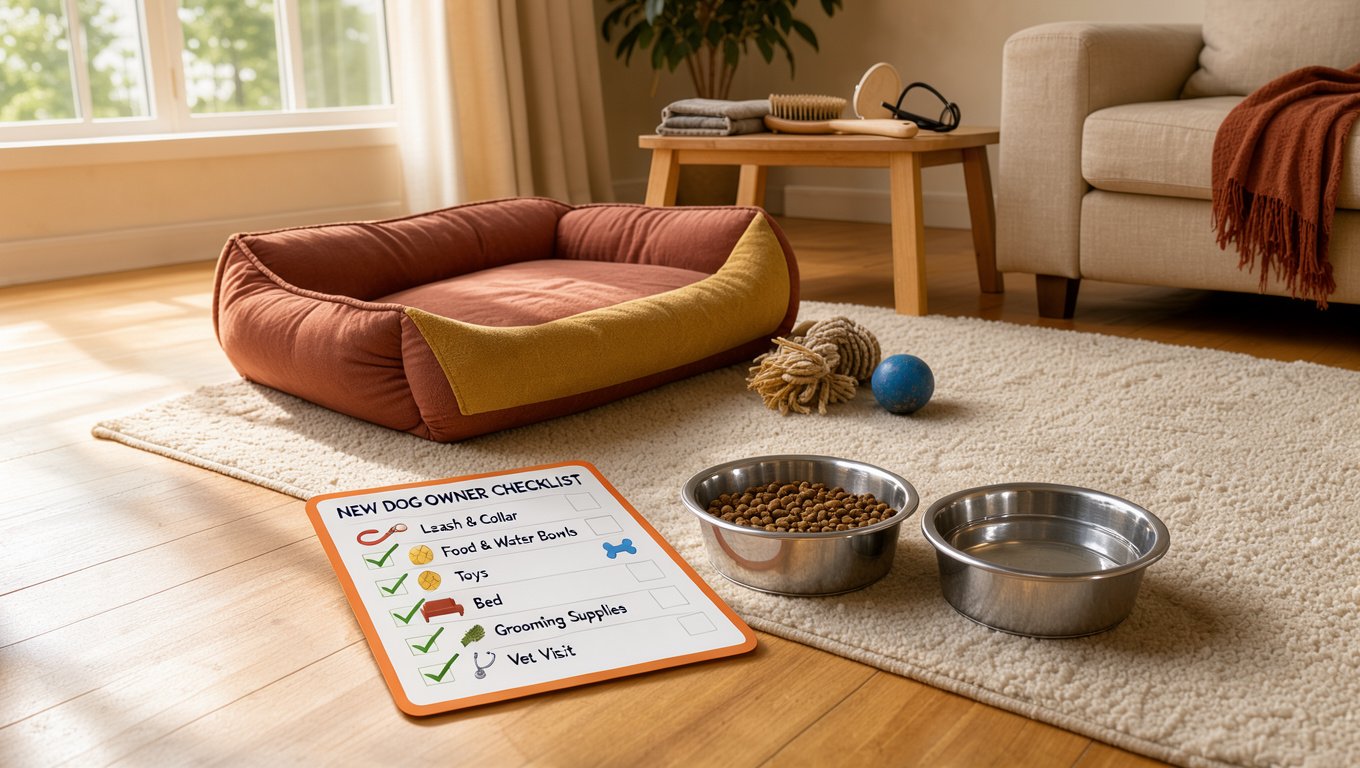
The top 10 things you need for a dog fit into five paired lines. Together, they form a starter checklist for a puppy or an adult dog, not a demand to buy every optional accessory at once.
Put anything needed for safe arrival or the first day on the pre-arrival list, and defer preference-based extras.
Use these paired categories to shape a practical new dog shopping list:
- Age-appropriate food and food-and-water bowls.
- A crate and washable bedding.
- A collar and fixed-length leash.
- An ID tag and poop bags.
- An enzymatic cleaner and a gate.
Buy safety and first-day essentials before arrival, then wait to see what suits the individual dog. That approach helps you avoid guessing about bed styles, toy preferences, or grooming tools before you know your new companion.
For what do you need for a new dog, the answer is a safe place to rest, food, water, identification, walking gear, and cleanup supplies. These essential dog supplies let you meet daily needs without filling a cart with extras. Dog essentials for first-time owners should also reflect the dog’s age and current routine.
A puppy supplies checklist may later include toys and training tools, but the first day calls for basics. The dog care and advice page offers broader guidance for owners building routines around nutrition, health, training, and everyday care. Keep your list flexible as you learn what works.
Choose Food and Water Bowls for the First Meals
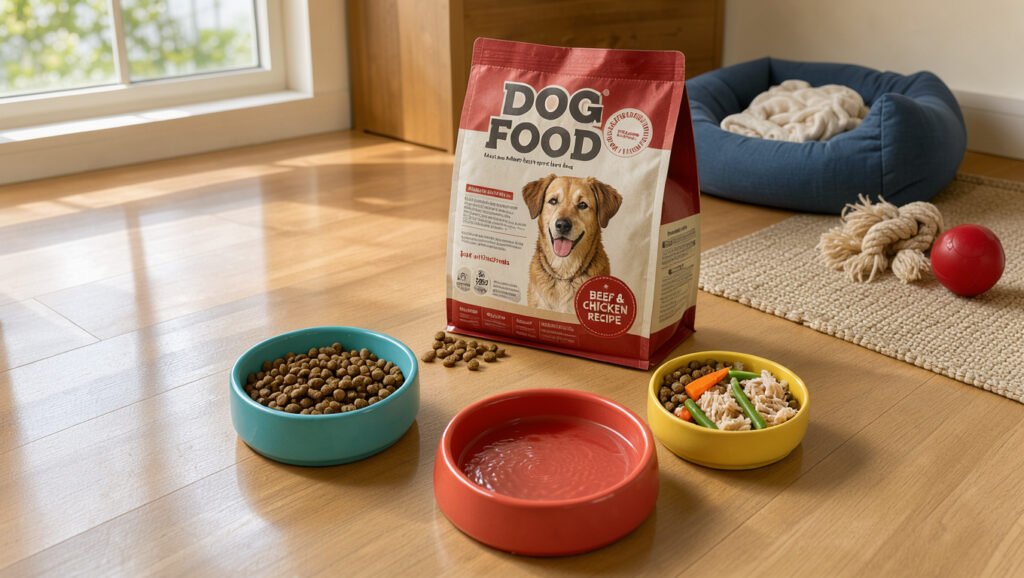
Your easiest first meals usually come from the food your new dog is already eating. Familiar food can make the first few days simpler while your dog adjusts to a new home.
If you change foods, make the switch over about 7-10 days unless your veterinarian advises a different pace. A prescribed diet takes priority over a general transition rule.
Start with the food your dog already knows
Ask the shelter, rescue, or breeder what your dog has been eating, then keep a small supply ready. A sudden change can upset some dogs’ stomachs, so watch for changes in appetite or stool during any transition.
Check three details on a food label before buying a new product:
- The life-stage statement and the age it supports.
- The feeding directions for your dog’s size and age.
- Whether your veterinarian has recommended a specific diet.
An AAFCO nutritional adequacy statement identifies the life stage a food is formulated to support. It can help you compare foods, but it does not replace advice for a dog with a medical need.
Choose bowls that are easy to clean
Food and water bowls should suit your dog’s size and eating style. Stainless steel bowls are sturdy and easy to wash; ceramic bowls can feel heavier and stay put, but inspect them for chips or cracks.
A puppy essentials kit needs bowls that are simple to clean every day. Choose a size that lets your dog eat and drink comfortably without crowding the muzzle. A wide, shallow bowl may suit one dog, while another eats neatly from a deeper dish.
Keep the bowls in a spot where your dog can reach them without being jostled. Wash food and water bowls regularly, and ask your veterinarian before changing a medically prescribed diet.
Size a Dog Crate for Safe Rest
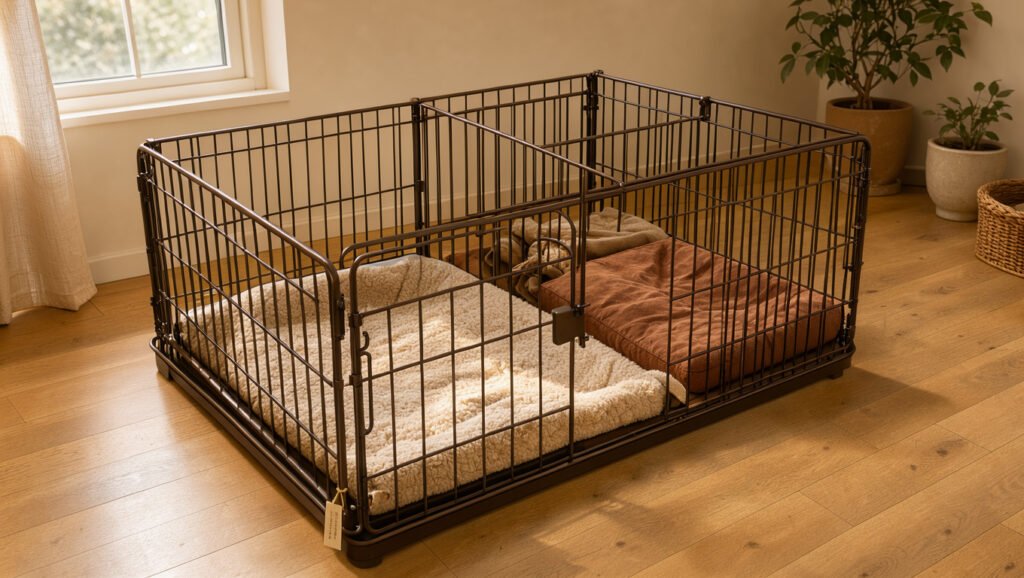
A well-sized crate lets your dog stand, turn around, and lie down without being cramped. Room to move matters for rest, comfort, and safe use.
Your dog should be able to stand naturally, turn around, and lie down inside the crate. A crate that blocks any of those movements is too small.
Measure your dog before choosing a crate
For a common length-sizing rule, measure from your dog’s nose to the base of the tail, then add about 2-4 inches. Check the crate’s height and width too, since your dog needs space to move naturally.
Dog crate sizing can be tricky when you bring home a growing puppy. A divider lets you reduce the usable space in a larger crate, then adjust it as your puppy grows. That can help prevent a young dog from using one end as a toilet and the other as a bed.
Do not rely on a breed label alone. Dogs of the same breed can differ in height and body shape, so compare your dog’s measurements with the crate’s inside dimensions.
Make the sleep area comfortable and voluntary
A washable crate pad or bed can make the space more inviting. Put the crate in a comfortable area where your dog can rest near household activity without being in a busy walkway.
Introduce the crate with calm, positive steps. Let your dog explore it, and reward voluntary entry instead of pushing the dog inside. A dog sleep setup should give your companion a quiet place to rest.
A crate is a management and rest option, not a reason to leave a dog confined for excessive periods. Recheck the fit as a puppy grows, since a divider that worked at pickup may need adjustment.
Pick an Adjustable Collar and Leash for Walks
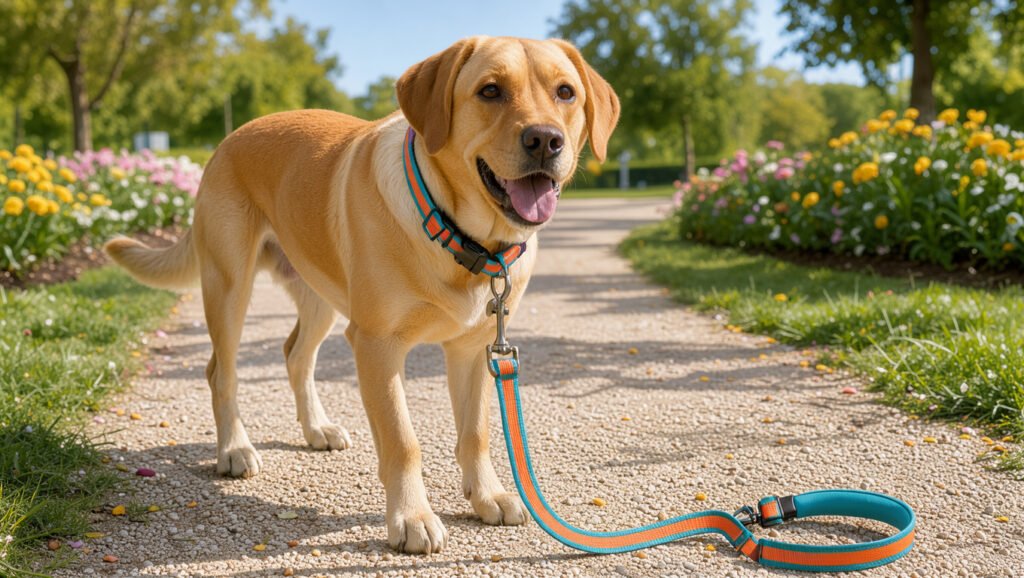
A secure fit matters more than choosing a particular collar style for every dog. Fit comes first, especially if your dog pulls, slips out of gear, or has a sensitive neck.
A flat collar suits many dogs who walk calmly, while a well-fitted harness may suit dogs who pull or slip equipment. The right walking setup depends on your dog’s needs.
Check fit and escape risk
A flat collar is a simple choice for dogs who walk without pulling. If your dog strains against the leash, slips a collar, or has a sensitive neck, consider a well-fitted harness instead.
A two-finger check is a common starting point for collar fit, but adjust it to the collar’s design and your dog. The collar should stay secure without pressing tightly against the neck. Check that the leash clip attaches firmly before each walk.
A review of 21 full-text studies and two abstracts found no single walking device suits every dog. The research review of collars and harnesses discusses comfort, body pressure, movement, and signs of stress across different designs.
Keep the first leash simple
A fixed-length leash is a useful choice for everyday walks. Standard models are typically 4-6 feet long, which gives you a steady connection without letting your dog range far ahead.
A retractable leash can make close control harder in a busy area. Cars, other dogs, and narrow sidewalks call for a leash you can shorten quickly. Your basic adjustable collar and leash setup includes a secure collar or harness, a fixed-length leash, and a working clip.
Keep walks calm while your dog learns the new routine. Check the fit again after growth or weight change, and replace any walking gear that is frayed or damaged.
Prepare ID Tags and Microchip Records
A readable ID tag gives someone who finds your dog a direct way to contact you. One current number is the minimum useful detail.
Put at least one current phone number on your dog’s ID tag. A tag and a registered microchip offer different, complementary ways to identify your dog.
Keep the tag simple and easy to read. Include your phone number and your dog’s name if space allows. A second number can help if you cannot answer, but the first number must reach someone who can respond.
A microchip is an implanted identifier, not a GPS tracking device. A scanner can read its number, which connects to registration details in a database. After adoption, update the registration so it lists your contact information.
Update the account again after a move or a phone-number change. A chip cannot help reunite you with your dog if its contact details are out of date. Keep the registration confirmation with your important pet records.
Identification is one practical part of a new dog owner checklist, but it does not replace supervision or secure walking gear. After any move or phone-number change, update both the tag and the microchip account.

Set Up House-Training Cleanup Supplies
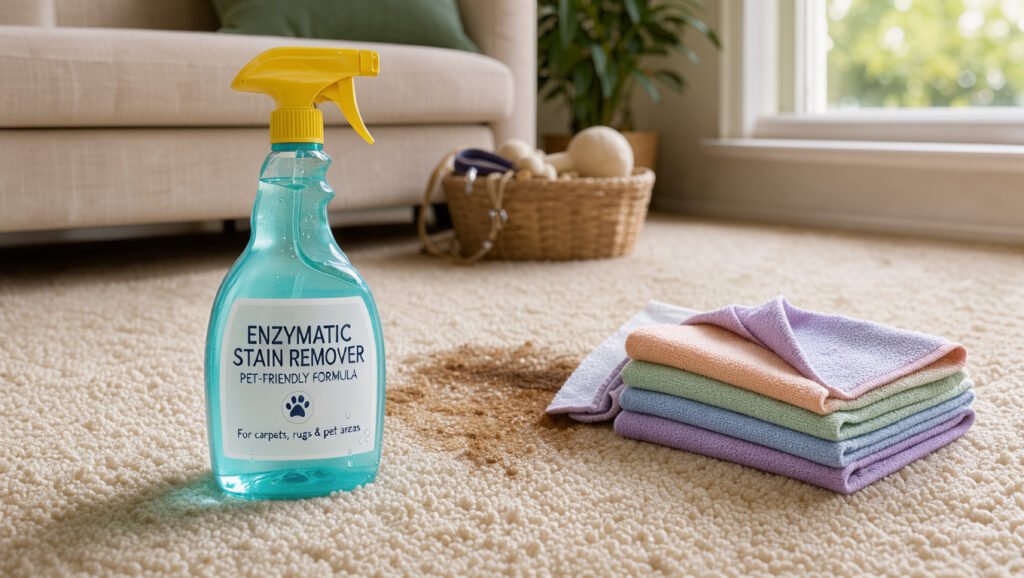
For a fresh accident, blot up as much liquid as you can before applying an enzymatic cleaner. Blot, do not rub, so you do not spread the mess deeper into fabric.
A basic cleanup station needs two tools: absorbent towels and an enzymatic cleaner. An enzymatic stain remover helps break down organic residue and odor rather than covering the smell.
Follow the cleaner’s label for how much to apply and how long it must sit. Test a small, hidden area first if you are unsure whether the product suits the surface. Let the treated area dry as directed before your dog returns.
A common mistake is cleaning only the visible spot. Liquid can reach carpet backing or nearby fabric, where leftover residue may keep an odor behind. Check the full affected area and treat it as the label directs.
Young puppies commonly need a potty opportunity every 1-2 hours while awake. Age, activity, and individual needs affect the schedule, so watch for signs that your puppy needs to go sooner.
Pee pads can help some puppies or households with limited outdoor access, but they are optional. They do not replace a steady toilet routine. Keep an enzymatic cleaner for dog accidents near the spots where accidents are most likely.
Cleaners can harm pets if used the wrong way, so follow the product label closely. Keep the cleaner where accidents are likely, but follow its label before letting your dog return to the treated area.
Puppy-Proof the Home Before Arrival
Get down to your dog’s eye level and check each reachable area for something tempting or dangerous. Look low, because puppies explore with their mouths.
Secure human foods, medications, and cleaning products before your dog comes home. These three common hazard groups can cause serious harm if a dog reaches them.
Remove everyday household hazards
Check shelves, counters, bags, and floors for items your dog could chew or swallow. Put away cords, trash, and small objects, along with food and household products.
- Store chocolate and foods containing xylitol out of reach.
- Keep human medications in closed storage.
- Put cleaners and laundry products behind secure doors.
- Cover or move reachable electrical cords.
- Empty trash bins and remove small objects from the floor.
The ASPCA Animal Poison Control Center lists household products that can harm pets. Its poisonous household products guidance advises keeping risky cleaners and personal-care items away from animals.
Create a safe area with gates
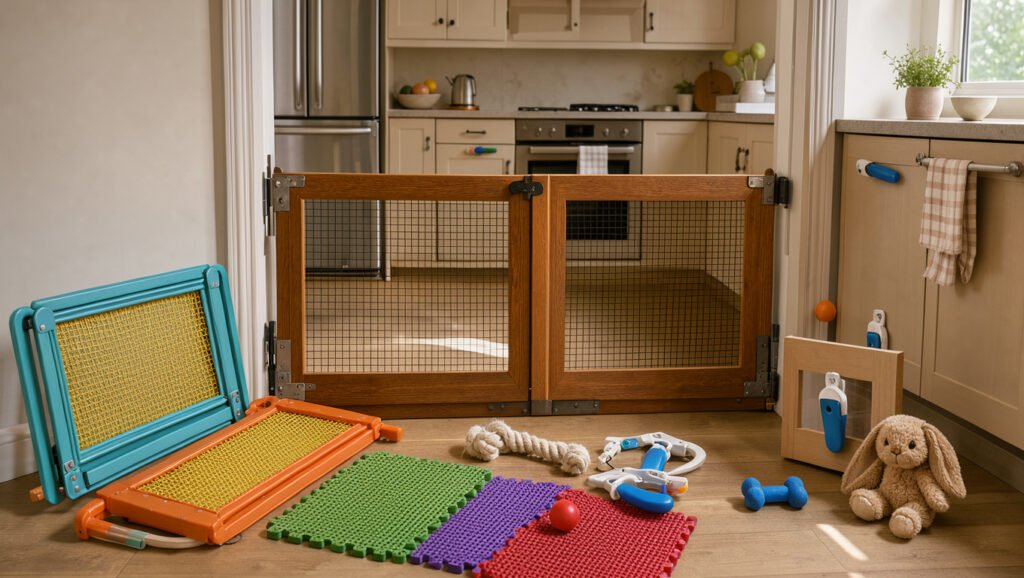
A sturdy baby gate or exercise pen can create a supervised safe zone. Use it to limit access while you learn which rooms your dog can handle and where you need closer supervision.
Choose a gate that fits the space and stays firmly in place. A gate is not a substitute for supervision if your dog can climb it, push through it, or chew it. Check the gate as your dog grows more confident.
For puppy-proofing supplies, focus on safe barriers and secure storage rather than trying to remove every object from your home. A room-by-room home safety checklist for kittens also offers ideas for keeping a new pet’s space safe. Keep the ASPCA Animal Poison Control Center’s contact information accessible in case you suspect your dog has swallowed a toxin.
Choose Safe Toys for Chewing and Enrichment
Start with a few different toy types rather than buying a large pile before you know how your dog plays. A small rotation can keep play varied without filling the house with unused toys.
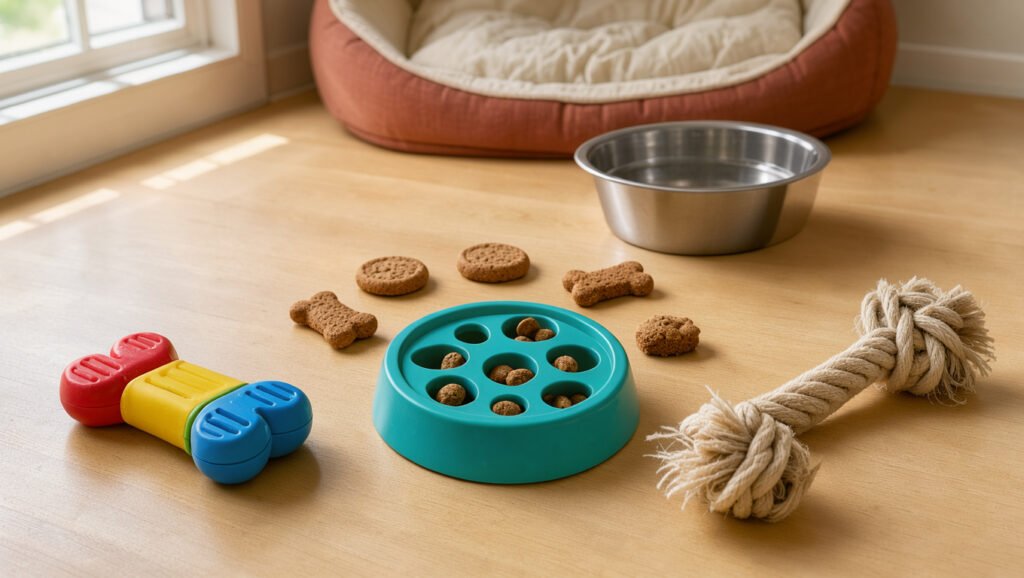
A starter rotation can include a chew toy, a food puzzle, and an interactive play toy. Choose each one for your dog’s size and chewing style.
Match chew toys to size and chewing style
Check the toy’s size against your dog’s mouth and strength. A toy should not be small enough to swallow, and a soft chew may not last with a dog who bites hard.
No toy is indestructible. Supervise new chews and inspect them often, especially if your dog tends to tear toys apart. A recommended size does not guarantee safety for a determined chewer.
Remove a toy if it cracks, sheds loose pieces, or becomes small enough to swallow. A toy that was safe when new can become a choking risk after repeated chewing.
Add play and food-puzzle options
A food puzzle gives your dog a chance to work for part of a meal. Start with an easy design, then watch how your dog uses it before offering a harder one.
A fetch or tug toy can support shared play when your dog enjoys those games. A soft toy may suit gentle play, though some dogs quickly pull apart plush fabric. Keep the play choice matched to your dog, not just the label.
A useful dog accessories list focuses on items that support play and mental activity, rather than decorative add-ons. Rotate the toys you offer so you can notice which ones your dog uses safely and often. Check each toy for loose pieces or damage before bringing it out for another play session.
Gather Positive-Reinforcement Training Supplies
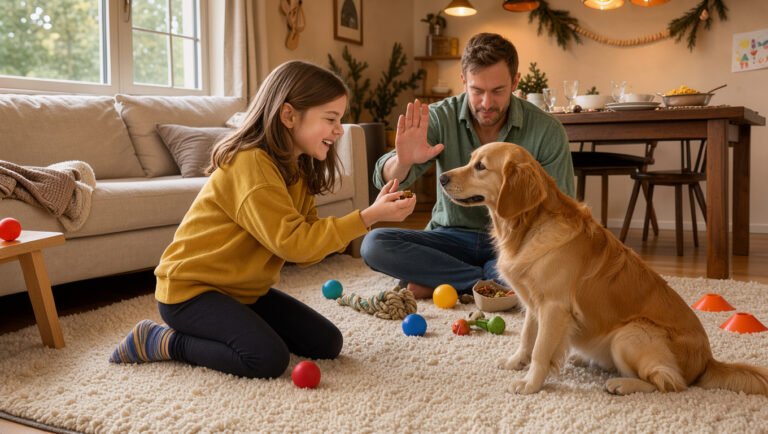
Keep a few small rewards within reach so you can reinforce a behavior as it happens. Quick rewards help your dog connect an action with something pleasant.
Deliver a reward within about 1-2 seconds of the behavior you want to encourage. Small treats are often pea-sized, adjusted for your dog and the food’s calorie content.
Keep rewards small and ready
Soft, small treats are easy to eat during practice. A treat pouch keeps rewards close at hand, while your dog’s regular food can work when it suits the task and diet.
Choose treats that your dog can eat quickly, so practice does not stop for long chewing. Keep portions small and account for treats in your dog’s daily food amount. Calm handling helps your dog focus on the behavior.
Choose a marker and practice tools
A clicker makes a distinct sound at the moment you want to mark. A consistent marker word, such as “yes,” can do the same job if you use it in the same way each time.
A non-slip mat or target is an optional aid for practice. It can give your dog a clear place to stand or a simple object to touch. Keep sessions short enough that your dog stays engaged.
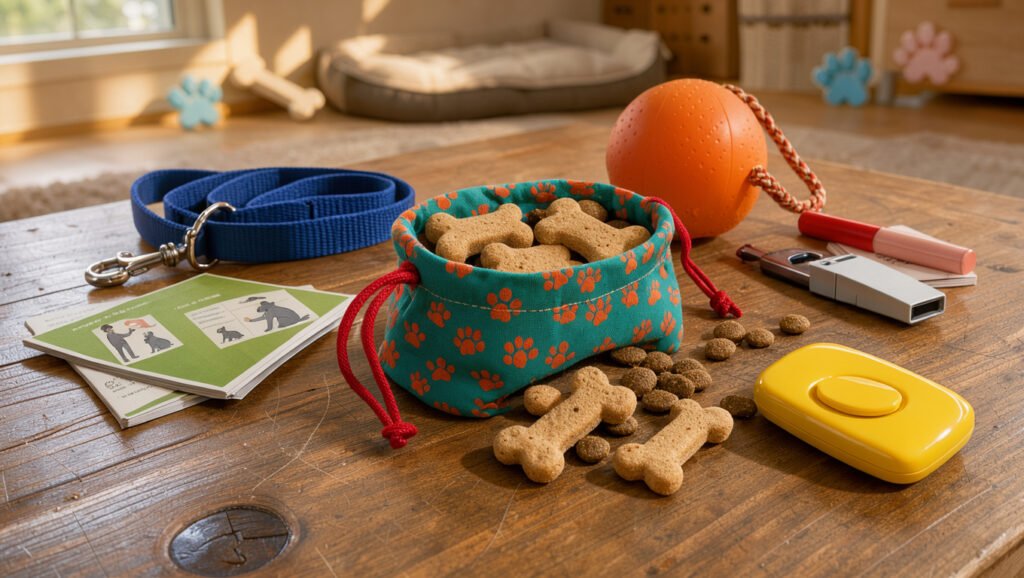
A simple starter set of positive reinforcement training supplies includes:
- Small treats.
- A treat pouch.
- A clicker or marker word.
- A non-slip mat or target.
Rewards work best when you deliver them promptly and pair them with calm, consistent handling. For a fuller positive-reinforcement training plan, see step-by-step dog training guidance. If food rewards need to fit a medical diet, ask your veterinarian which treats are suitable.
Match Grooming Tools to Your Dog’s Coat
The best first brush depends on your dog’s coat, not on buying the biggest grooming kit. Choose for the coat, since one brush cannot suit every dog.
Long, curly, double, and short coats can need different brushing routines. Coat type can make brushing frequency range from daily to weekly.
Choose a brush for coat type
A soft brush can suit some short or delicate coats. A slicker brush can help with loose hair and tangles in some longer coats, while a comb can reach through curls or check for mats.
Dog grooming supplies should match your dog’s coat and tolerance for handling. Start gently and keep early sessions brief. If your dog has a double coat, learn how to brush the coat without scraping or irritating the skin.
A puppy supplies checklist may include a brush and comb, but you can choose those after learning the coat type. Ask the shelter, rescue, or breeder about the dog’s current grooming routine.
Plan nail, ear, and dental care
Nail trims commonly start at about every 3-4 weeks, though activity and nail growth affect the interval. Use nail clippers or a grinder made for dogs, and take off only a small amount at a time.
Do not trim past the quick, the sensitive part inside the nail. If you are unsure, ask a veterinarian or groomer to show you how to trim safely.
Use dog-formulated toothpaste and a suitable brush for dental care. Gentle ear-cleaning supplies may help when appropriate, but never push cotton swabs deep into the ear canal. If coat mats, skin irritation, or nail handling make home care difficult, get guidance from a veterinarian or qualified groomer.

Pack Safe Supplies for Car Travel
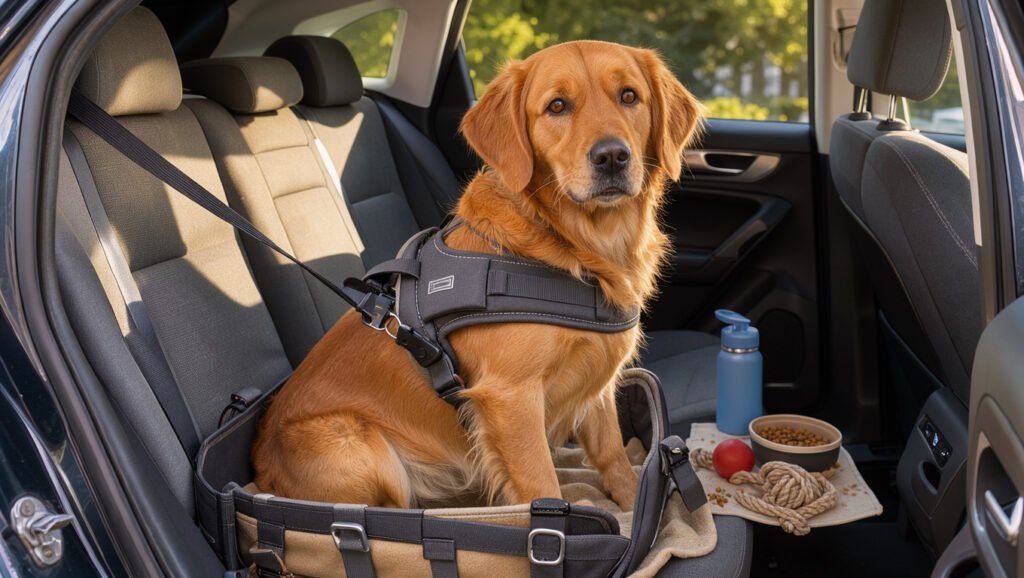
Plan the ride home before pickup so your dog is secured before the car moves. Set up the restraint first, not after your dog is already in the vehicle.
Dogs should ride restrained in the back seat, not loose in the vehicle. A secure car restraint can help keep your dog from moving around the cabin.
Restrain your dog for the ride
Two common options are a crash-tested harness and a secured crate. A regular walking harness is not automatically crash-tested, so check the restraint maker’s safety details.
Follow the maker’s fit and installation instructions for the restraint you choose. A loose or poorly secured device may not work as intended. Choose a size that fits your dog and your vehicle.
Keep a small travel kit in the car
A compact travel kit can include water, a travel bowl, waste bags, and a towel. Bring a secure carrier or restraint suited to your dog and the vehicle.
Offer water during travel breaks, and keep waste bags within reach for stops. A towel can help with wet paws or a small mess on the ride. Store the kit where it will not slide around the vehicle.
Safe car travel with a dog also means planning breaks and watching your dog’s comfort. Never leave your dog unattended in a parked car, since the interior can become unsafe even when a window is cracked.
Schedule a Veterinary Wellness Exam
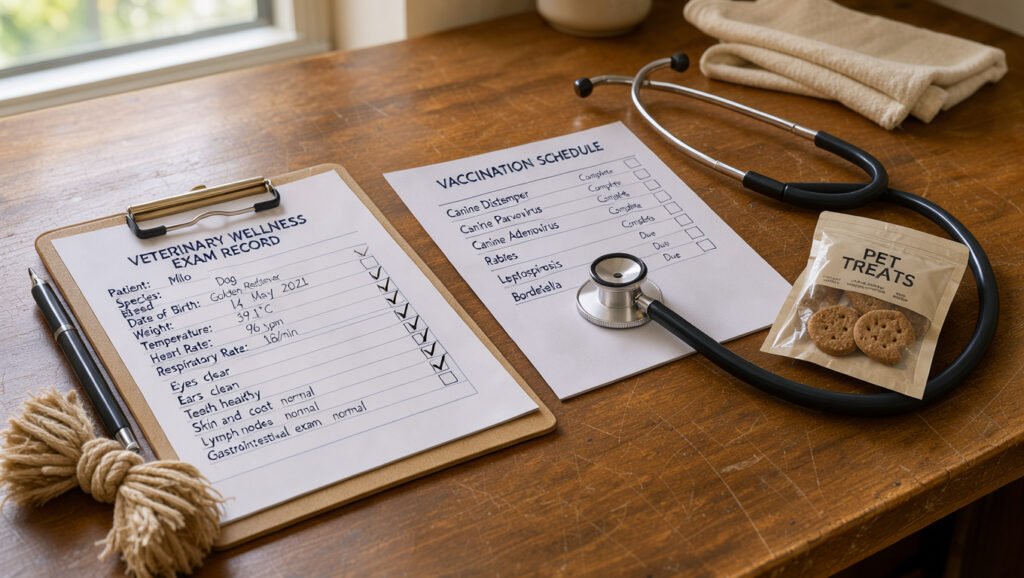
Arrange a veterinary wellness exam soon after arrival so you can review your dog’s health and records. An early checkup gives you a chance to discuss care based on your dog’s history.
Book the visit soon after bringing your dog home, with timing guided by the dog’s condition and any adoption agreement. A dog who seems unwell may need prompt care.
Book an early checkup
Set up the first appointment with your dog’s needs in mind. The American Animal Hospital Association advises arranging a veterinary visit within the first week for a newly adopted adult dog, when possible.
For wider advice on pet wellness and preventive care, browse pet health guides for dogs and cats. Your veterinarian can set a plan that fits your dog’s health, age, and known history.
Gather records and prevention details
Bring these four details to the visit:
- Vaccination records.
- Current food and medication details.
- Recent stool or health concerns.
- Questions about parasite prevention and dental care.
Puppy core vaccination schedules commonly begin at 6-8 weeks, with boosters about every 2-4 weeks until at least 16 weeks. Your veterinarian sets the schedule based on your puppy’s health and history.
A newly adopted adult dog may need a record review or catch-up care. If records are missing, tell the clinic what you know rather than guessing about past care. The AAHA new dog checklist also recommends discussing available medical history during early veterinary care. Bring every record you received, even if it looks incomplete, because your veterinarian can use it to plan next steps.
Compare Pet Insurance Coverage Before You Enroll
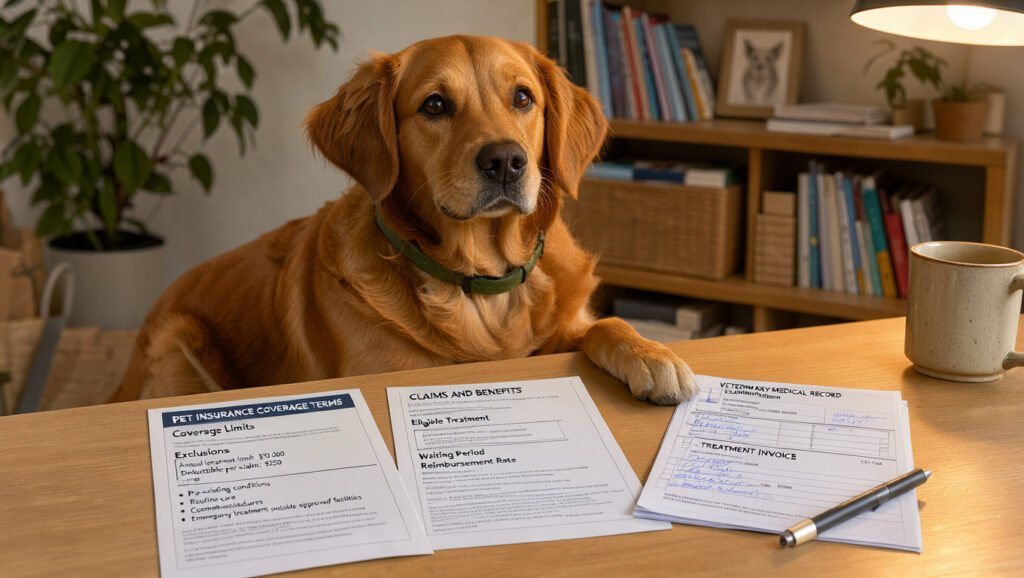
Compare the covered events and exclusions, not just the monthly premium. Read the details so you know what the policy may pay for before you enroll.
Accident-only and accident-and-illness plans cover different events, and routine wellness benefits may be a separate add-on. Read the policy wording to see where each type begins and ends.
Compare what the policy covers
Accident-only coverage may help with care for injuries caused by accidents. Accident-and-illness coverage may include eligible care for both injuries and illnesses, subject to the policy terms.
Some plans offer routine wellness benefits separately. Those benefits may cover certain preventive services, but they do not make every routine cost part of the main policy. Compare the covered care with the kind of costs you want help managing.
Read limits, exclusions, and waiting periods
Check the deductible, or the amount you pay before reimbursement begins. Then review the reimbursement rate and any annual or per-condition limits that cap payments.
Waiting periods set how long you must wait before certain coverage begins. Policies also define pre-existing conditions, and those definitions affect which later claims may be excluded.
A policy bought after signs of a condition appear may not cover care related to that condition. Read the policy’s definition of pre-existing conditions and its waiting-period rules before enrolling.
Check the full policy wording and consumer information from your state insurance department. That can help you understand how the plan handles claims, limits, and exclusions before you choose.
A policy purchased after signs of a condition appear may not cover care related to that condition.
Conclusion
Your dog does not need a perfect setup on day one, but a safe and comfortable one. Start with what matters now, then adjust your choices as you learn your dog’s size, health, and behavior.
Buying every optional accessory before pickup can create extra work without helping your dog settle. A few useful supplies and a thoughtful home setup give you room to learn what your new companion actually needs.
Before pickup, check your home for hazards and set out the supplies you chose for your dog’s first day.