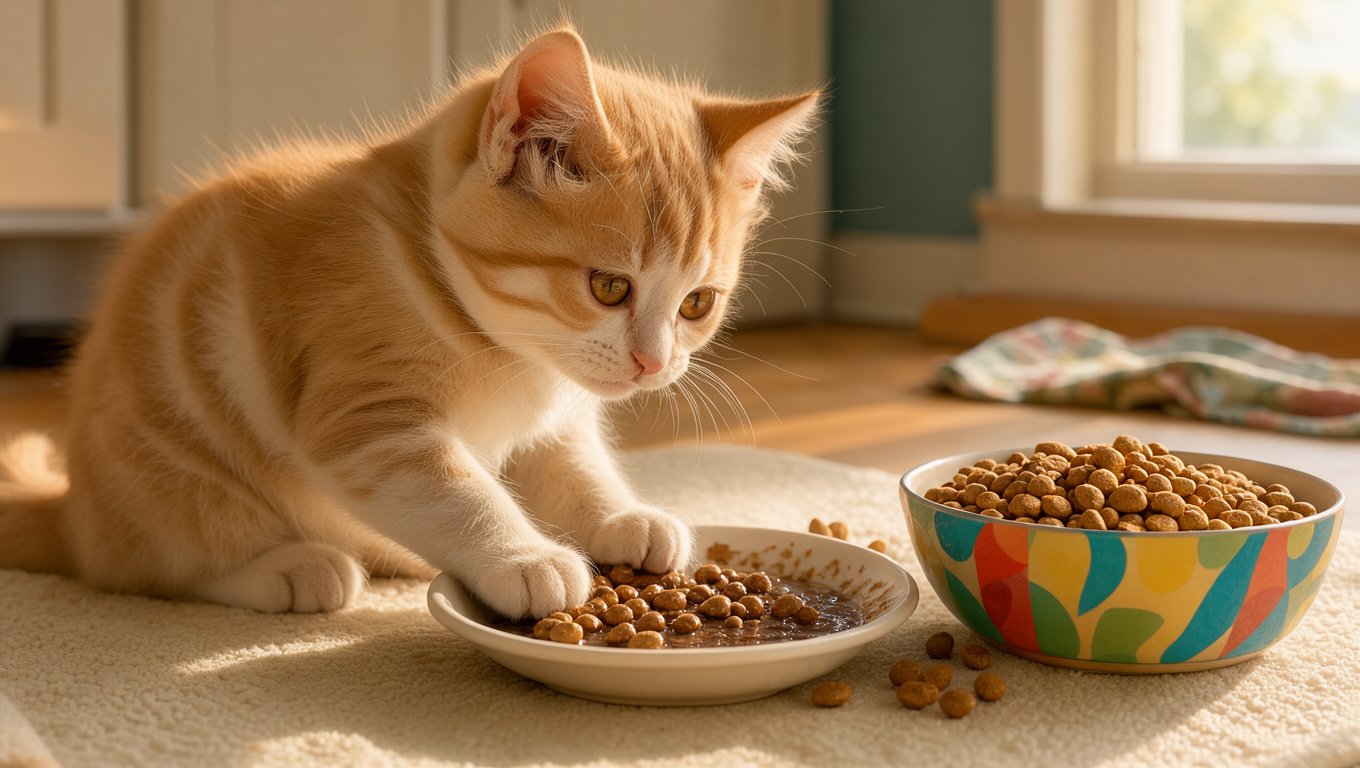
The best food for kittens is a complete and balanced commercial formula labeled for growth or all life stages. Wet, dry, or mixed feeding can work when the food meets that standard and suits your kitten. Watching a small kitten grow brings plenty of joy, along with real questions about health and nutrition. A food made for growth gives you a reliable starting point, but the right amount and routine change as your kitten gets older. The nutritional adequacy statement identifies the life stage a food supports and how its nutritional adequacy is substantiated. A life-stage statement is a more useful first check than a front-of-package claim.
Key Takeaways
- Choose a complete and balanced formula labeled for growth or all life stages.
- Wet, dry, or mixed feeding can work if the food meets that standard.
- Expect portions and feeding routines to change as your kitten grows.
- Use the nutritional adequacy statement as your first label check.
- Ask your veterinarian about your kitten’s individual growth and feeding needs.
How to Choose the Best Food for Kittens
Start with the nutritional adequacy statement, usually printed on the back or side of the package. Choose a statement that names growth or all life stages. Complete means the food contains all required nutrients, while balanced means those nutrients appear in the right ratios.
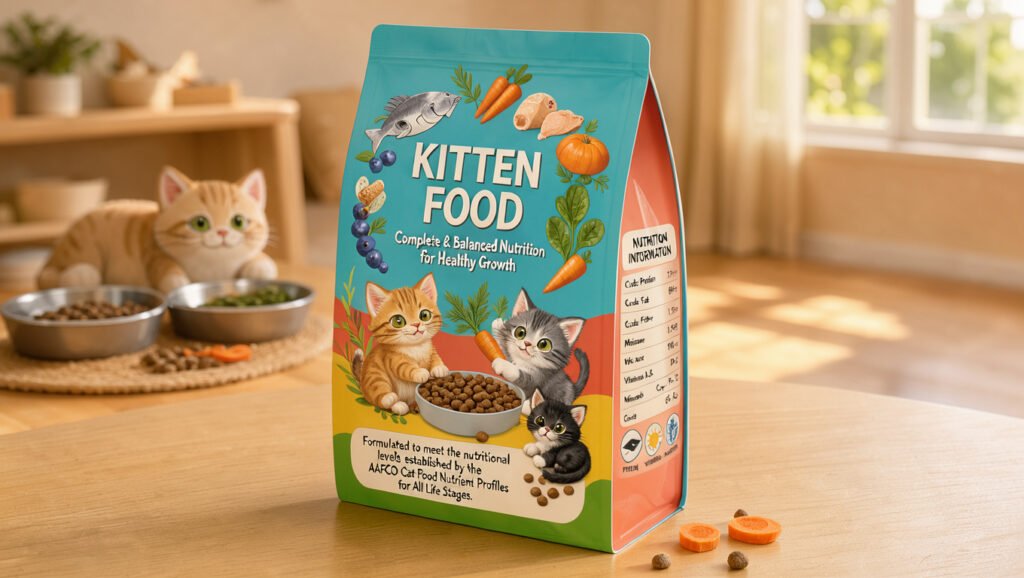
AAFCO sets nutrient profiles for pet foods. A complete-and-balanced claim can be substantiated by meeting those profiles through formulation or by passing feeding tests that follow AAFCO procedures. The FDA guide to complete and balanced food explains how those claims relate to life stage.
Choose a food whose nutritional adequacy statement supports growth or all life stages, not one sold only with appealing marketing claims.
Use this four-part label checklist before choosing kitten food:
- Life stage: Look for growth or all life stages.
- Nutritional adequacy statement: Check what the food supports and how adequacy is substantiated.
- Method: Note whether the claim relies on nutrient profiles or feeding tests.
- Feeding directions: Read the package’s directions for serving the food.
Most foods claiming to be complete and balanced must include feeding directions. A pet nutrition guide can help you learn more about balanced diets and treats. Ingredient words such as “natural” or “human-grade” do not prove nutritional adequacy.
A vet-recommended kitten food can be a useful starting point, but its label still needs to show growth or all-life-stages adequacy. The best vet-recommended dry kitten food follows the same rule: check the growth statement on the kibble label. Protein claims and ingredient buzzwords come second. If a food’s label does not identify growth or all life stages, choose a different formula for a growing kitten.
What Should Kittens Eat at Each Age?
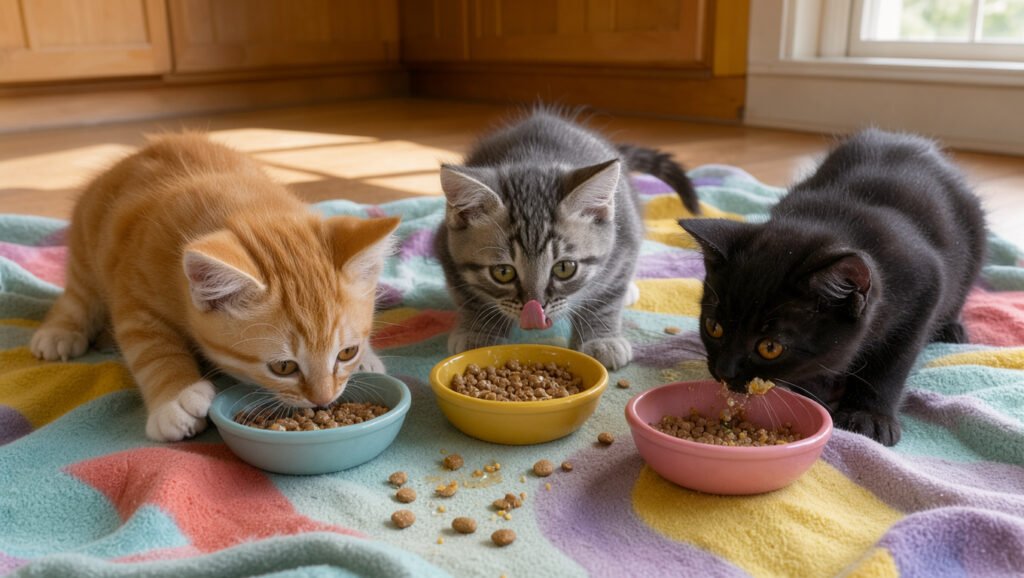
A kitten’s feeding changes quickly, from nursing in the first weeks to eating and drinking independently by about 8 weeks. Offer soft kitten food during weaning, then let your kitten progress toward solid food.
Nursing and the start of weaning
Newborn kittens should nurse from their mother when possible. During their first week, they nurse about every two hours, then gradually move to four to six feedings each day. Kittens can begin weaning at about 3-4 weeks, and balanced commercial kitten food can be introduced from 3-5 weeks.
Hand-reared kittens need kitten-specific milk replacer. The kitten nutrition guide describes the move from nursing to solid food. Weighing kittens daily helps you track growth; they should gain about 15-20 grams per day.
Moving from gruel to solid food
As weaning begins, offer soft kitten food that young kittens can lap. You can make it into gruel, a soft mixture that is easier to eat. Gradually offer food with a firmer texture as your kitten learns to chew.
By 5-6 weeks, kittens can chew food without it being made into gruel. Their growth and development continue quickly, so keep an eye on appetite and daily weight. A quiet feeding spot can help a small kitten focus on eating.
Independent eating and drinking
By about 8 weeks, kittens should drink water and eat on their own. You can offer dry kitten food at this stage. Keep fresh water within easy reach as your kitten builds an independent routine.
The best dry kitten food for indoor cats still needs to support growth. Indoor status does not change the need for a growth-appropriate formula; choose based on life-stage adequacy and your kitten’s individual calorie needs. A cat care guide can offer more everyday care ideas. Weighing a growing kitten daily makes it easier to spot a gain that falls short of the expected 15-20 grams.
Wet, Dry, or Mixed: Which Food Fits Your Kitten?
Wet, dry, and mixed feeding can all suit a kitten when the food is complete and balanced for growth. Choose the format your kitten eats well, then use that package’s calorie details to guide portions.

Dry food examples and label details
Royal Canin Kitten Dry Cat Food is formulated for kittens from 4 months to 1 year. It provides 367 calories per cup and 3,823 calories per kilogram on an as-fed basis. Its guaranteed analysis lists at least 34% crude protein and 16% crude fat.
The analysis also lists no more than 4.4% crude fiber and 7.5% moisture. Royal Canin says the food meets the AAFCO Cat Food Nutrient Profiles for growth. Its growth nutrient profile statement is the key check, not a claim that one dry food suits every kitten.
The best dry kitten food at Walmart still needs to meet the same growth standard. Store location does not change what your kitten needs from its food. Purina, Hill’s Pet Nutrition, Royal Canin, and Iams are brands commonly suggested by veterinarians, without a single brand ranking above the others.
Wet food and mixed feeding options
Royal Canin Wet Kitten Food and Wellness CORE Kitten Classic Paté are two wet food examples. Wellness CORE Kitten Classic Paté is a protein- and calorie-rich canned food with a soft pâté texture. Royal Canin Wet Kitten Food is another kitten-food pick.
Royal Canin wet food lists 80.2% moisture and 53.03% protein on a dry-matter basis. Wet food adds moisture to a meal, while dry food is convenient to serve. Either can fit when it is complete and balanced for growth, and mixed feeding offers a practical way to use both.
Compare the calorie information on the specific package you buy, since a cup or can is not a universal serving size.
How Much and How Often Should You Feed a Kitten?
Use the feeding guide as a starting estimate, then adjust portions to your kitten’s growth and body condition. Calorie needs change with age, weight, activity, growth, and the food’s calorie density.
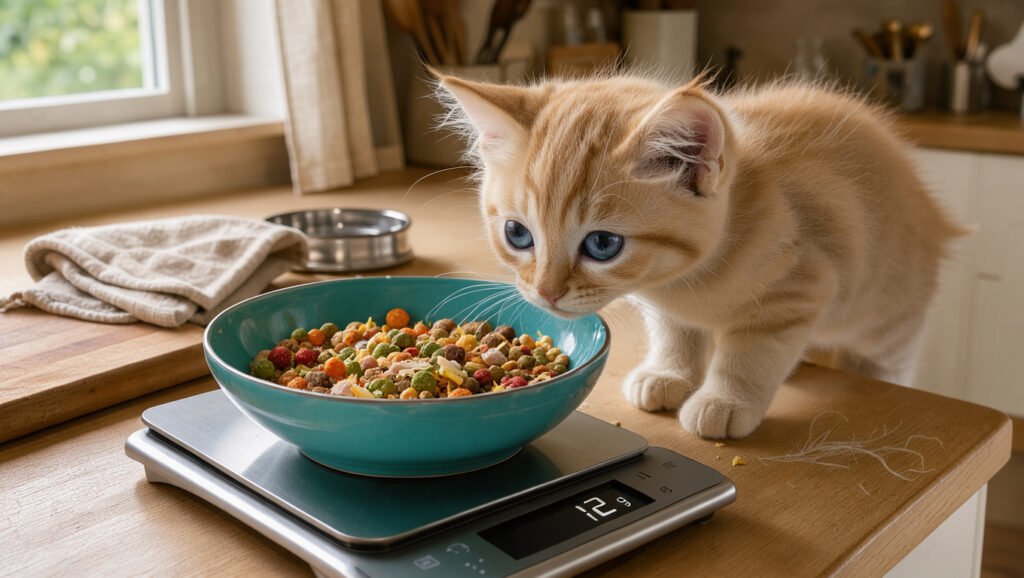
Daily calorie starting points
At 10 weeks, growing kittens need about 200 calories per kilogram of body weight each day. At 10 months, they need about 80 calories per kilogram daily. These figures show why the same portion may not suit a kitten for long.
An average starting estimate is 162 calories daily for an 8-week-old, 2-pound kitten. Chart examples rise to 225 calories for a 3-month-old, 3-pound kitten; 272 for a 4-month-old, 4-pound kitten; and 327 for a 5-month-old, 5-pound kitten.
The same chart estimates 369 calories for a 6-month-old, 6-pound kitten; 419 for a 7-month-old, 7-pound kitten; 457 for an 8-month-old, 8-pound kitten; 504 for a 9-month-old, 9-pound kitten; and 541 for a 10-month-old, 10-pound kitten.
These chart amounts are averages, not prescriptions. Individual needs may be up to 50% higher or lower. To portion dry food, measure from its calorie information rather than guessing by bowl volume. The best dry kitten food still needs a measured serving that fits your kitten’s needs.
Meal timing and growth checks
Most kittens can have food available day and night until about 4-6 months. From 4-6 months, offer food at least three times daily. By 10 months, offer at least two meals a day.
Free-choice feeding carries a greater risk of unhealthy weight gain from 4-6 months onward, especially after spaying or neutering. Watch your kitten’s weight and body condition as you adjust portions. If your kitten gains weight quickly, measured meals can help you track intake.
Most kittens can switch to adult cat food around 10 months, though your veterinarian can advise on timing for your kitten. Take note of changes in weight, appetite, and growth between visits. A pet health guide can also support your wider care routine. Ask your veterinarian to review the portion plan if your kitten’s weight changes quickly or growth seems off.
How Should You Manage Food Changes, Milk, and a New Kitten’s Routine?
Change a kitten’s food gradually over about 7-10 days, and use fresh water rather than cow’s milk. Set up a quiet feeding area before your new kitten arrives.
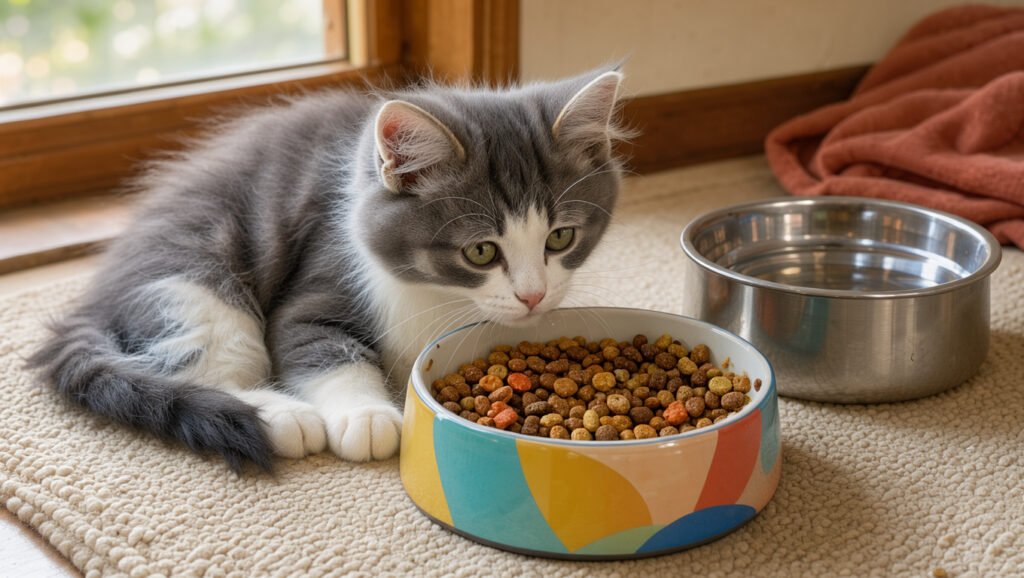
Change foods gradually
A slow change can make a new diet easier to accept. Follow these four steps:
- Keep your kitten’s current food in place.
- Mix a small amount of the new food into it.
- Increase the new food gradually over 7-10 days.
- Pause and contact a veterinarian if vomiting, diarrhea, or refusal to eat continues.
Keep treats below 10% of your kitten’s total daily calories. You can find more practical nutrition advice for food and treats. A steady routine helps you notice if a change affects your kitten’s appetite or comfort.
Keep milk safe and settling calm
No, kittens should not drink regular cow’s milk as a routine drink. Many cats lack enough lactase, the enzyme that digests lactose, so cow’s milk can cause vomiting, diarrhea, or stomach pain. Fresh water is the right everyday drink, and kittens eating a complete, age-appropriate diet do not need cow’s milk.
Hand-reared kittens need kitten-specific milk replacer, not cow’s milk or other types of milk. Prepare a quiet space, litter boxes, and food and water bowls before your new kitten comes home. This gives the kitten a calm place to eat and settle.
The 3-3-3 rule describes a flexible adjustment period of three days, three weeks, and three months. It is a guide, not a guaranteed timetable for every kitten.
Every kitten settles at a different pace, so let your new companion explore and build confidence gradually. For more ideas about welcoming a cat, see this guide to preparing your home for a new cat. Keep the feeding area predictable during the adjustment period, while allowing your kitten to settle at its own pace.
Conclusion
A clear growth-stage adequacy statement is the simplest first check when you choose food for a kitten. It helps you focus on nutrition that suits a growing body, rather than a claim on the front of the package.
Use your kitten’s progress to guide portions, not the package estimate alone. Bring your kitten’s current food label and recent weight record to your next veterinary visit for a personalized feeding check.