
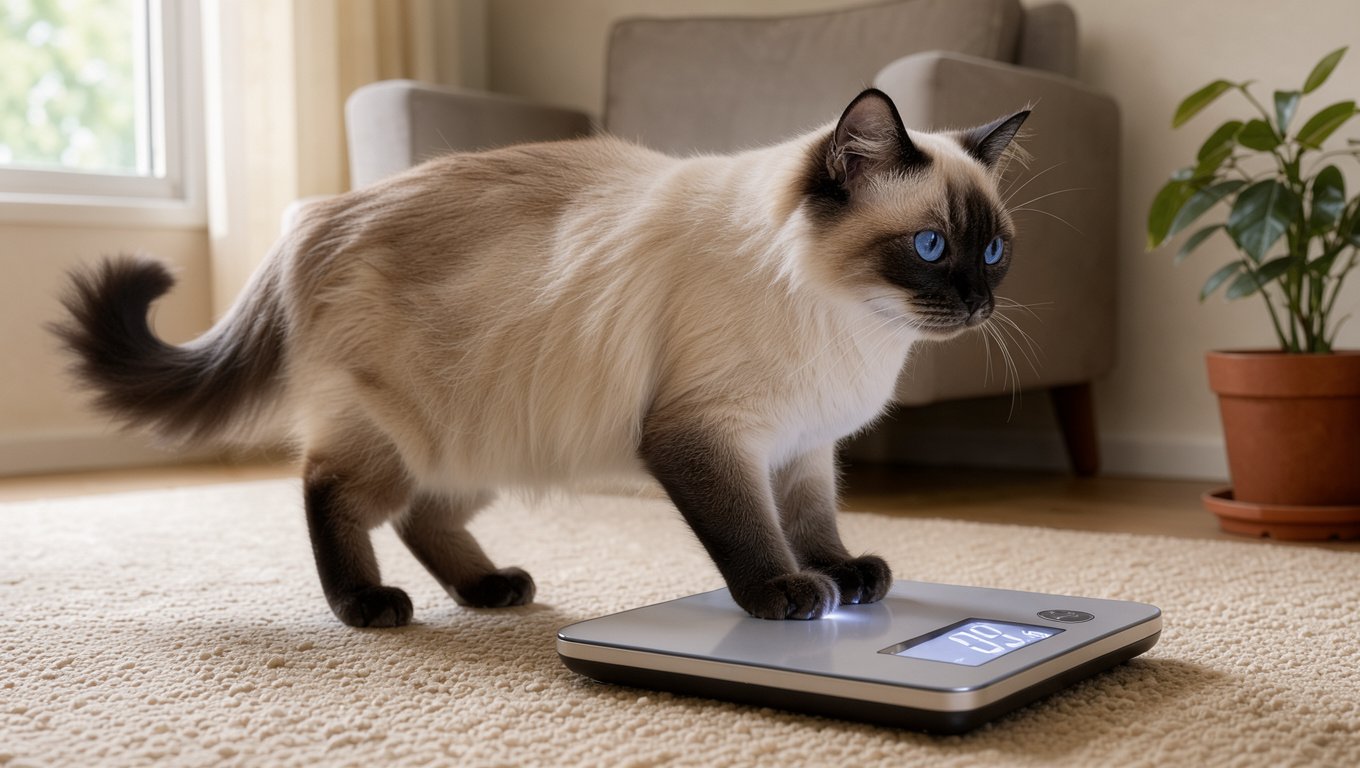
Your cat is more likely to be at a healthy weight when their ribs are easy to feel, their waist is visible, and their body condition fits their frame, not just a scale number. Could a cat weigh more than expected and still be lean? A body shape can answer questions that one measurement cannot. Feline body condition score (BCS) is a visual and hands-on rating of a cat’s body fat and shape. It helps you judge condition alongside your cat’s frame, breed, and weight history.
This article follows a clearly hypothetical cat, not a real patient record. The example shows why breed references and weight trends matter, but neither replaces an assessment of shape. You will learn how to make a useful first check and when a change deserves veterinary care. Your cat’s age, health, and build can all affect the right goal. A scale can show that a number changed, but it cannot explain why or tell you what that number means for your cat.
Treat a scale reading as a starting clue, not a diagnosis.
How to Check Your Cat’s Shape at Home
Set your cat on a level floor and start with your hands, not a bathroom-scale target. A rib and waist assessment works best when you compare touch and sight from three angles. Keep your cat relaxed, and stop if they resist or seem sore.

- Ribs: Run your fingertips lightly along the chest. You should feel the ribs without pressing hard. Ribs that feel sharp or are difficult to find can flag a concern.
- Waist from above: Look down at your cat while they stand. A slight inward curve behind the ribs can help show the waist.
- Abdomen from the side: View your cat at eye level. The belly usually rises from the rib cage toward the hind legs.
A loose primordial pouch can hang on a lean cat, so its presence alone does not establish excess weight.
That hanging fold is abdominal skin and fat, and it can move as a cat walks. Its shape alone cannot tell you how much fat covers the rest of the body. Look at your cat in a calm stance rather than judging a twist, crouch, or stretch.
Coat length and posture can hide the outline, so part the fur gently when needed. A body condition chart can help you name what you see, but it is not a substitute for a full health check. Repeat the same three-view check in good light so you can compare like with like.
Is My Cat the Right Weight for Its Frame?
A score of 4 or 5 on the 9-point feline body condition scale is generally the target for an adult cat. The score describes shape and fat cover, not a fixed number of pounds or kilograms. Lower scores suggest too little body fat, while higher scores suggest excess fat.
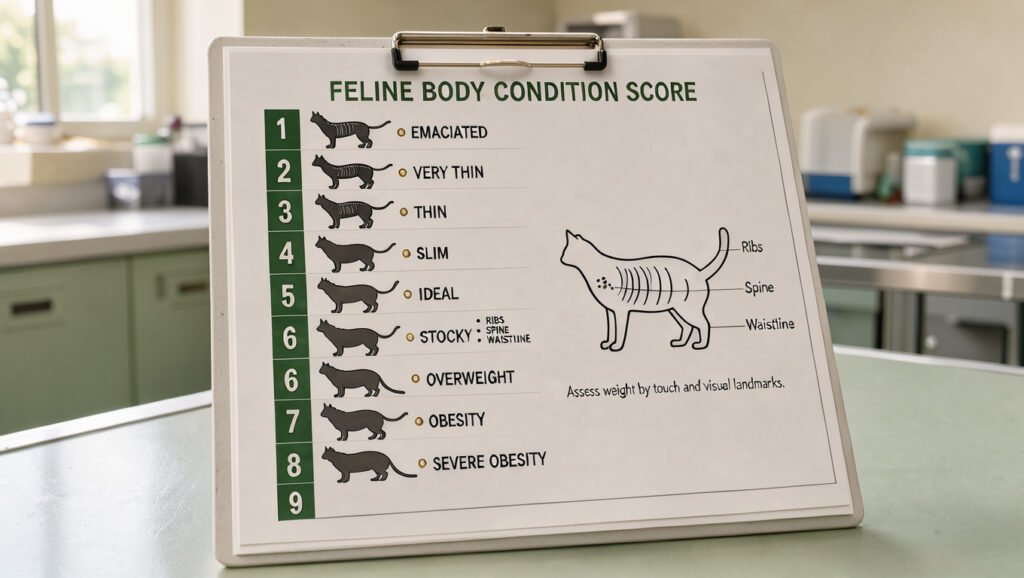
A veterinary body condition chart can guide a visual check, then you can consider your cat’s frame and health. The WSAVA Global Nutrition Committee offers cat body condition charts and muscle condition tools for veterinary teams. Muscle condition matters because a cat can lose muscle even when fat hides the change.
A cat weight chart in kilograms can help compare recorded weights over time, but it cannot set one ideal weight for every cat. Charts may group cats by age, breed, or sex, while individual cats still vary in frame. Your veterinarian can compare the chart with your cat’s shape and health history.
There is no single healthy body fat percentage that works as an at-home pass-or-fail measure. BCS is a practical rating, not a body-fat percentage reading. A number from a home scale or app cannot replace that hands-on view, especially when your cat’s frame differs from the chart’s example.
If you are deciding, “is my cat the right weight,” use the score to describe what you see. Do not treat it as a diet prescription, because illness and muscle loss can affect the right next step. Use a score to describe what you see, not to set a diet without veterinary advice.
What Counts as a Healthy Weight by Breed and Sex?
Many adult domestic shorthairs fall near 8-10 pounds, but that broad range is not a target for every cat. Your cat’s ideal weight by cat breed depends on body size and condition, not breed name alone.
Adult Weight Ranges Are a Starting Point
For a domestic shorthair, 8-10 pounds is about 3.6-4.5 kilograms. That range answers the common question about normal weight for a cat in kilograms, but it does not describe every healthy adult. A small-framed cat and a large-framed cat can have different needs, even when both are domestic shorthairs.
Age and health can also change how useful an adult reference is. A young cat may still be growing, while an older cat may lose muscle or gain fat. A listed weight gives you a place to begin a discussion, not a result to aim for without looking at the cat.
Breed and Sex Change the Reference
Adult Norwegian Forest cats are often roughly 8-12 pounds for females and 12-18 pounds for males. Those figures give a broad breed reference, not a promise about an individual cat’s healthy size. Sex can shift typical breed size, but it does not determine a cat’s ideal weight by itself.
That distinction also matters when you compare a female cat or a male cat with a veterinary weight chart. A female may be healthy above a smaller cat’s weight, while a male may be lean at a number that seems high. Breed, frame, muscle, and body condition all help explain the difference.
Use the Cat’s Frame to Interpret a Range
A veterinary weight chart is a guide, not a diagnosis. It can show a broad range for a breed or age group, while a veterinarian checks whether your cat’s body shape fits that range. One chart value cannot show how much muscle or fat a particular cat carries.
When the chart and your cat’s shape seem to disagree, consider the cat’s full build instead of forcing a match. A broad chest, long body, or strong muscles can change the scale number without showing excess fat. A smaller frame may need a lower weight to keep a healthy shape.
Your veterinarian can read the chart alongside your cat’s frame, condition, and health history. Bring old weight records if you have them; a steady trend can add useful context. Choose a reference for the cat’s actual breed and frame rather than treating one chart value as a goal.
What a 7-Kilogram Cat’s Shape Can Reveal
Imagine an adult cat who weighs 7 kilograms but still has ribs you can feel and a visible waist. That 7-kilogram reading, about 15.4 pounds, does not by itself show whether the cat needs to lose weight.
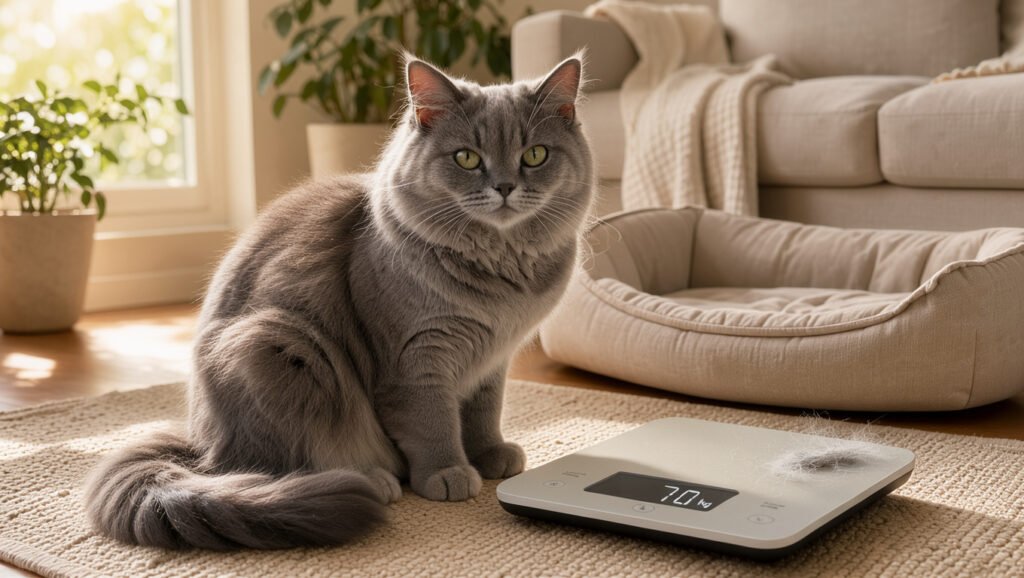
In this hypothetical example, the cat’s frame and condition add information that the scale cannot provide. A large-framed cat may carry that weight differently from a small-framed cat. The same number can describe two cats with different shapes, muscle, and health needs.
There is no separate answer hidden in the unit. Pounds and kilograms describe the same weight, so converting 7 kilograms to pounds does not reveal whether that individual cat is at a healthy weight. A number can help track change, but it cannot decide whether that change is helpful or harmful.
A weight loss plan for a cat should start with a clear goal based on the cat’s condition. A veterinarian can assess body shape, health, and history before deciding whether weight loss is right. The same review can help rule out a health problem that needs care rather than a change in food.
This example does not diagnose the cat or set a goal for another cat. It shows why you should bring the full picture to an appointment, including changes you have noticed at home. If you are unsure how to use pet-health information, read the pet care information disclaimer before making a health decision. Do not start a weight-loss plan until you have checked body condition and discussed the goal with a veterinarian.
What Can Make a Cat Look Underweight?
A cat may be underweight when bones become prominent, muscle seems to disappear, or weight keeps falling. A persistent change in shape or weight deserves a veterinary exam, even when your cat still eats well. A thin appearance alone does not explain the cause.
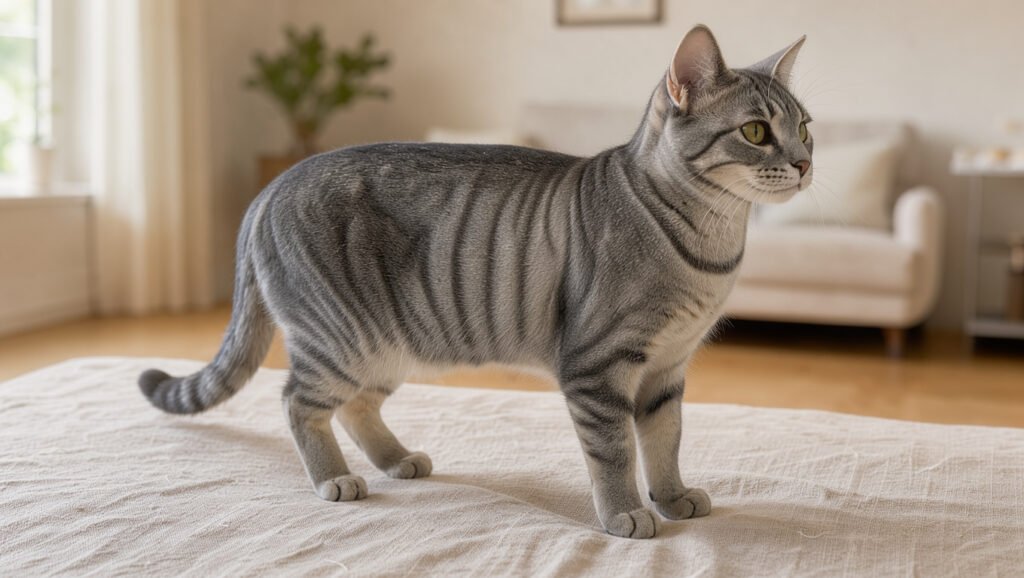
- Prominent bones: A sharply visible spine or hips can signal that your cat has lost body tissue.
- Sharp ribs: Ribs that feel sharp during a gentle rib and waist assessment can point to too little fat cover.
- Muscle loss: The shoulders, back, or hind legs may look less full as muscle fades.
- Continuing weight change: Repeated measurements that keep dropping deserve attention, even if each change seems small.
A healthy body fat percentage estimate cannot identify why a cat is thin. Hyperthyroidism and diabetes mellitus can lead to weight loss despite a good or increased appetite. Parasites and digestive problems can also affect a cat’s weight and appetite.
Those conditions have different signs and need different care, so a home estimate cannot sort them out. Your veterinarian may review your cat’s history, examine them, and decide whether testing is needed. Do not assume that eating well rules out illness.
A sudden change in shape is important, especially when it continues over time. Keep notes on appetite and weight changes to share at the exam. Arrange a veterinary visit promptly if your cat is losing weight while eating normally or more than usual.
How Extra Weight Affects a Cat’s Health
Extra body weight can affect a cat’s mobility and raise the risk of important health problems. Excess weight is associated with a higher risk of diabetes mellitus and osteoarthritis. These concerns are about health and daily comfort, not appearance alone.
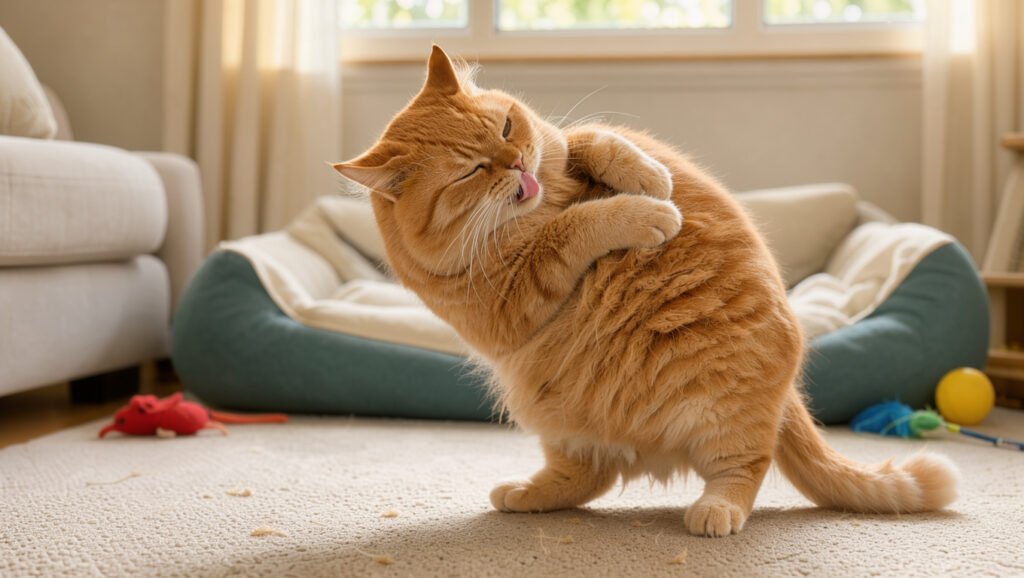
More body mass can make jumping, climbing, and moving through the home harder. A cat may also struggle to reach parts of the coat while grooming. Less movement can then make it harder to keep daily activity steady.
The dvm360 overview of body and muscle condition scoring explains why teams assess fat and muscle as separate parts of a cat’s health. A large-looking body does not prove that a cat has excess fat. Frame size and loose abdominal skin can affect appearance, so body condition matters more than a glance.
If your cat has become less active, trouble with grooming may be easy to miss at first. Watch for changes in how they move around the home or care for their coat. A health visit can help identify what is behind a new limit and what support might help.
Weight concerns can be easier to address before daily tasks become difficult. You can find broader pet health guides for common wellness questions, but a veterinarian should assess your cat’s own condition. Ask your veterinarian to assess body condition if movement or grooming has become harder.
What a Safe Cat Weight Change Plan Looks Like
A safe cat weight change plan is gradual and tailored to the reason your cat needs to change weight. Your veterinarian sets the goal after checking body condition and health.
Weight Loss Needs a Veterinary Target
A commonly used supervised weight-loss pace is about 0.5-2% of starting body weight per week. Your veterinarian can choose a target and monitor progress, then adjust the plan as needed. The right pace depends on your cat’s health and response to the plan.
The American Animal Hospital Association advises veterinary guidance before weight loss and describes a supervised pace of 1%-2% per week. Its feline weight-loss guidance warns that rapid loss can cause hepatic lipidosis, a serious liver condition. Crash diets and withholding food can put cats at risk.
A measured plan can include food portions, treats, and follow-up checks. Do not assume that a cat should eat much less just because a chart suggests a lower goal. You can explore other cat care and nutrition guides, while keeping your veterinarian involved in choices for your cat.
Weight Gain Starts With the Cause
A skinny cat’s weight-gain plan depends on why the cat is thin. If an illness is driving weight loss, treating that illness may come before increasing food. More food alone may not solve the problem and could delay care.
Your veterinarian can help decide whether food, treatment, or both should come first. If your cat’s appetite has changed, share when it began and how much your cat eats. Those details can help guide the next step without guessing at a home plan.
Change food and portions only with a clear goal and a way to check the result. Rapid weight shifts can harm cats, even when the change seems helpful at first. Never make a cat fast or sharply restrict food to speed up a weight change.
How to Estimate Calories for an Indoor Cat
An indoor cat’s calorie target starts with an estimate, then changes according to body condition and progress. A formula gives you a starting point, not a feeding order for every cat. Your veterinarian can help decide whether the estimate suits your cat.
Calculate a Starting Energy Estimate
Resting energy requirement (RER) estimates the calories a cat needs at rest. A common formula is 70 × body weight in kilograms^0.75 kcal per day. Maintenance energy requirement (MER) estimates calories for daily needs, including activity.
For a neutered adult cat, a typical starting MER estimate is about 1.2-1.4 times RER. Age, activity, health, and body condition can change the useful amount. A growing kitten, an active adult, and a cat with an illness may need different plans.
Indoor life alone does not set an individual cat’s caloric needs. Two indoor cats of similar size can respond differently to the same daily amount. Treat the calculation as a starting estimate and follow your cat’s weight and condition over time.
Turn the Estimate Into Measured Meals
Once your veterinarian approves a target, use the food label and a consistent routine to serve it. Small measuring errors can add up when you feed several times each day.

- Check the calories per serving on the food label.
- Measure each portion with a suitable measuring tool.
- Count treats in the daily total, not as extra food.
- Review your cat’s progress with the veterinarian.
Keep the daily amount steady enough to see how your cat responds, unless your veterinarian changes the target. Write down treats and meals if several people feed the cat. This record can reveal small extras that are hard to remember later.
A food label may give calories by can, cup, or other serving size, so match your measure to its units. Avoid switching between estimates and unmeasured scoops. Confirm a calorie target with your veterinarian before reducing your cat’s portions.
How to Track Changes and Know When to Call the Vet
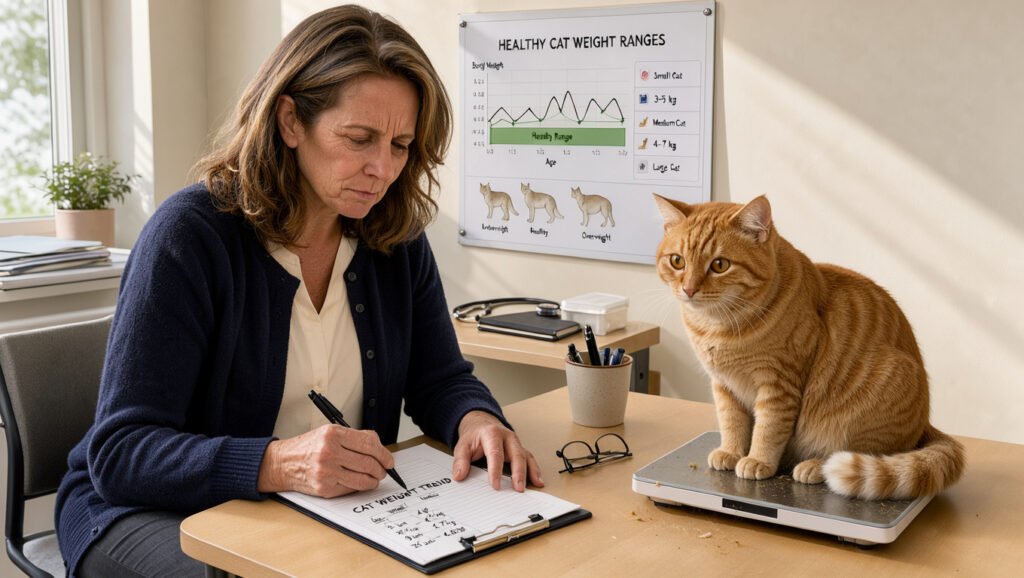
A weight trend is more useful than one reading, so record each measurement in the same way. Repeated weights and body condition checks give more context than a single age-based number. A written record can help you spot a slow change.
Why Kitten Charts Follow Growth Curves
Kittens grow along individual curves, so an age-based chart should track a kitten’s pattern rather than assign one universal kilogram target. A kitten’s place on the chart matters less than whether growth follows a healthy path over time. Ask your veterinarian to review the curve during routine visits.
A chart can help you notice when a kitten’s growth slows or shifts, but it cannot explain why. Food intake, health, and development all affect growth. A single weight that differs from a chart does not diagnose a problem.
How Adult Weight Trends Guide Checkups
Adult and senior cats are better assessed through repeated weights and condition checks than through one age-based number. Healthy adult cats generally need a veterinary checkup at least once a year. Senior cats often need checkups about every six months.
During an active weight-change plan, weigh your cat on the same scale and under similar conditions once a week.
Record the date and weight, along with changes you notice in appetite or activity. Similar conditions make one measurement easier to compare with the next. Bring the record to checkups so your veterinarian can see the pattern.
An unexplained rise can matter as much as an unexplained drop. Contact your veterinarian if repeated measurements move up or down without a clear reason, even when your cat seems comfortable. Call your veterinarian when repeated measurements show an unexplained change, even if your cat still seems well.
Conclusion
The useful outcome is not a perfect number but a repeatable way to notice change early. Your cat’s frame and body shape matter alongside weight, because the same reading can mean different things for different cats.
Write down your cat’s current weight and what you notice about their shape. Add the date, so you can compare later measurements under similar conditions. Share your notes with a veterinarian if you are unsure or notice an unexplained change.
Bring your weight notes and body-shape observations to your veterinarian if you are uncertain about your cat’s condition.