You can spot stress signals in your dog by reading changes in the face, posture, movement, and behavior together, then responding to the situation rather than to one signal. A familiar dog who suddenly avoids a guest may need space, not another greeting. The change from your dog’s usual behavior and the setting around it matter more than one gesture.
Displacement behavior is a normal-looking action, such as sniffing or yawning, that appears out of context when a dog is tense. A dog may do these things for other reasons, so look at the whole situation.
Stress can affect sleep, play, eating, and daily routines at home. Noticing a change early can help you respond with care, whether people, noise, or a new event has unsettled your dog.
This guide explains how to notice possible signals, read their context, offer support, build comfort over time, and seek help when needed.
Start by noticing how your dog behaves when relaxed in familiar surroundings.
What Are the Signs of Stress in Dogs?
A dog may show stress through subtle facial changes before the behavior becomes obvious. Look for a cluster of changes and compare them with your dog’s usual behavior, rather than treating one gesture as proof.
Dogs communicate through the whole body, and a tail wag alone does not prove happiness. A 2026 study of 64 dogs found that behaviors varied across situations and did not track expected stress levels in a simple, steady way.
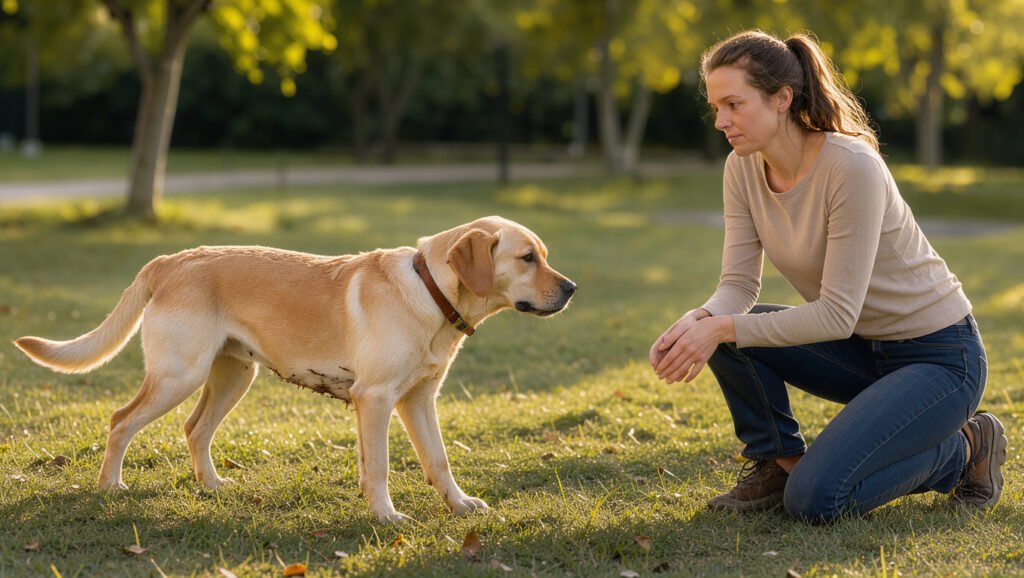
Read each signal in context, and consider what changed just before it appeared.
Facial and Displacement Signals
Lip licking can be a sign of stress in dogs when food is not involved, though the situation still matters. A dog may lick its lips after a meal, too, so one lick cannot tell you what it feels.
- Lip licking: A quick tongue flick with no food nearby may appear when a person leans close or a dog faces an unfamiliar event.
- Yawning: A yawn can happen when your dog is tired. A yawn during an unfamiliar greeting may also be displacement behavior.
- Whale eye or widened eyes: You may see more of the eye whites when your dog turns its head but keeps watching something.
- Ears pinned back: Ears held close to the head can suggest discomfort, though ear shape and normal posture differ among dogs.
A study of 53 dogs found that nose licking, lip wiping, and blinking were linked with non-aggressive behavior during neutral and mildly threatening approaches. The dogs were meeting an unfamiliar person, which is one reason the setting matters.
Looking away, sniffing the ground, or scratching without an itch may also be possible cues. Shedding, appetite changes, and digestive changes can occur alongside stress, but they can have other causes.
Stress Signals in a Dog’s Legs and Posture
Signs of stress in a dog’s legs can include a lifted paw, crouching, shifting weight away from a trigger, or moving away. A dog may also lift a paw for reasons unrelated to tension.
- Paw lifting: A dog may briefly raise one paw as a person approaches or an uncomfortable event unfolds.
- Low or tucked tail: A low tail with a fast wag can signal fear or uncertainty, rather than happiness.
- Low, stiff, or crouched posture: A tense body held close to the ground can suggest discomfort or unease.
- Weight shifted away or moving away: A dog may lean back, step aside, or leave when it wants more space.
A dog rolling onto its back may be showing that it is not a threat, rather than asking for a belly rub. Check the rest of the dog’s posture before reaching down.
Movement, Vocal, and Physical Changes
Repeated pacing or new vocal sounds can stand out against your dog’s regular habits. A raised ridge of hair along the back, called hackles, can appear with arousal, but it does not explain the cause by itself.
- Pacing or circling: Repeated laps or tight circles may suggest that a dog cannot settle in the moment.
- Panting or drooling without an obvious physical cause: These changes deserve attention when the dog is not hot or active.
- Whining or barking that is unusual for the dog: A new sound, or a sharp rise in familiar sounds, may reflect discomfort or concern.
- Trembling or a whole-body shake-off after a stressful event: A shake-off may follow tension, while trembling can have other causes.
Some dogs may also move away, whine, or circle in ways that look ordinary at first. If the behavior is new, note what happened around it and whether it fades.
Treat a cluster of cues or a sudden change as a reason to pay attention, not as a diagnosis.
What Causes Stress and Anxiety in Dogs?
A sudden noise or unfamiliar visitor can trigger a short-lived stress response, while repeated or inescapable triggers can weigh on a dog’s wellbeing. Stress is a response to a stressor; an animal may return to its baseline when the stressor ends and it can recover.
Distress can arise when a stressor continues or a dog cannot cope and recover. Watch for patterns over time, not just one difficult moment.

Situations That Trigger a Short-Term Response
Loud noises, unfamiliar places, and new people can unsettle dogs. A vet visit may involve strange smells, close handling, and other animals, all in one trip.
Changes at home or in a routine can affect a dog’s sense of predictability. A move, a new family member, or a shift in work hours may take time to adjust to.
Boredom and tension with other pets can also add strain. Pain or illness may change how a dog responds to touch, activity, or everyday events.
Being alone can be hard for some dogs, especially after a major routine change. Separation-related behavior may include pacing, barking, or distress around departures.
When Stress Becomes Ongoing Anxiety
Ongoing fear may involve separation-related, sound-related, or age-related problems. Anxiety in dogs can make normal events feel hard to manage, especially if a dog faces the same trigger often.
In 2026, a reanalysis of owner ratings for 43,517 U.S. dogs estimated moderate-to-severe fear or anxiety at 14.1%-28.2%, depending on the behavior type. The reported fear and anxiety range reflects different types measured, not a diagnosis for any one dog.
The same analysis estimated moderate-to-severe separation-related behavior in 9.3% of dogs. Estimates for moderate-to-severe aggression ranged from 1.2%-30.4%, depending on the type measured.
These figures describe owner-rated survey results, not universal rates. Results depend on how behaviors are grouped and which rating threshold is used; owners may also differ on what counts as a problem.
A large U.S. survey found that 91% of dogs had at least one mild, moderate, or higher rating across nine situations. Without grooming questions, that share was 84%. Those results also depend on owner ratings and the survey’s chosen threshold.
Separation, Age, and Individual Differences
Separation anxiety can involve repeated distress when a dog is alone or expects to be alone. A change in household or schedule may play a part, but the same event will not affect every dog alike.
Senior dogs may become confused or restless as they age. New pacing or disorientation deserves attention because health changes can affect behavior as well as comfort.
Stress dogs experience can vary with health, past experience, and the situation at hand. Two dogs in the same home may react differently to a sound or visitor.
Record the trigger, how long the response lasts, and how quickly your dog returns to usual behavior.
When Is a Stress Signal a Warning?
A dog that suddenly freezes or growls is communicating that something about the situation feels unsafe or uncomfortable. Do not punish or suppress freezing, stiffening, staring, growling, showing teeth, snapping, or biting.
These behaviors can signal fear, guarding, feeling cornered, discomfort, or pain. A dog’s whole body and the situation around it help you understand what may be happening.
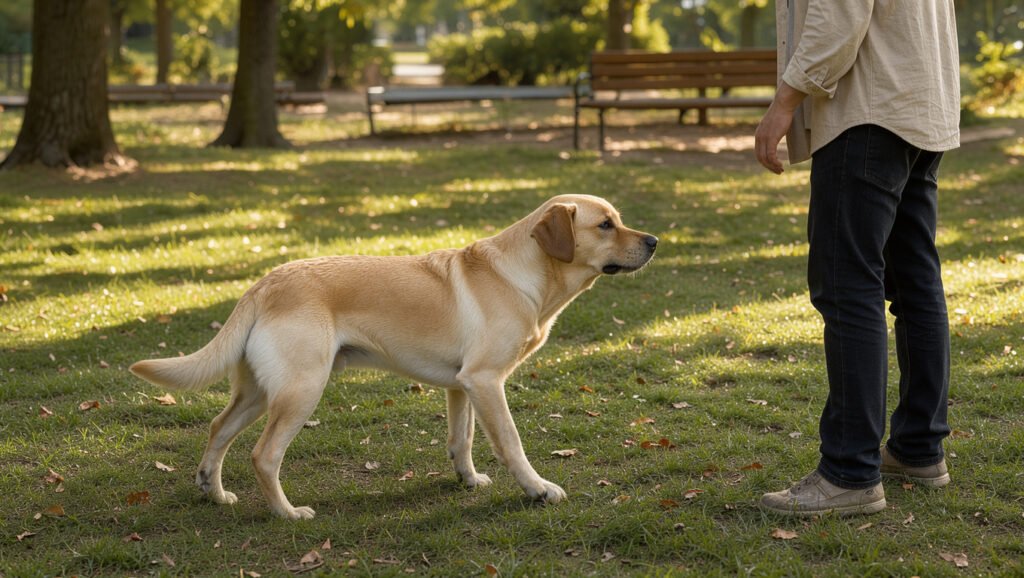
A dog may first look away or turn its head as a person approaches. In a study of 53 dogs, head turning during a mildly threatening approach by an unfamiliar person was associated with non-aggressive behavior.
Another dog may move away, then freeze if someone follows. A stiff stare or growl could follow, but dogs do not all follow the same path.
Freezing can mean a dog feels scared, is guarding food or a toy, or feels cornered. If people ignore that signal, the dog may growl, snap, or bite.
A growl gives you useful information; it does not prove that a dog is inherently aggressive. Suppressing a warning can make it harder to notice when the dog needs space.
Look at the face, body, and surroundings together. A dog showing the whites of its eyes may be watching while turning its head away; the sign alone cannot explain why.
Rolling onto the back can mean a dog is trying to show it is not a threat. The dog may not want its belly touched, so the posture is not an invitation by itself.
For more examples of how posture and setting work together, read this guide to dog body language.
If a dog freezes or growls, stop moving closer and leave the dog a clear route away.
How to Calm a Stressed Dog
If your dog is overwhelmed, first make the situation easier by reducing exposure to the trigger. Choose steps that lower pressure and protect the dog’s ability to move away.
Use the least restraint and the fewest people needed to keep a highly fearful, anxious, or stressed pet safe. A veterinary handling guide also recommends offering choice and inviting voluntary movement when possible.

Try these options in the moment, choosing only what your dog can handle comfortably:
- Create distance from the trigger by moving away or helping other people give the dog room.
- Offer a quiet retreat with familiar bedding, where the dog can rest without being followed.
- Keep your voice low and your movements calm, especially when the dog is watching you closely.
- Invite the dog to move with a treat or toy, but only if the dog feels comfortable taking it.
- Pause handling and allow time to recover before trying another interaction.
Food or a familiar cue may help some dogs, but it can add pressure for others. If your dog seems more tense, stop asking and give the dog more space.
During a vet visit, a comfortable place such as the floor, a lap, or a bench may feel easier than an exam table. The Fear Free handling guide advises a brief break or a pause when a highly stressed pet needs time to de-escalate.
Choice matters during handling, too. Let the dog move voluntarily when you can, rather than placing the dog in a position by force.
Predictable routines can help make daily life easier to manage. Enrichment, exercise suited to your dog, and short positive activities for puppies may also support wellbeing.
These steps do not promise a quick fix. A dog may need more time or a different plan, especially when distress keeps returning.
If your dog will not take food or cannot disengage, stop asking for cues and prioritize distance.
Training and Routines That Build Coping Skills
Coping skills grow through small, predictable experiences that the dog can handle comfortably. Training should progress at your dog’s pace, with rewards for relaxed behavior rather than force.
Choose a quiet time and a simple plan. Short, positive practice can give your dog a chance to learn without adding pressure.

Teach a Calm Settle on a Mat
Settle training teaches a dog to rest on a mat through positive reinforcement. Start in a place without distractions, after your dog has had a chance to play, exercise, and go outside.
Place the mat nearby and let your dog choose to lie down. Quietly reward relaxed lying with small treats, without calling the dog over or asking for a position.
At first, give treats close together. As your dog relaxes, slowly lengthen the time between treats and reward softer, looser postures.
Add a settle cue only as your dog begins to relax. A cue given while the dog is tense or actively seeking attention may not help the dog understand what you want.
Keep sessions short enough that your dog stays at ease. If the dog gets up, let the dog move and try again another time.
Make Handling Practice Predictable
Pair a brief, gentle touch with a treat, then pause. Start with a body area your dog already accepts, and keep each touch easy to end.
Increase the body area, touch type, or length only while your dog remains calm. For example, you might touch a shoulder before trying a paw or ear.
Do not force a dog to stay still during handling practice. Tensing, moving away, snarling, or growling means you should stop progressing and seek professional guidance.
Use the same simple steps each time so the dog can predict what comes next. End a session before the dog feels trapped or needs to struggle to leave.
Build Comfort With Alone Time
Build alone time through gradual desensitization, a process that makes a trigger less concerning through careful, small steps. Start with a very brief absence, such as stepping out of the room, then return while your dog remains comfortable.
Increase the time away in small amounts only while your dog stays relaxed. If your dog shows distress, shorten the next absence instead of expecting the dog to push through it.
The ASPCA recommends gradual practice for separation-related distress, with alone time increased only as the dog can handle it. Each dog’s pace may differ, so keep track of what your dog can manage.
Consistent meal, walk, play, rest, and training routines can make each day more predictable. Puppies also benefit from short, positive introductions to new people, places, and handling.
Harsh punishment can add fear and make learning harder. Quick-fix promises are a poor fit for a plan built on steady, reward-based practice.
Increase time or touch only while your dog stays relaxed, and return to an easier step if tension appears.
When to Get Veterinary or Behavior Support
A sudden change in behavior deserves a health check, since discomfort can affect how a dog responds to touch and handling. Contact a veterinarian for sudden changes, possible pain, recurring distress, or new appetite or digestive problems.
Pain and emotional stress can overlap, so a health check can help guide the next steps. A 2024 U.S. survey asked owners about possible pain-related changes, including snapping when petted and leaning away from head touches.
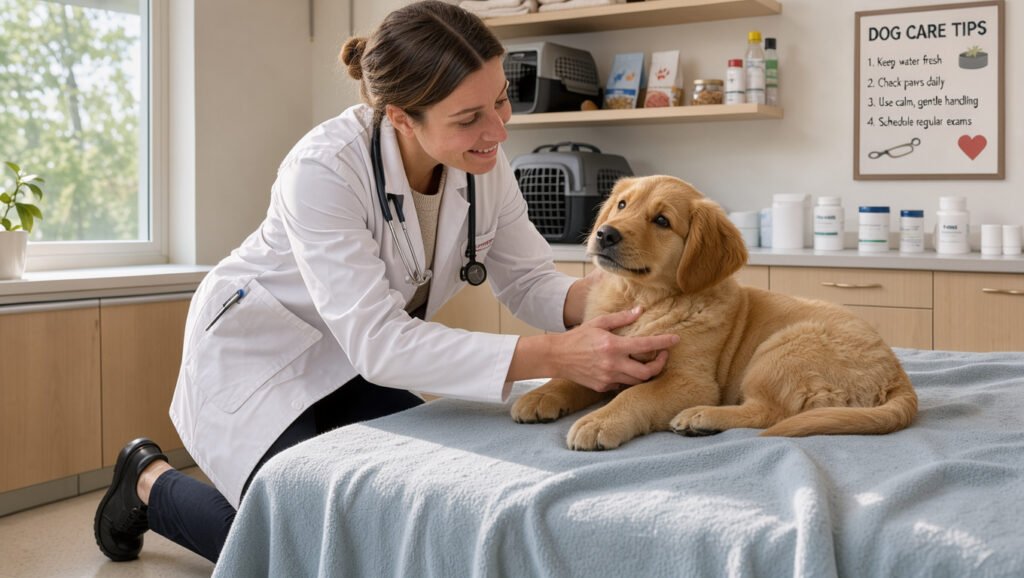
When behavior changes suddenly, ask your veterinarian to check for pain or illness before choosing a behavior plan.
Sudden Changes and Possible Pain
A dog may walk differently or try to squirm away during an exam when something hurts. Pain can add to fear, anxiety, and stress, so veterinary care should address pain when possible.
Call your veterinarian if distress keeps returning or your dog’s appetite or digestion changes. New pacing or disorientation in a senior dog also deserves a health check.
Bring a short record of the trigger, behavior, duration, recovery, and any related health changes. A written note can help you describe what happened without relying on memory during the visit.
For broader pet health guidance, use information as a starting point, not a replacement for a veterinarian’s advice. If you need help with an urgent health problem, contact a veterinary clinic promptly.
Choosing Professional Help and Planning for Safety
Ask about a referral to a qualified reward-based trainer or veterinary behavior professional when fear or aggression affects daily life or safety. A professional can help shape a plan around your dog’s needs and your home.
Tell the clinic what tends to upset your dog before the visit. Calling ahead gives the team a chance to discuss lower-stress handling and other needs before you arrive.
Medication decisions belong with your veterinarian, who can consider your dog’s health and the planned visit. A past visit that went smoothly does not show which choice is safe for the next one.
Read the pet health information disclaimer for a reminder that online information cannot replace care from a licensed veterinarian. For an emergency, seek veterinary help right away.
Call the clinic before giving any sedative or supplement, even if a previous visit went smoothly.
Conclusion
Your dog’s signals are most useful when you read them as part of the whole situation. The same action can mean different things depending on what happened, where your dog is, and what feels normal to that dog.
A calm response can give your dog room to feel safe and show you what helps. You do not need to guess from one signal; watch for changes and notice whether your dog recovers.
Make one simple note after a stressful event: write down the trigger, the earliest change you noticed, and the recovery time. If the pattern recurs, share the record with your veterinarian.
Keep a brief behavior record and bring it to your veterinarian if the pattern continues.