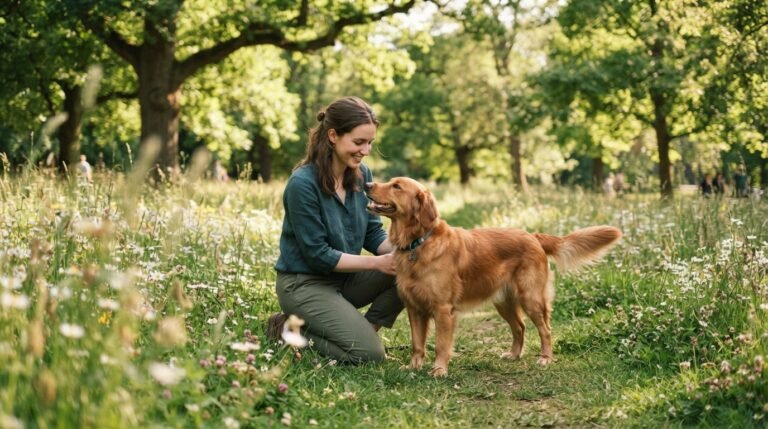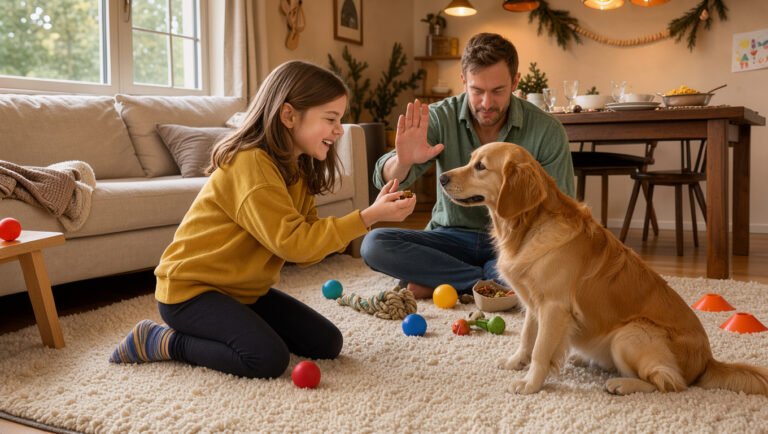
Our dogs’ eyes can offer clues about how they feel, what they notice, and whether an eye may need veterinary care, but no single look tells the whole story. A dog’s gaze can stay with us long after we wonder what it meant. We can read it more safely by looking at the whole body, the setting, and any change from the dog’s usual behavior. This guide helps us separate behavior cues from signs that call for veterinary attention.
Key Takeaways
- Eye signals are clues, not a diagnosis or a complete account of a dog’s mood.
- Posture, ears, mouth, tail, movement, and the setting help us read a gaze.
- A sudden change in eye appearance or comfort deserves attention.
- Pupils can change with light and other conditions, so size alone does not name an emotion.
- Squinting, pawing, or keeping an eye closed can signal pain.
- New trouble with steps or familiar objects may point to a vision change.
We get the clearest read when we compare a dog’s eyes with their usual behavior and the rest of their body.
What Your Dog’s Eyes Are Telling You
A relaxed gaze can suggest comfort, while a fixed stare or a sudden change in the eyes deserves a closer look at the surrounding signals. We can use these ten cues as starting points, not firm answers about what a dog feels.
In each pair, context matters. The same eye signal can mean different things when posture, activity, or surroundings change. The sclera is the white outer part of the eye; the iris is the colored part. The pupil is the opening inside the iris, and its size changes with light and other conditions.
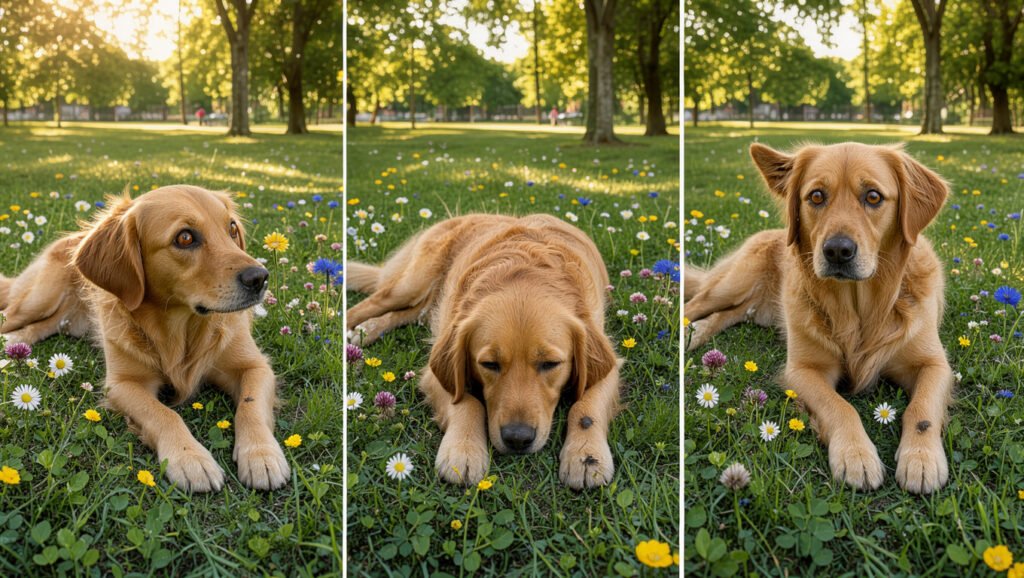
- Soft eyes and slow blinking: Relaxed lids and an easy face may accompany comfort. A slow blink can occur during calm interaction, but does not carry one fixed message.
- Whale eye and an averted gaze: Whale eye is a crescent of visible sclera beside the iris, not a diagnosis. Looking away may reflect avoidance, distraction, or another response to the moment.
- A hard stare and sustained eye contact: A rigid, fixed gaze may call for caution, while a brief glance can be part of a comfortable exchange. The dog’s body and focus help us tell them apart.
- Wide eyes and pupil dilation: Wide-looking eyes or larger pupils may reflect low light, arousal, or other conditions. We need the setting and any other changes to interpret them.
- Puppy-dog eyes and squinting: Raised inner brows can make a dog look especially expressive. Squinting may reflect a momentary expression or discomfort, so we should note whether it persists.
Treat each eye signal as one clue to check against what your dog is doing and what has changed.
These patterns give us a shared vocabulary without turning a glance into a verdict. A change from the dog’s usual expression can matter more than a single familiar look.
We can also note what happened just before the look, such as a new sound, a meal, or someone entering the room. Treat each eye signal as one clue to check against what your dog is doing and what has changed.
Read the Eyes Alongside the Rest of the Body
A dog who looks away while keeping a loose body is giving us a different picture from one who turns away with a tense posture. To read canine body language, we should check the whole scene, not just the direction of the eyes.
Start with posture, ears, mouth, tail, and movement. Notice what happened just before the gaze shifted, including a person approaching, a noise, or a hand reaching toward the dog. One eye cue cannot explain a dog’s response without those details.
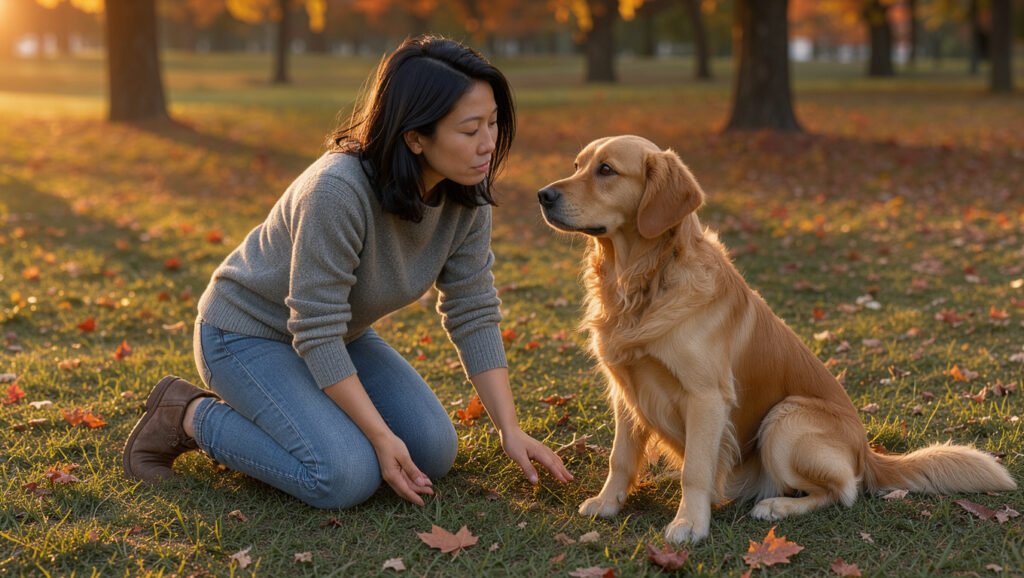
How dogs see humans involves more than vision: dogs combine visual details with scent, sound, and learned routines. They may notice our gestures or the way we move, then use familiar patterns to anticipate what comes next. Our faces are only one part of that exchange.
Dogs may tilt their heads to locate a sound or adjust their view, but a head tilt alone does not prove confusion or affection. It also does not show that a dog understands every word we say. A repeated or new tilt paired with other changes is different from a brief tilt after a sound.
Our guide to dog body language can help us look at signals as a group. A short research report on how breed ancestry may relate to eye contact also describes differences in human-directed gaze.
Before naming an emotion, check whether the dog’s whole body and the situation support that reading. A quick note about the trigger can help us spot a pattern across several days.
Soft Eyes and Slow Blinks Often Signal Ease
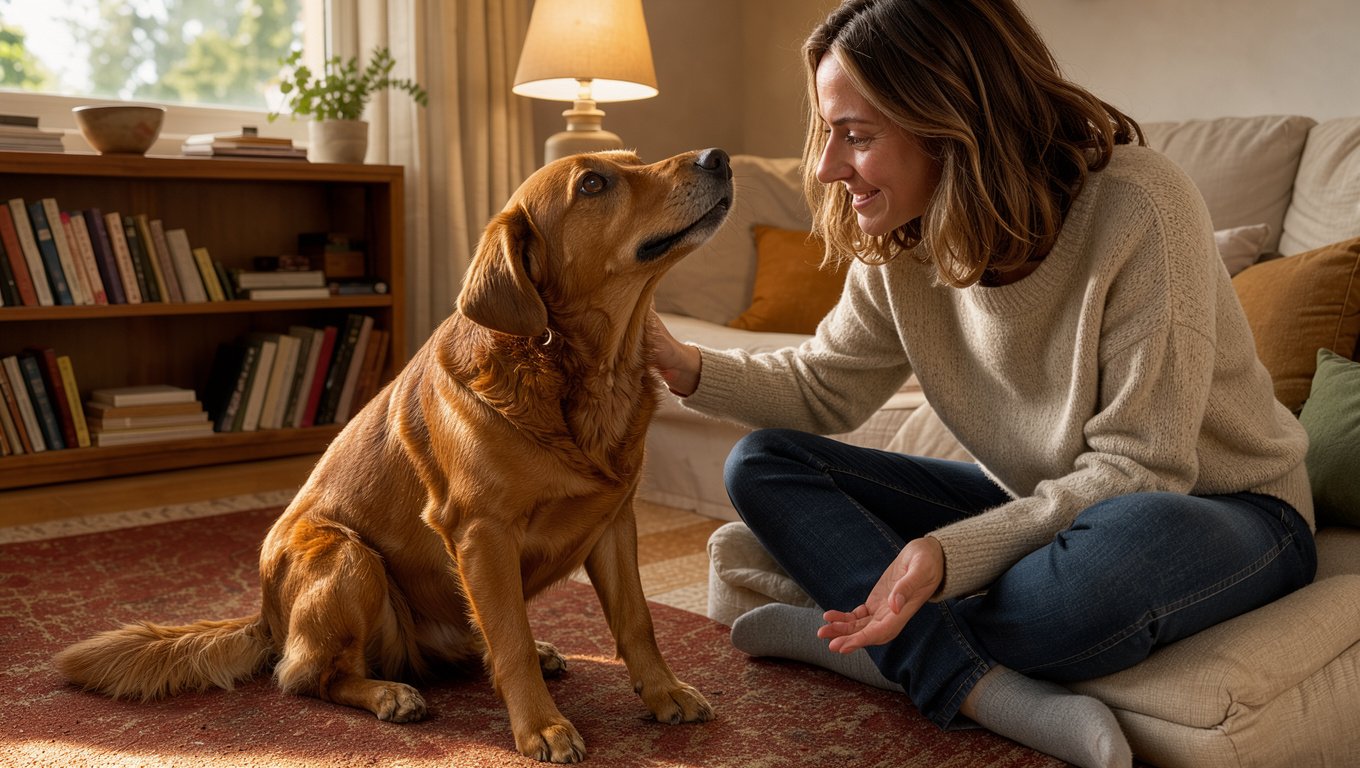
When a dog’s eyelids look relaxed and the rest of the face is loose, we may be seeing a dog who feels at ease. The cluster matters: calm eyes alongside a loose body offer more context than relaxed lids alone.
A dog’s visible eye includes the sclera, iris, and pupil. Relaxed eyelids and facial muscles can make the eyes look softer without changing the eye’s anatomy. Soft eyes are a possible sign of comfort, not proof of trust or affection.
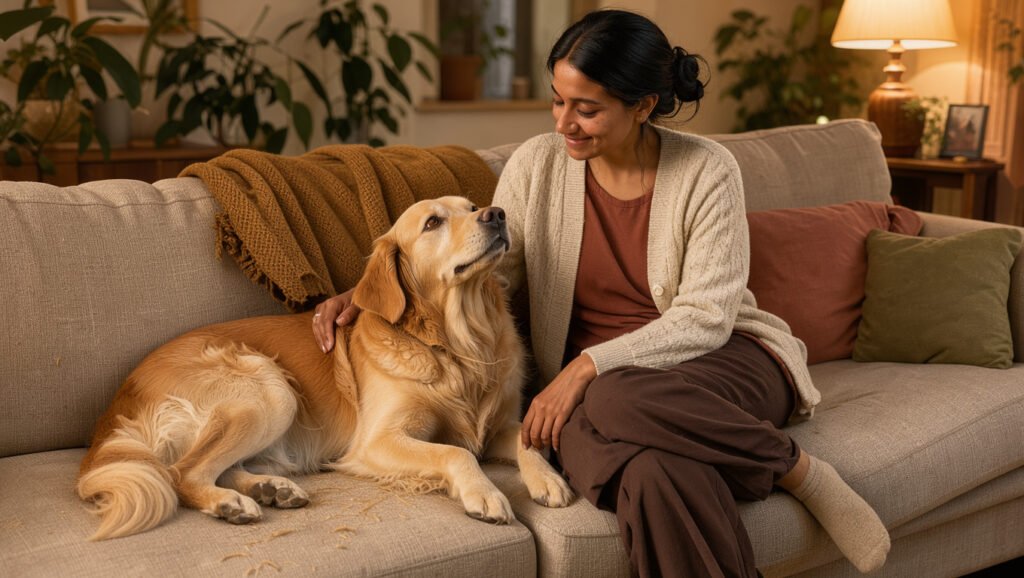
A slow blink may happen during a quiet, relaxed interaction. We should not treat it as a guaranteed canine message, since one blink cannot tell us exactly what a dog intends.
Our response can keep the moment easy. If a dog settles near us, we can stay still and let them choose whether to come closer. Leaning over them or holding prolonged eye contact may change a calm moment into pressure.
That choice matters when a dog is new to our home or still learning our routines. We can sit at an angle, keep our hands to ourselves, and allow the dog to approach on their own terms.
Let a comfortable dog choose whether to stay close or move away. Their choice gives us clearer information than asking them to hold a pose.
Whale Eye and Averted Gaze Can Signal Discomfort
A dog may turn their head aside yet keep watching us, leaving a crescent of white visible at the corner of the eye. This is whale eye: a crescent of visible white around the iris that can appear when a dog turns away but keeps looking toward something.
The white is the sclera. A dog might show it while watching a person, an object, or a valued item from the side. Whale eye can signal discomfort, but it does not identify a cause by itself.
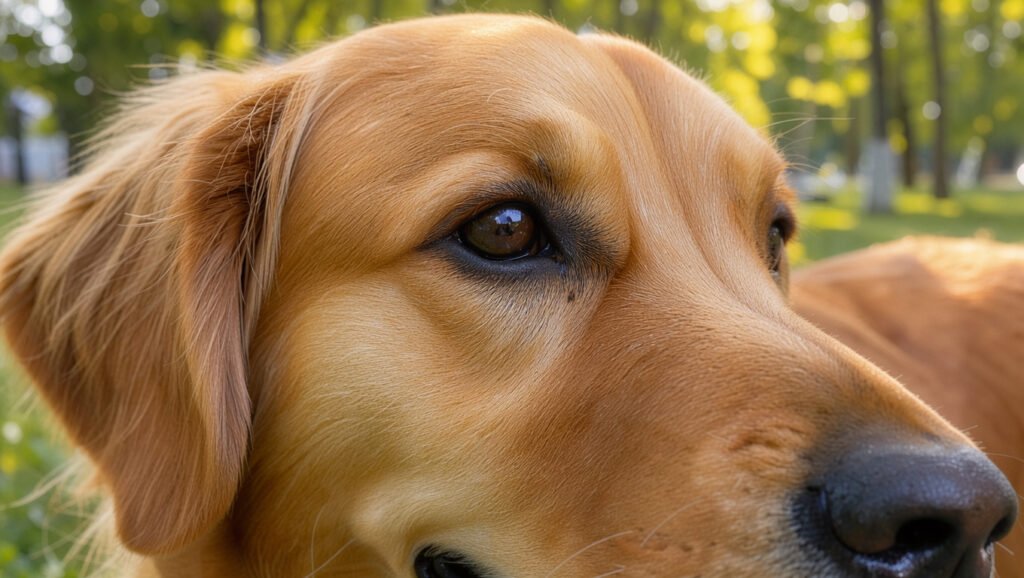
Look for nearby clues instead of focusing on the eye alone:
- A tense or still body
- Ears held back against the head
- Lip licking when nothing is on the dog’s lips
- An attempt to move away or hide
Why does my dog avoid eye contact? Uncertainty, a wish to avoid confrontation, distraction, and discomfort can all play a part. Averted eyes do not prove that a dog feels guilty or knows they have done something wrong.
If a dog turns away while we reach toward them, we can pause, create space, and stop reaching. This response gives the dog a chance to settle without making the interaction more intense.
Our dog body language guide offers more ways to read signals around a tense interaction. The setting matters too: a dog may avert their gaze because a smell or sound has caught their attention.
If the dog is trying to create distance, give them room instead of asking for more eye contact. Keep children and other pets from closing in while the dog moves away.
Hard Stares Need Space and Careful Attention
A fixed gaze paired with a stiff body is a reason to avoid moving closer or reaching for what the dog is watching. A hard stare is rigid and sustained, unlike a brief glance during a relaxed exchange.
Dogs use gaze in social situations, and its meaning depends on posture, distance, and focus. A hard stare may signal tension or a challenge, especially around food, toys, resting places, or another valued resource. Direct eye contact does not always build trust.
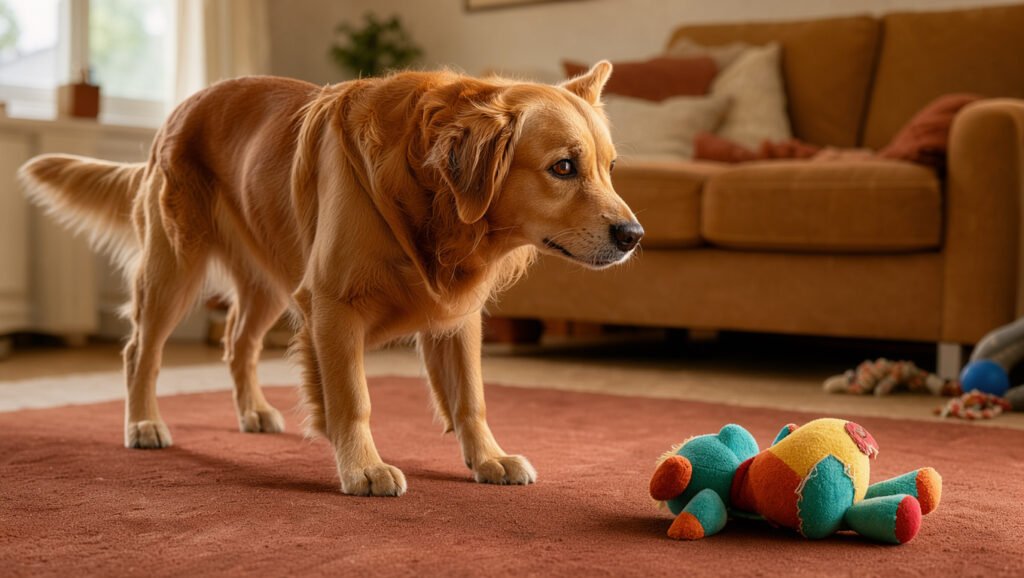
Dog eye contact meaning can shift with the relationship and the moment. A familiar dog may look toward a trusted person for a cue or connection. That brief, loose glance differs from a fixed stare over a food bowl.
In a study of 20 owner-dog pairs, owners’ direct gazes were linked with longer whining or whimpering and more looks at their faces. Pawing and approaching did not differ between the study’s gaze conditions. The report, “Owners’ direct gazes increase dogs’ attention-getting behaviors,” shows why gaze should be read in context.
Eye contact and trust are not a simple rule. A dog can seek a familiar person’s gaze in one situation and find prolonged eye contact uncomfortable in another.
In a tense moment, turn slightly aside and give the dog a clear path to move away. Avoid blocking the route or taking the object the dog is watching.
Wide Eyes and Dilated Pupils Need Context
Large pupils in a dim room may be a normal response to low light, while the same look in bright surroundings deserves more context. Dog pupil dilation is a clue, since light is only one factor that can change pupil size.
The pupil is the opening within the iris, and it gets larger in dim conditions. Fear, excitement, pain, and some medications can also affect its size. A wide pupil does not prove that a dog is afraid or excited.
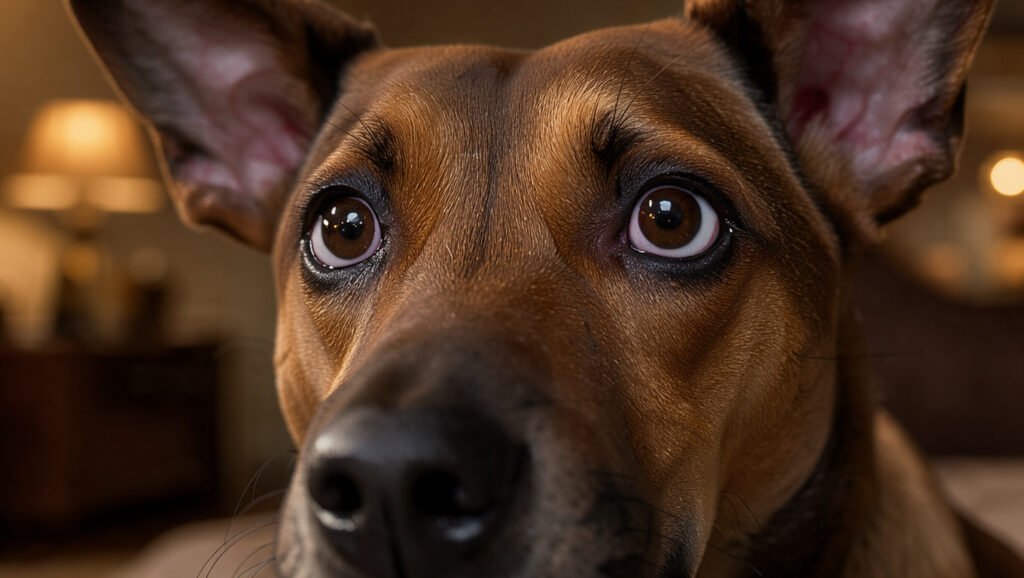
Compare the dog’s eyes with the lighting and what was happening. A larger pupil in a dark hallway may fit the setting; a sudden change in a familiar, bright room deserves closer attention.
Check both pupils and notice whether they look alike. If one pupil stays a different size, or a new change comes with disorientation or eye pain, contact a veterinarian promptly.
A medication change is also useful context to share with the veterinary team. Do not stop or change a prescribed medicine based on pupil size alone.
Compare both pupils and the lighting, then contact a veterinarian if a new change persists or comes with other symptoms. Note when you first saw it and whether the room’s light had changed.
Puppy-Dog Eyes Can Prompt Human Attention
When a dog raises the inner brows, the eyes can look larger and especially expressive to us. The raised brow can catch our attention, but its appearance alone does not tell us what the dog feels.
Dogs can move their faces during interactions with people. A dog may raise the inner brows while seeking attention, food, or comfort, but the expression cannot identify which request they have in mind. We need the dog’s actions and the situation to read the look.
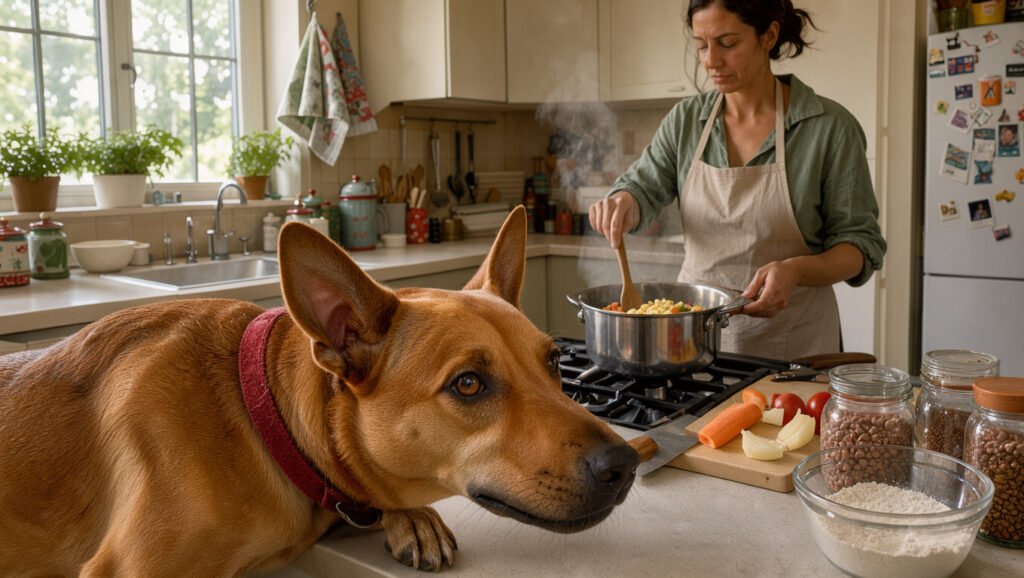
A dog looking toward a treat jar may be waiting for food. The same eyes near a closed door could appear while the dog wants to go outside. If we respond to every expressive look with a treat, we may miss the actual need.
People often call this look “guilty,” especially after finding a chewed shoe or tipped-over trash. The face does not prove that the dog understands the past event as wrongdoing. We should focus on what the dog is doing now and what happened around them.
Notice whether the dog moves toward a person, a bowl, a door, or a resting spot. That action adds useful detail without turning an expressive face into a promise or a confession.
Read the expression alongside the dog’s actions and the situation rather than assigning it a single message. A raised brow can draw us in, but our next step should fit the full scene.
Healthy Dog Eyes vs. Unhealthy Changes
A clear-looking eye that opens comfortably is reassuring, but it cannot rule out every eye problem. We can compare each eye with the dog’s usual appearance, while remembering that appearance alone cannot diagnose the cause.
A sudden difference from a dog’s normal eye appearance matters more than a single feature viewed in isolation. The cornea is the clear front surface of the eye, and the third eyelid is another visible structure in dogs.
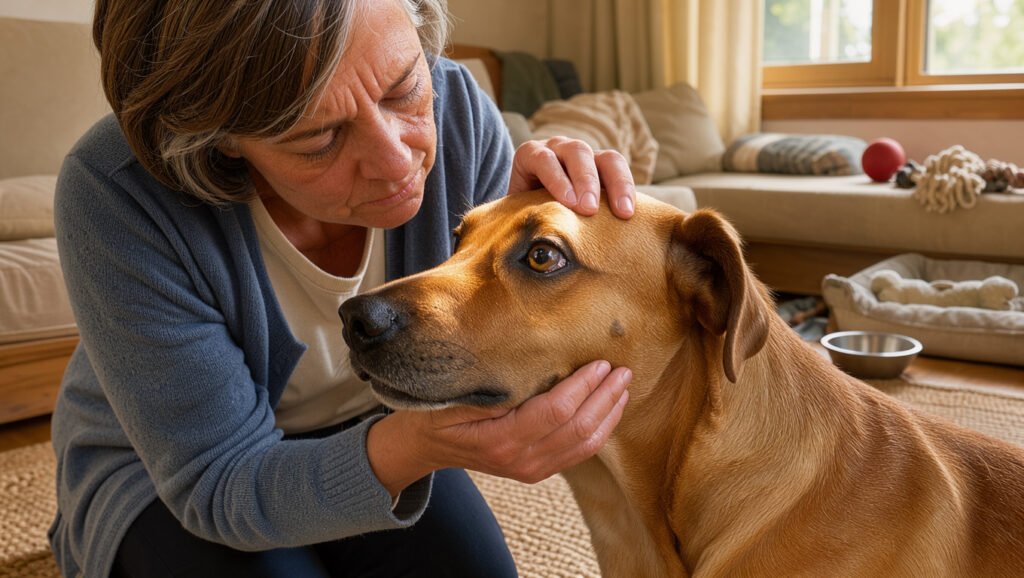
What a Clear, Comfortable Eye Usually Looks Like
An eye that opens comfortably and looks clear can be a reassuring sign. We should also notice whether the dog holds both eyes open without persistent squinting or unusual discharge.
The sclera may show when a dog turns their head, so visible white does not prove that an eye is healthy or unhealthy. A useful check looks at comfort, clarity, and change from that dog’s normal appearance.
Changes in Color, Surface, or Discharge
Redness, cloudiness, a bluish haze, yellowing, swelling, or bulging can have several causes. Green or yellow discharge also deserves veterinary attention; a visual check cannot tell us which condition is present.
Check for these changes:
- New redness, cloudiness, or a blue-gray haze
- Yellowing of the eye or nearby tissue
- Swelling or a bulging appearance
- Green or yellow discharge
A new change in one eye may be easier to spot beside the other, but both eyes can also change. If we are unsure, we can describe what looks different rather than trying to name a disease.
Our dog care guides cover other everyday health questions, and our pet health resources offer broader wellness information. Neither can replace an exam when an eye’s appearance changes.
Photograph a visible change in good light if it is safe to do so, then share the change and its timing with the veterinary team. A clear photo can help show how the eye looked at home.
Signs of Eye Pain Call for Prompt Veterinary Advice
A dog who suddenly squints, paws at one eye, or keeps it closed may be experiencing eye pain. New discomfort deserves prompt attention, especially when it affects one eye without an obvious reason.
Squinting, pawing, rubbing, tearing, and sensitivity to light can accompany eye pain. A dog may also pull away when someone reaches near the face. A painful or injured eye should be assessed by a veterinarian promptly.
Pupil changes can occur with pain, but pupil size cannot tell us what caused it. We should share any sudden change with the veterinary team rather than trying to diagnose the eye at home.
Do not use human eye drops or leftover medicine unless a veterinarian directs you to do so. The wrong product may not address the problem and could delay the care the eye needs.
A bulging eye, sudden vision change, injury, or eye held closed calls for urgent veterinary care. For a new painful eye without those signs, call the clinic promptly and describe what you see.
Our pet health guidance can support general learning, but it is not a substitute for a veterinary exam. The website’s health information disclaimer also explains that online guidance cannot replace care from a licensed veterinarian.
Call a veterinarian promptly for a painful eye, and seek urgent care for injury, bulging, or sudden vision loss. Tell the clinic when the signs began and whether they are getting worse.
Canine Vision Problems Can Change Everyday Behavior
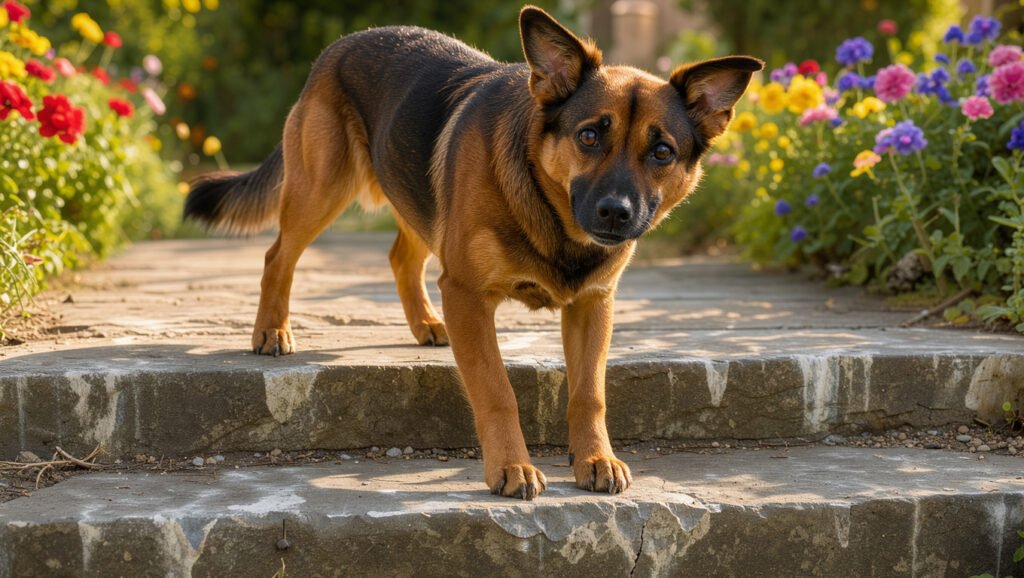
A dog who starts hesitating at steps or bumping into familiar objects may be having trouble seeing clearly. These behavior changes can be clues to canine vision problems, though other health or mobility concerns can cause similar behavior.
Misjudging a jump or step may point to dog depth perception problems, but it does not confirm vision loss. A veterinarian must examine the dog to identify the cause of a new sight-related change.
Clues That a Dog May Be Seeing Less Clearly
Some dogs hesitate in unfamiliar or dim places, misjudge steps, bump into objects, or struggle to find familiar items. We can note whether the behavior happens in one setting or across the day.
Difficulty finding a toy in its usual place may reflect a change in sight, but smell, hearing, stress, or pain may also affect the search. A pattern matters more than one missed object.
Eye Conditions That Can Affect Vision
Cataracts affect the lens, which helps focus light. Glaucoma involves increased pressure inside the eye, and retinal disease can impair sight. Each condition needs a veterinary exam for diagnosis.
Canine vision problems can have different causes, so an eye’s appearance or a dog’s behavior cannot identify the condition alone. Glaucoma can harm the optic nerve; the Merck Veterinary Manual’s guidance on acute glaucoma describes it as an eye emergency.
For new dog eye vision problems, note when the behavior began and whether one or both eyes seem affected. Include changes in familiar routines, such as a new pause before stairs or difficulty finding a bowl.
Keep furniture and walking routes consistent until a veterinarian has assessed a new vision change. Familiar paths can help the dog move around while the cause is being checked.
How Dogs See Color, Depth, and Low Light
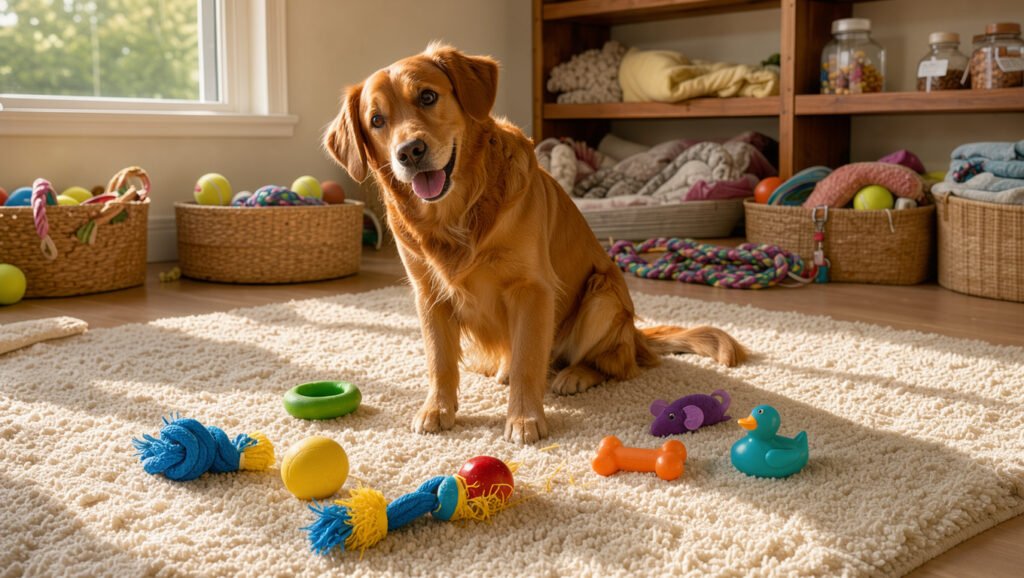
Dogs do see colors, but their color range differs from ours because their eyes have two main types of color-sensitive cones rather than three. Those two cone types help dogs see some colors, especially blues and yellows.
Dogs do not live in a black-and-white world. They distinguish reds and greens less well than humans do, and color perception comes from the eye and brain working together.
Color Vision and What Dogs See
A dog vision filter is not a literal colored overlay placed over the world. The dog’s photoreceptors detect light, and the brain processes those signals into what the dog sees.
Depth perception partly depends on the overlap between the fields of view from both eyes. A dog’s eye health can affect how well that system works, and individual sight can differ.
Night Vision and Comparing Dogs With Cats
The tapetum lucidum reflects light inside the eye and supports vision in low light. It does not let dogs see in total darkness, and it does not make every dim space easy to navigate.
Dogs and cats are both adapted to dim conditions, but dog night vision vs. cat night vision is not a contest with one perfect winner. Neither animal has perfect night sight, and both still need enough light to see obstacles.
Dogs may move more carefully when a route is unfamiliar, even if the light seems adequate to us. A night walk past a new pile of yard tools can be harder than a familiar path.
Keep a light on for unfamiliar routes at night, since low-light vision does not make obstacles disappear. A small change in the room’s lighting can make an unfamiliar route easier to see.
Tear Staining Has Several Possible Causes
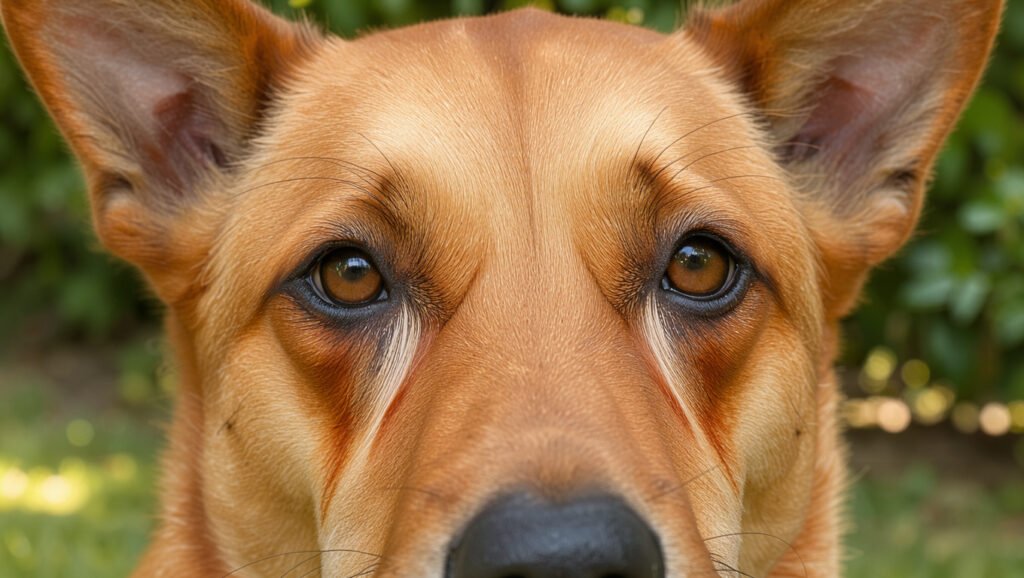
Reddish-brown fur beneath the eyes often appears when tears repeatedly wet the hair. Tear staining can happen when tears overflow and leave pigment on the fur.
Tears normally drain through tear ducts. Irritation, blocked drainage, facial structure, or another eye condition can contribute to overflow. Staining by itself does not prove infection or poor hygiene.
Clues that call for a veterinary check include:
- Staining that has appeared recently
- Red or irritated skin beneath the eye
- An unusual odor
- Discharge or tearing on one side
Tear staining causes can be hard to sort out by looking at fur alone. New staining on one side may deserve a closer check, especially if it comes with irritation or discharge.
Avoid household bleach and products not approved for use near the eyes. The skin is delicate, and a product can irritate the eye if it spreads or runs.
Arrange a veterinary check if staining is new, one-sided, or accompanied by irritation or discharge. A clear note of when it began can help the veterinary team assess the change.
When Veterinary Ophthalmology May Be Needed
A veterinarian can begin evaluating a new eye concern and decide whether specialized testing or referral is appropriate. A veterinary ophthalmologist is a specialist with advanced training in animal eye disease.
A general veterinarian can assess many eye concerns and may refer a dog for specialized care. Sudden pain or injury needs prompt assessment, not a wait for a specialist appointment.
What a Veterinary Eye Examination Can Check
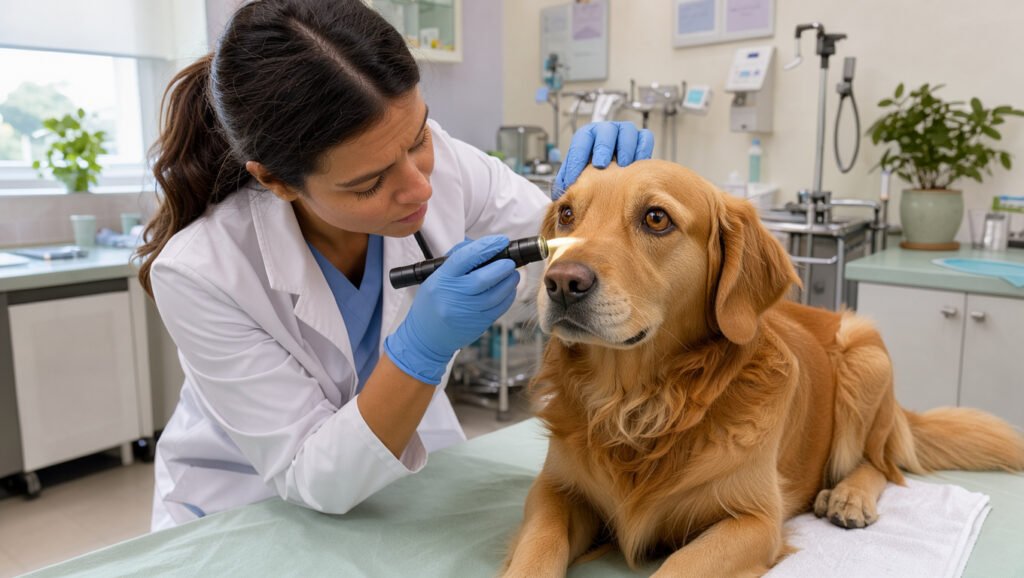
An exam may assess vision, the cornea, pupils, and tear production. The veterinarian may also measure eye pressure when appropriate, based on the dog’s signs and exam.
These checks help the care team decide whether more testing is needed. We can describe the change we noticed and the conditions in which it appears.
When a Specialist Referral Makes Sense
A referral may make sense for a complex, persistent, or sight-threatening condition. The primary veterinarian can explain whether a veterinary ophthalmologist may offer needed testing or treatment.
Bring a note of when the change began, whether it affects one or both eyes, and any medicines your dog has received. Include the names and timing of eye products, even if they were used only once.
Bring a note of when the change began, whether it affects one or both eyes, and any medicines your dog has received.
That record can help the veterinary team compare the current exam with the first signs you saw at home. If pain or injury starts suddenly, contact a veterinarian for prompt assessment instead of waiting for a referral.
Conclusion
A dog’s eyes tell us the most when we notice what is normal for that individual and pay attention to changes. A gaze is a clue, not a diagnosis, so we should consider the dog’s actions and setting before deciding what it means.
Sudden pain or a change in vision deserves veterinary advice. If an eye looks painful or changes suddenly, contact your veterinarian and describe what changed and when.