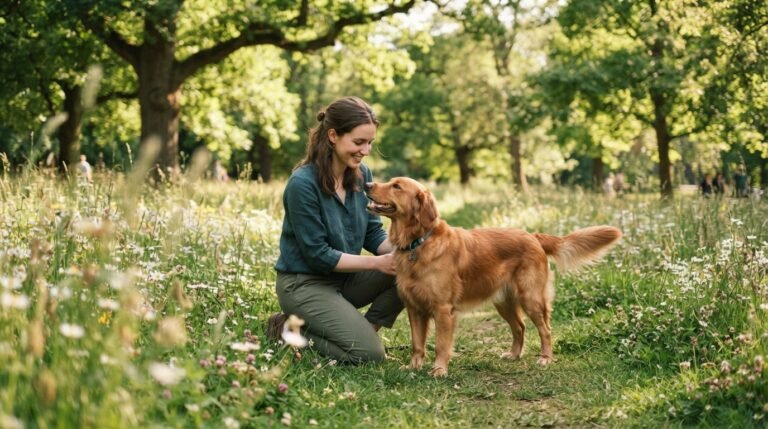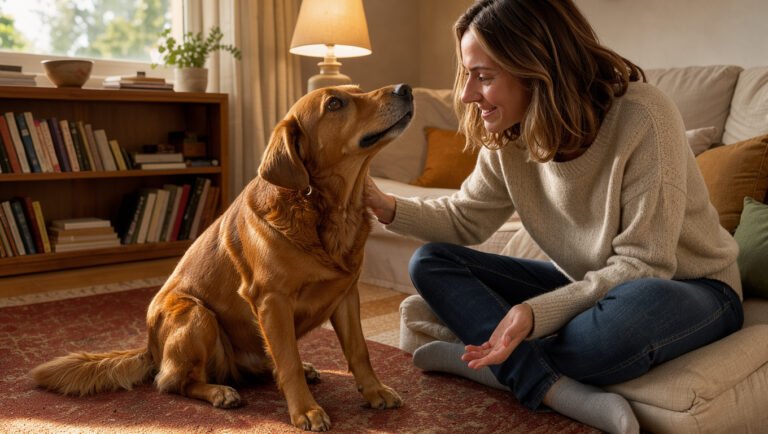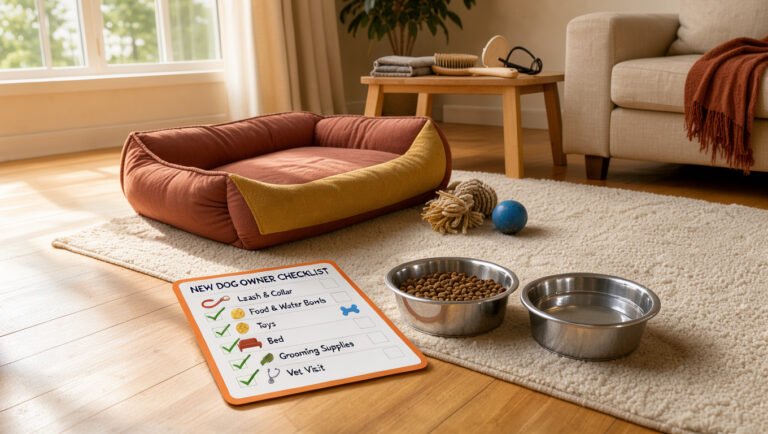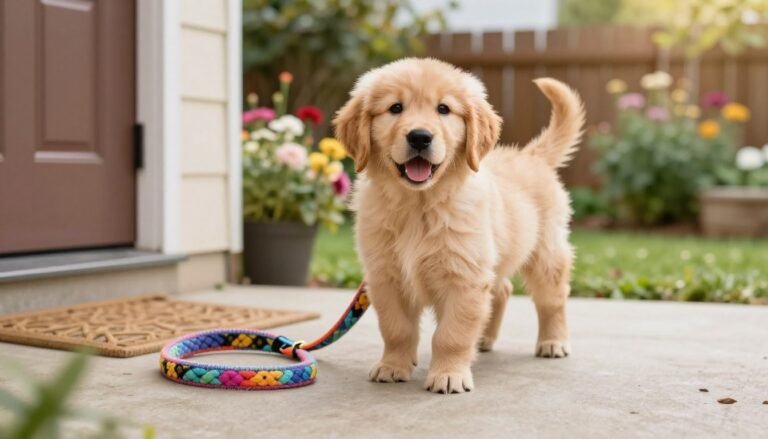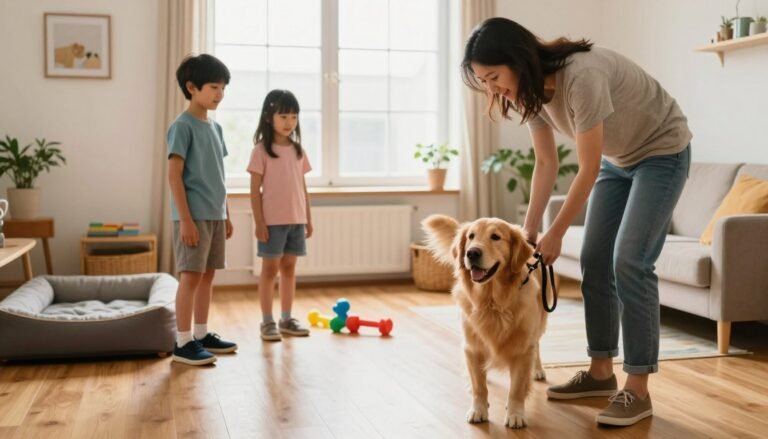
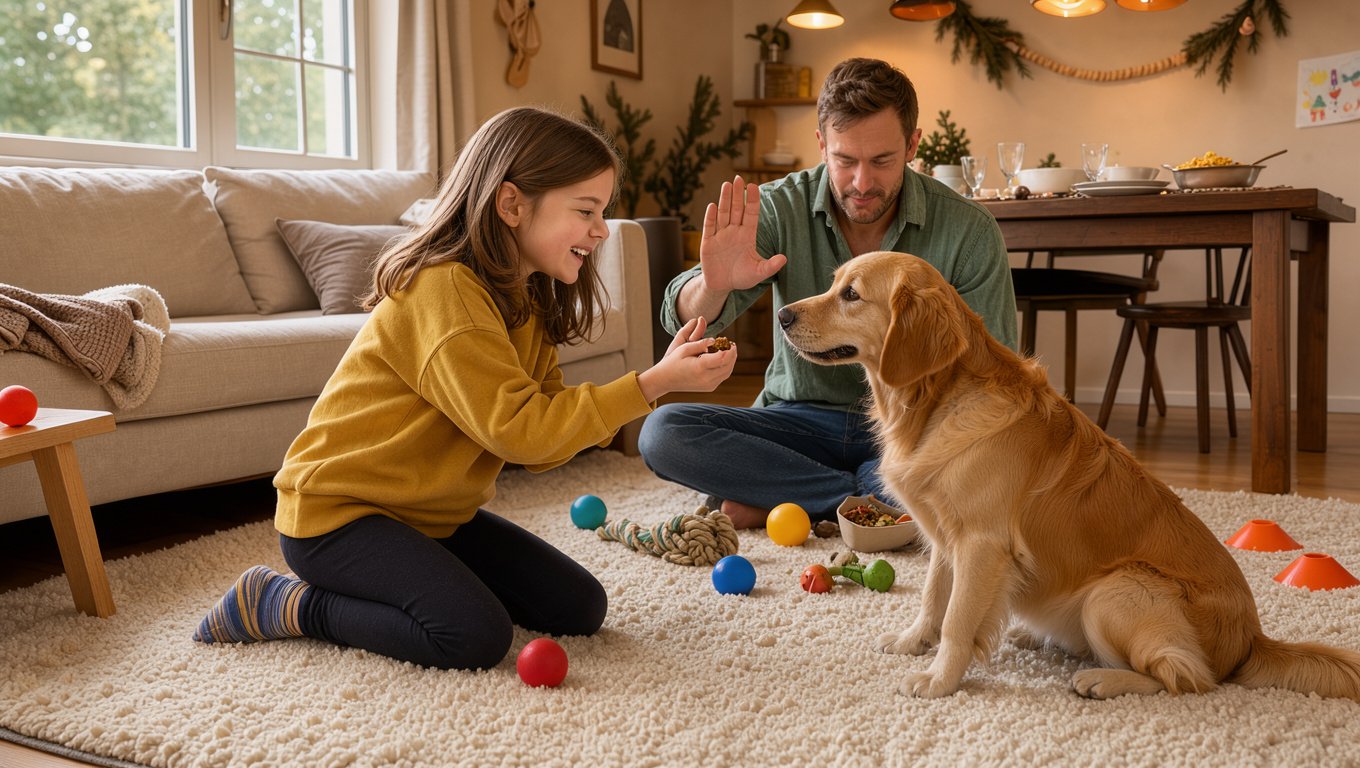
You can train a dog at any age by rewarding the behaviors you want and practicing them in small, consistent steps. A quiet moment at home can become a chance to build trust, even when family life feels busy. Puppies and adult dogs can both learn through positive-reinforcement training, clear cues, patience, and regular practice. Start with simple skills your dog can succeed at around familiar people and daily routines.
Training takes time, and progress may look different from one dog to another. One week can help you set a useful routine, but it cannot promise mastery of every skill. Small gains, such as waiting calmly or turning toward you, count as success. Keep your goal practical and make practice part of care, not a test your dog must pass.
Pick one everyday behavior to practice first, such as sitting before you set down a meal.
How to Train a Dog With Positive Reinforcement
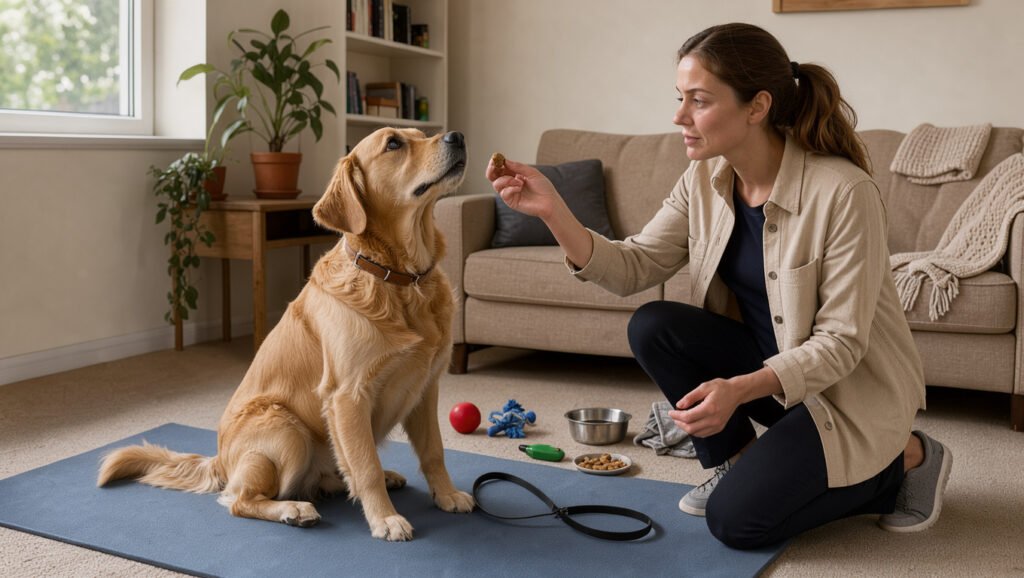
Begin each practice session with a reward your dog genuinely wants and a quiet place where they can focus. Positive-reinforcement training rewards a behavior you want, which helps your dog learn what works. Food, toys, praise, and attention can all motivate a pet, but each dog has personal favorites.
Start in a calm room with only a few repetitions. A clear plan helps you train at home by yourself, without paid equipment or a complicated setup.
Choose rewards and mark the right moment
A reward can be a treat, a toy, a game, praise, or access to something your dog wants. Notice what your dog chooses when given options. Some dogs work eagerly for kibble, while others respond better to a tug toy or a chance to sniff outside.
A marker is a consistent sound or word, such as a click or “Yes,” that signals the exact behavior you are rewarding. It bridges the moment your dog does something right and the moment the reward arrives. Say “Yes” or click as the dog gets the behavior, then give the reward right away.
For example, mark the moment your dog looks at you after hearing their name. The treat can follow a beat later because the marker tells them which action earned it.
Keep the marker distinct from casual talk. If “Yes” is your marker, avoid using it for unrelated praise until your dog knows what it predicts. A clicker can help keep the sound steady, but a clear spoken word costs nothing.
Reward-based methods can teach everyday skills and help with behavior concerns. The American Veterinary Society of Animal Behavior recommends reward-based training for all concerns and advises against methods such as shock collars, prong collars, leash corrections, or physical punishment.
Choose rewards and clear markers instead of fear or pain. Aversive methods bring animal-welfare and relationship risks, without better results.
Food is not the only useful reward. A dog that loves play may earn a short game after a calm wait, while a social dog may value your attention.
You can train your dog at home for free by using kibble, play, praise, and everyday attention as rewards. Ordinary routines offer many chances to practice. Ask for a calm pause before opening a door or setting down a food bowl.
If you are choosing a how to train a dog book, look for a practical guide with reward-based methods and clear steps. Skip books that rely on intimidation or physical correction.
Keep sessions short and easy to repeat
Typical training sessions last 10-15 minutes, and five minutes can still be effective. Keep each session under 20 minutes so practice stays manageable. A few focused tries can fit between household tasks more easily than one long lesson.
Begin with only a few repetitions, then pause to see whether your dog remains interested. If your dog succeeds, you can add a few more tries another time. End on a familiar action your dog already understands, so the last moment feels clear.
Practice in a quiet room before adding harder surroundings. A dog may follow a cue indoors but struggle when a visitor arrives or a squirrel passes. Change one challenge at a time, such as adding a little distance or moving to a different room.
After your dog succeeds eight to ten times out of ten, make rewards less predictable instead of stopping them. Reward some correct responses with food and others with play or praise. Keep rewarding the behavior at times, so your dog has a reason to keep choosing it.
If your dog misses the cue, make the next try easier. You might move closer, lower the distraction, or use a reward that matters more. Repeating a difficult request does not make it clearer.
Make cues consistent across your household
Choose short cues that everyone can say in the same way. Use one word for each action, and agree on what that word means before practice starts. A steady tone helps your dog hear the cue without turning it into background chatter.
People in the home can share practice, but one person should explain the cue and reward plan first. That prevents a dog from learning several versions of the same request. It also makes daily routines easier for children and adults to follow.
A household cue list can be a scrap of paper on the fridge. Write down the cue, the behavior it asks for, and the release word that ends a wait. You do not need a paid course or special gear to keep the words clear.
Use the same cue at meals, during play, and in different rooms. You can explore practical advice about dog care and training as your needs change.
Ask everyone in the household to use the same cue for the same behavior, since “sit” and “sit down” can sound like separate instructions to your dog.
When Should You Start Training a Dog?
An adult dog can learn new cues too, while an 8-week-old puppy can begin simple, reward-based practice at home. Healthy dogs can learn at any age, with the pace and physical demands adjusted to the individual. Start with actions that fit your dog’s comfort and experience.
A puppy may learn a few predictable basics in seven days, but that is not enough time to master every skill. A new home, family routine, and unfamiliar sounds all take attention.
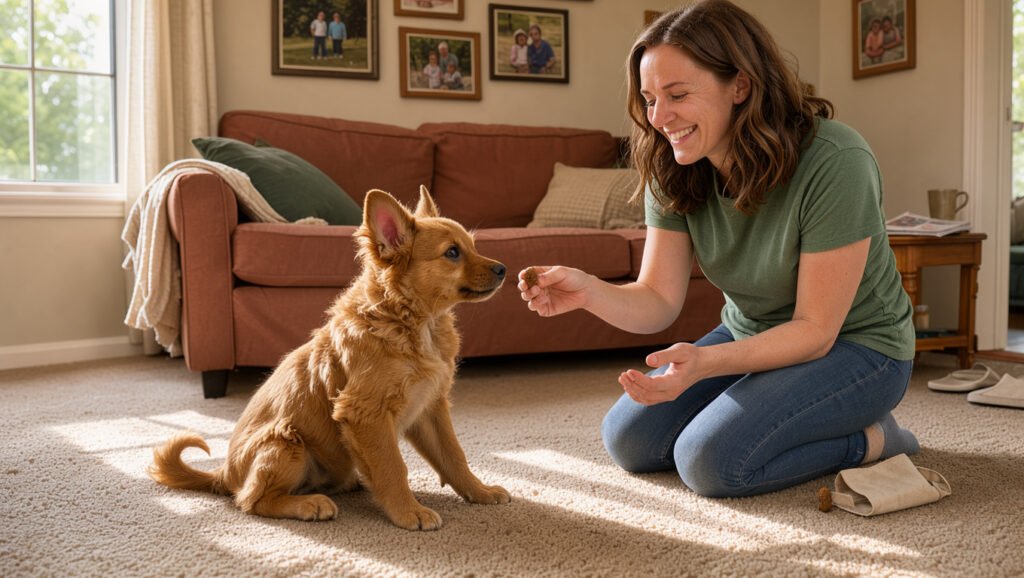
Can you train a dog at any age?
There is no dog training age limit for a healthy dog. Older dogs can learn new cues and habits, while puppies can start with easy tasks as soon as they come home. Change the pace to suit your dog’s energy, health, and past experience.
A dog with sore joints may need a comfortable surface and fewer movements. A dog new to your home may need time to settle before facing busy places. You can still build trust through calm, clear practice.
At home, choose a simple behavior your dog can offer without strain. Sitting before a meal or pausing before play gives a young dog a clear pattern. These small skills can support impulse control without asking for long periods of focus.
Use the puppy socialization window safely
The American Kennel Club identifies 8-16 weeks as a critical puppy socialization period. During this time, give your puppy positive introductions to sights, sounds, people, places, and gentle handling. The first three months can shape adult personality and reactions to the environment.
Socialization does not mean forcing a puppy to greet every person or dog. Let your puppy watch from a comfortable distance and reward calm interest. A short, pleasant visit can be more useful than a crowded outing that overwhelms them.
Puppy classes can provide controlled exposure once vaccinations have started. A class gives your puppy a chance to see new people and dogs in a planned setting. Ask the instructor how they manage greetings and keep the space safe.
Public dog areas carry different risks from a managed class. Follow your veterinarian’s guidance about your puppy’s health and local exposure. A dog park visit can wait until seven to ten days after your puppy completes the full vaccination series.
Choose safe places that match your puppy’s health status and comfort. A visit to a quiet friend’s home may offer new sights without direct contact with unknown dogs. Positive experiences matter more than the number of places visited.
What a puppy can learn in 7 days
In seven days, a puppy can begin to recognize a few simple routines, such as sitting before meals or play. Short, repeated practice can help your puppy connect a cue with an action. Expect early progress, not reliable performance in every setting.
New skills need time to work around different people and distractions. A puppy may sit in the kitchen but forget the cue in a busy yard. Keep each first lesson easy enough for your puppy to understand.
By six months, a puppy should be making progress with housetraining, polite play, and being alone for short periods. Recall and impulse control should also be developing. Progress does not mean perfection, and setbacks can happen as your dog grows.
Use a familiar daily event to repeat a new behavior. A meal, a toy, or an open door can become a steady practice cue. When your puppy understands one step, build on it slowly rather than piling on new demands.
Understand the 3-3-3 adjustment timeline
The 3-3-3 rule uses the first 3 days, first 3 weeks, and first 3 months as a flexible guide for rescue-dog adjustment. It describes a possible adjustment pattern, not a deadline every dog must meet. A dog’s past, health, and home setting can affect the pace.
During the first three days, a newly adopted dog may need quiet time to rest and observe. The next three weeks can bring more routine as the dog learns household patterns. By three months, some dogs feel more settled, while others still need support.
Do not judge an adopted dog’s full personality from the first few days. Let the dog explore at a pace that feels safe and offer steady routines. A calm home gives the dog room to learn who lives there and what happens each day.
Training can continue during adjustment, but keep early requests simple and low pressure. A dog that has just moved may not be ready for busy outings or many new people. Familiar patterns can help your dog feel more secure.
Follow your veterinarian’s advice on exposure and vaccination timing before taking a puppy to public dog areas.
Which Skills Should You Teach First at Home?
Start with house-training, basic cues, recall, and loose-leash walking, then add polite play and brief alone time. Close supervision and an immediate reward help your dog learn which actions work at home. Choose skills that make everyday care safer and easier for your family.
For toilet training, take your dog to one chosen place on a steady routine. Watch closely indoors, reward success at the right spot, and clean accidents without scolding. Gradually give your dog more room as training progresses.
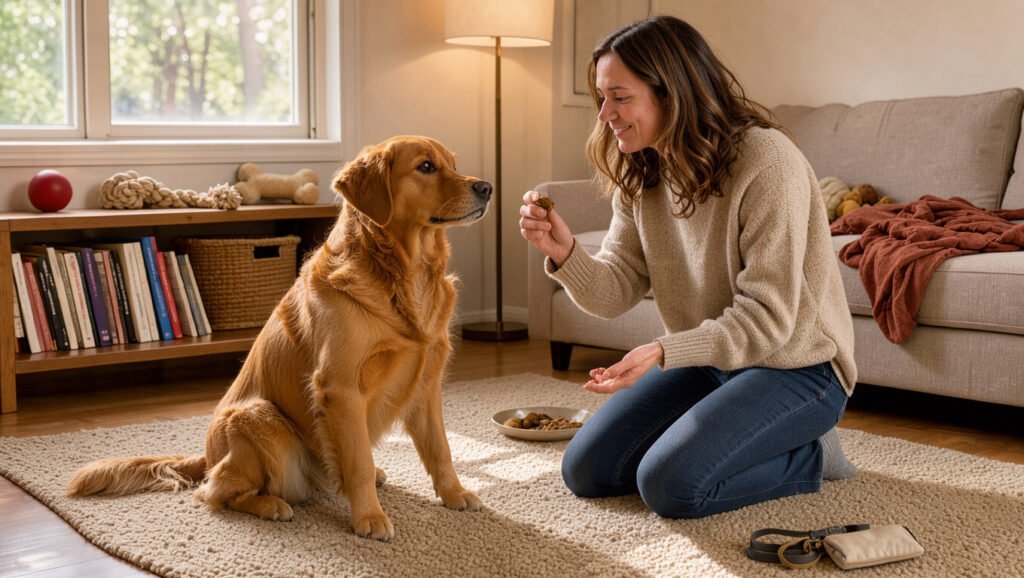
House-train with supervision and rewards
Limit your dog to one or two rooms where an adult can supervise. Keep your dog nearby, then take them to the designated toilet spot before they wander off. The spot can be outdoors or an indoor pee pad.
Reward elimination in the intended place as soon as it happens. Use a treat, praise, or another reward your dog likes. Quick feedback helps your dog connect the reward with the right place.
If an accident happens, clean it well and continue the routine. Do not scold your dog for a past accident, since the dog may not connect your response with what happened earlier. Gradually expand access to more rooms as your dog makes progress.
A sudden change in toilet habits can point to a health issue, not a training failure. If accidents persist or start without warning, contact your veterinarian. Keeping a simple record of meals and toilet trips may help you spot a pattern.
American Humane’s housetraining advice supports close supervision, immediate rewards, and calm cleanup after accidents. The same basic routine can help puppies and adult dogs learn where to go.
Teach sit, down, stay, and leave it
Use short cues and teach one action at a time. A dog who knows how to pause and wait has more chances to make safe choices around food, doors, and toys. Start in a quiet room before trying the same skill elsewhere.
- For sit and down, lure your dog’s nose upward with a treat to encourage a sit. Mark the moment your dog’s bottom reaches the floor, then reward. For down, guide the treat toward the floor and mark when your dog lies down. Never push the dog into position.
- For a brief stay, ask your dog to wait for a moment, then use a release cue. Reward the pause before asking for a little more time or distance.
- For leave it, place a reward in one hand and offer a better reward from the other hand when your dog turns away. Mark that choice, then reward from the other hand.
- For recall and loose-leash walking, start indoors with a cheerful call and reward your dog for arriving. On a walk, pause when pulling begins or reward your dog for staying beside you. Never jerk the leash.
A release cue tells your dog when a stay ends, so choose one word and use it consistently. Begin with a very brief pause. Add time or distance only after your dog can succeed with the current step.
For leave it, keep the first practice simple and controlled. Your dog learns that turning away from one item can lead to a better reward. Later, you can practice around more tempting objects without placing your dog in danger.
Build recall and loose-leash walking
Recall means coming when called. Use a cheerful cue indoors, then reward your dog for arriving close to you. Make the call worth answering with a treat, a toy, or a brief game.
Move to a safe outdoor setting only when indoor practice feels steady. A long line of 20 feet or longer can give your dog room to explore while keeping them connected to you. Practice in a safely enclosed area or on that line.
Loose-leash walking means walking beside you without pulling. Reward your dog when they stay beside you, and pause when the leash tightens. Wait for your dog to return closer before moving again.
Keep walks calm enough for your dog to notice you. If a busy path makes it hard to respond, move to a quieter route and build skill there first. A leash should guide your dog, not deliver a sudden correction.
Address barking, alone time, and polite play
Alert barking often starts when a dog notices a sound or person. Thank your dog with a calm voice, then guide them away from the window or door. Reward quiet behavior after the alert, rather than shouting over the barking.
Attention barking can grow when it reliably brings a response. Wait for a brief pause, then give attention or start a game. If your dog barks from boredom, add sniffing, food puzzles, or short play breaks to the day.
Help your dog practice being alone for short periods by stepping away briefly, then returning before your dog becomes upset. Add time gradually. If your dog struggles, shorten the absence and seek help if the problem continues.
Polite play needs pauses. Stop the game briefly if your dog becomes too rough, then resume when play is calm. Give children and visitors simple rules, such as keeping hands away from a dog’s food and resting place.
Practice recall only in a safely enclosed space or on a long line until your dog responds reliably around distractions.
What Should You Do When Training Stalls?
If your dog suddenly stops responding, first make the task easier and check whether the dog is stressed or distracted. When a dog does not listen, check the cue, reward, setting, and the dog’s comfort before changing your approach. Add distance from distractions or return to a step your dog knows.
A dog may ignore a cue because it sounds unclear, the reward has little value, or the room is too busy. Tiredness and worry can also make learning harder. Make the next repetition easier instead of adding pressure.
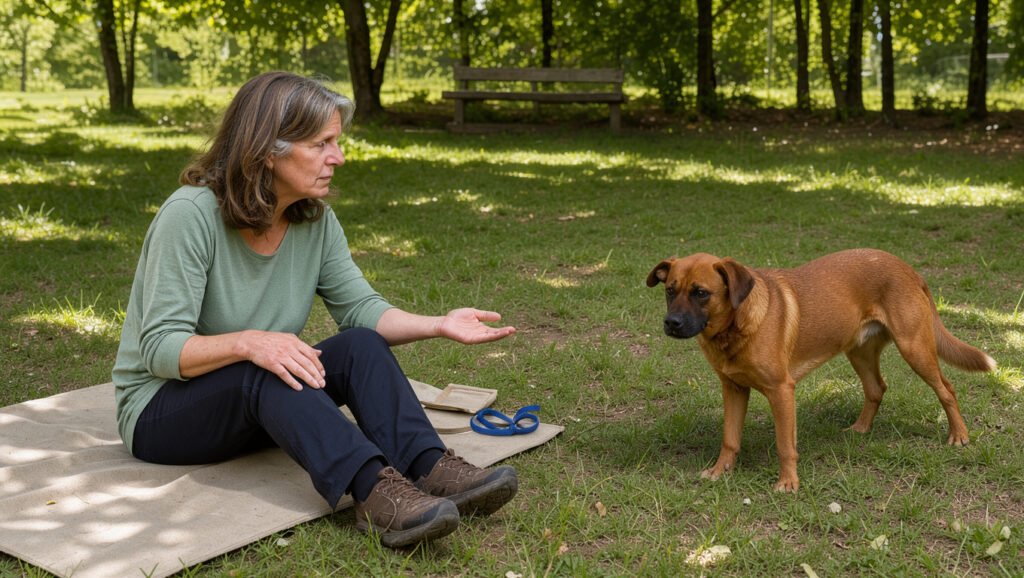
Read stress signals before changing your approach
Look at the whole dog, not one movement alone. A tucked or low, fast-wagging tail can point to fear or uncertainty. A high, stiff wag can signal agitation or arousal, so a wag does not always mean a dog welcomes contact.
Watch for signs that may mean your dog needs space:
- Freezing in place, especially when someone approaches or touches the dog.
- Looking away or licking the lips without eating or drinking.
- Yawning during an emotional or unfamiliar situation.
- Panting when the dog is not hot.
- Shaking off after handling or a tense interaction.
Freezing can signal fear, guarding, or feeling cornered. Ignoring that warning can lead to growling, snapping, or biting. Give the dog space instead of insisting on contact or repeating the exercise.
Looking away, lip licking, and yawning can be easy to miss when you focus only on the cue. Notice what happened just before the behavior, such as a person reaching over the dog or a noisy visitor entering. Pause and lower the pressure.
Learn more about dog body language and stress signs when you need help reading the full picture. A dog’s tail, face, posture, and setting all matter together.
A dog that freezes during handling may need a slower plan with more choice. Let the dog move away, then allow them to approach when ready. Do not punish growling, since it is a warning that the dog needs space.
Which breeds may need extra training patience?
Some breeds may need extra patience during training, including beagles, Siberian huskies, Alaskan malamutes, Jack Russell terriers, doodles, Basenjis, bloodhounds, Great Pyrenees, and Australian shepherds. No breed is disobedient by nature, and each dog’s temperament and history matter.
Beagles may follow a scent trail instead of responding to off-leash recall. Use a high-value reward and keep early practice in a safe place with a long line. That setup helps your dog practice while you manage the pull of a strong scent.
Siberian huskies can be independent, which may make traditional training less effective. Early training, exercise, and socialization can help. Keep lessons engaging and give your dog a clear reason to take part.
Jack Russell terriers often need exercise and outlets for their instincts. Obedience, tricks, and brain games can help keep them engaged. A short task with a clear finish may suit them better than repeating the same cue without a break.
Alaskan malamutes, doodles, Basenjis, bloodhounds, Great Pyrenees, and Australian shepherds also appear among breeds that may need extra patience. That label does not predict how an individual dog will behave. The dog’s health, past learning, daily needs, and surroundings shape the task.
Adjust the setup when your dog stops responding
Change one part of practice at a time. Move to a quieter room, stand closer, shorten the wait, or offer a reward your dog values more. When your dog succeeds, you have found a better starting point.
Check whether the cue has one meaning for everyone. A dog may seem to ignore “come” if people use it for different actions or call from too far away. Ask for a response only when you can help your dog succeed.
Also check your dog’s energy and surroundings. A dog that has just played hard may need a rest, while a dog focused on a nearby squirrel may not be ready for a difficult cue. Wait for a calmer moment or reduce the distraction.
Keep a brief note of where practice went well and where it fell apart. A pattern may show that the issue appears near the front door, around food, or when a certain person gives the cue. That detail can help you change the setup with care.
A qualified, reward-based trainer can help when problems keep returning despite easier practice. Serious fear or aggression calls for a qualified behavior professional. Training and behavior advice is educational, results vary, and serious concerns should be discussed with a qualified professional or veterinarian; read the pet-care information disclaimer for more.
If a dog freezes, growls, snaps, or guards an item, give space and get qualified help rather than forcing the exercise.
Keep people and animals safe while you arrange support. Do not reach for a guarded item or corner a dog that is trying to move away.
Conclusion
A few calm repetitions in an ordinary part of your day can build a useful habit. Small, repeatable practice and attention to your dog’s comfort matter more than rushing through a long list of commands.
Choose one behavior and fit it into a familiar routine. Reward the action you want as soon as your dog gets it right, then stop while practice still feels easy.
Choose one cue to practice at the next meal and reward your dog as soon as they get it right.