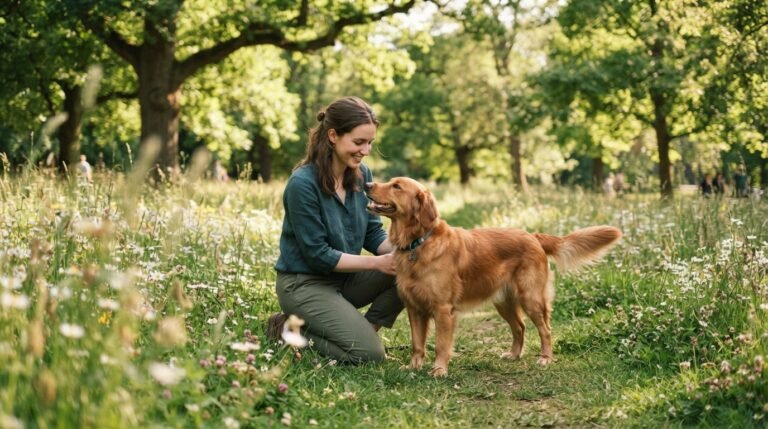
Most healthy adult dogs do well with one or two walks a day, with the schedule adjusted for age, health, energy, and veterinary advice. The best dog walk is not always the longest; it is one your dog can comfortably enjoy and repeat. A steady routine should fit your family’s life at home, too.
Your dog’s needs may change with age, health, weather, and daily activity. A routine that works on a mild weekday may need adjusting during hot weather, illness, or a busy week. Good pet care means choosing a plan that works for both pets and the people who care for them. When the routine fits, dogs have something to look forward to each day.
Start with a schedule your dog can handle, then notice how they respond. Dog walking should suit your pet’s comfort and health, not simply fill a set amount of time. Pet parents can ask their veterinarian what exercise is safe when health concerns affect the plan. The right routine is one your dog can comfortably repeat—not the longest walk you can fit into the day.
How Often Should You Walk Your Dog?
Most healthy adult dogs do well with one or two walks each day. Adjust the schedule to your dog’s age, health, energy, and response, and follow your veterinarian’s advice when a health condition affects exercise. The right number of walks is the one that supports your dog’s needs and fits your household routine.
| Dog’s age or situationWalks per dayTypical duration | ||
| Healthy adult dog | 1–2 | Varies with energy and health |
| Puppy | 3–5 short outings | Brief; allow frequent potty breaks |
| Senior dog | 2–3 gentle outings | Short, with breaks as needed |
| Mobility or health concerns | Ask your veterinarian | Set a safe length with your vet |
A summarized dog-walking study found that 77.9% of dogs had at least one walk each day, and two walks a day was the most common single pattern. These figures describe what people did, not what every pet needs. Link the statistic to its original study when the source is confirmed.
Your dog’s bathroom needs and health matter as much as the number of exercise walks. A brief potty break is a bathroom outing, not necessarily a dog walk for exercise. It can provide a chance to go outside between longer walks and help make sure your dog is comfortable at home.
If a health condition changes your dog’s exercise needs, ask your veterinarian what is safe before changing the routine.
Age, stamina, and comfort all affect how dogs handle walking. A dog with joint pain needs a different plan from an energetic dog without health concerns. The PDSA guide to dog exercise recommends one to two walks daily for most dogs, unless a veterinarian advises otherwise.
Notice how your dog acts during and after each outing. If they return comfortably and settle as usual, the plan may suit them. Keep track of ongoing changes in energy, appetite, or movement to discuss at a veterinary visit. Pause and seek veterinary guidance if your dog develops a limp, unusual fatigue, or sudden reluctance to walk.
Daily Walk Length Depends on Energy and Health
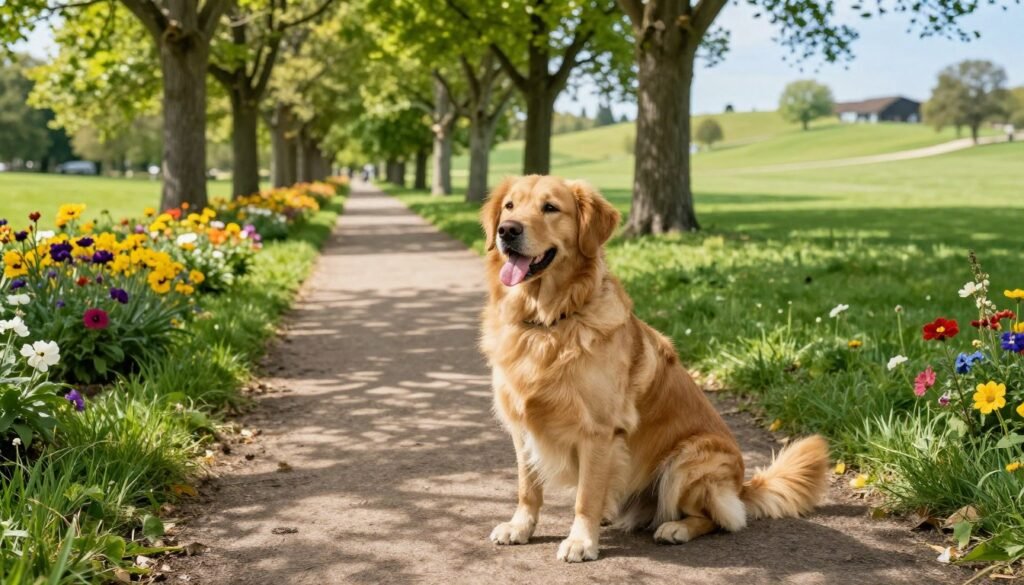
Many healthy adult dogs do well with 30 to 90 minutes of walking across the day. That is the total daily time, divided into outings that fit your dog’s energy, health, and routine. The right length varies: some dogs are content with less, while others need more activity.
Use your dog’s comfort and recovery to guide the duration, rather than treating a number of minutes as a daily requirement. A dog’s age, fitness, and health all affect how much exercise is suitable.
Set a practical daily walking range
Divide the daily total between a morning outing and a later walk. One dog walk might be longer, while another stays brief and relaxed. Bathroom breaks can be added as needed, but they do not have to count as exercise walks.
A dog recovering from illness or returning to activity after a break needs a careful plan. Ask your veterinarian to recommend a safe length when health affects exercise. Good care means adjusting the routine to your pet’s condition, not pushing for a target that does not fit.
Walking time does not have to mean constant movement. A relaxed sniffari gives your dog time to follow scents and explore at its own pace. This kind of dog walking adds variety to the day, though it does not replace every other form of play or enrichment.
Pay attention to your dog’s response instead of aiming for an exact distance. A comfortable short outing is more useful than pushing a tired dog onward. The best length is one that fits your dog’s needs and supports a comfortable life.
Match the pace to your dog’s activity level
A dog who stays eager to move may enjoy a longer or more active route. Some Border Collies and Labrador Retrievers need more activity than lower-energy dogs, but breed alone does not determine the right walking plan.
Health, fitness, age, and temperament also shape a dog’s exercise needs. Watch for a slowing pace, repeated pauses, or trouble settling after a walk. These changes can signal that the duration or effort was too much.
A dog who tires quickly needs a gentler route and time to rest. There is no need for your pet to match another dog’s pace. If your dog has been inactive, increase the length gradually so their body has time to adjust.
Notice how your dog moves later that day and the next morning. Comfortable recovery helps you judge whether the routine suits their current condition. Shorten the walk and contact your veterinarian if your dog shows discomfort or struggles to recover.
Adjust Walks for Puppies, Seniors, and Mobility Limits
Puppies, senior dogs, and dogs with mobility limits often do best with shorter outings than healthy adults. Brief walks still give pets a chance to move, explore, and get outside.
Shape the routine around your dog’s age, comfort, and veterinary advice. Exercise needs change as dogs grow older or deal with illness, so adjust the plan when their health or stamina changes.
Keep puppy walks short and frequent
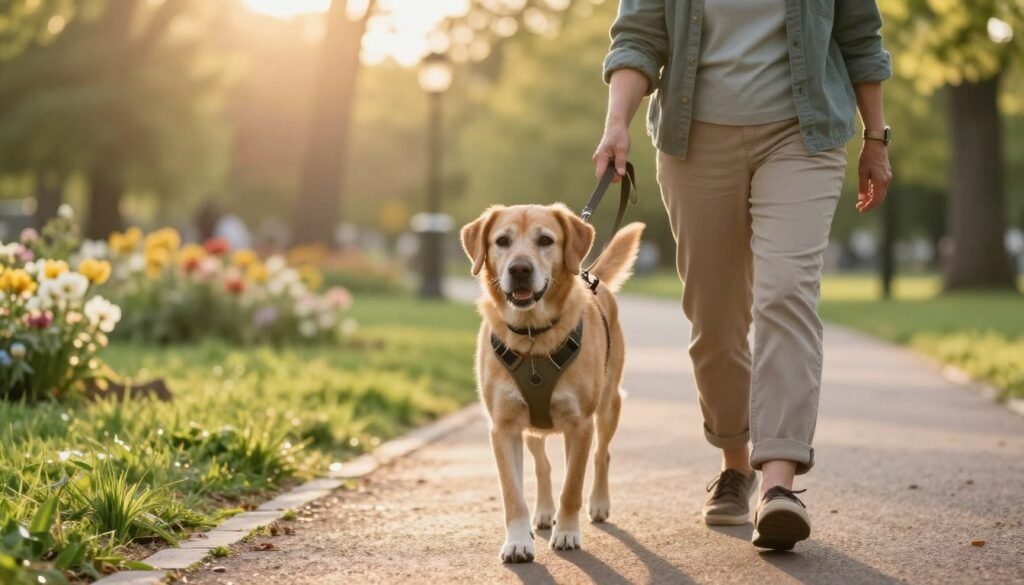
Puppies under six months often need three to five short outings a day, along with frequent bathroom breaks as they learn where to toilet. These are brief opportunities to go outside, not a requirement for several long exercise walks.
The familiar rule of five minutes of walking per month of age, twice a day, is only a rough guide. It is not a substitute for advice from your veterinarian, who can account for your puppy’s breed, growth, and health.
Puppies grow at different rates and tire quickly. Keep each outing calm, watch your puppy’s response, and let comfort guide how far you go. Consistent habits also help puppies learn at home. This positive reinforcement training plan shows how short practice can fit into everyday routines.
Make senior walks gentler
Many senior dogs do well with two to three gentle walks a day. Keep outings short enough for your dog to stay comfortable, and allow breaks or turn back when needed. Bathroom breaks can be separate from exercise walks.
A dog who once enjoyed a long route may now prefer a familiar loop. Notice changes in pace, interest, or recovery, and talk with your veterinarian if your dog’s walking habits change. Pet parents can adjust the family routine to make outings manageable for older pets.
Adapt outings for mobility limitations
There is no single walking schedule for dogs with mobility limits. Ask your veterinarian to recommend a safe pace, route, and number of short outings based on pain, balance, and stamina.
Shorten or stop a walk if your dog:
- Lags well behind or struggles to keep moving.
- Pants in an unusual way for the effort.
- Starts limping or changes how they place a paw.
- Sits down repeatedly and does not want to continue.
Consider posture and behavior together, since one sign alone may not explain what your dog feels. A guide to dog body language can help you notice patterns of discomfort or stress. Give your dog attention during and after each outing, and make sure the routine still fits their needs. Contact your veterinarian about pain, a chronic condition, or a new change in mobility.
Let Sniffing and Exploration Make Walks More Enriching
A walk gives your dog more to do than cover ground. Sniffing helps dogs learn about their surroundings and gather information as they explore.
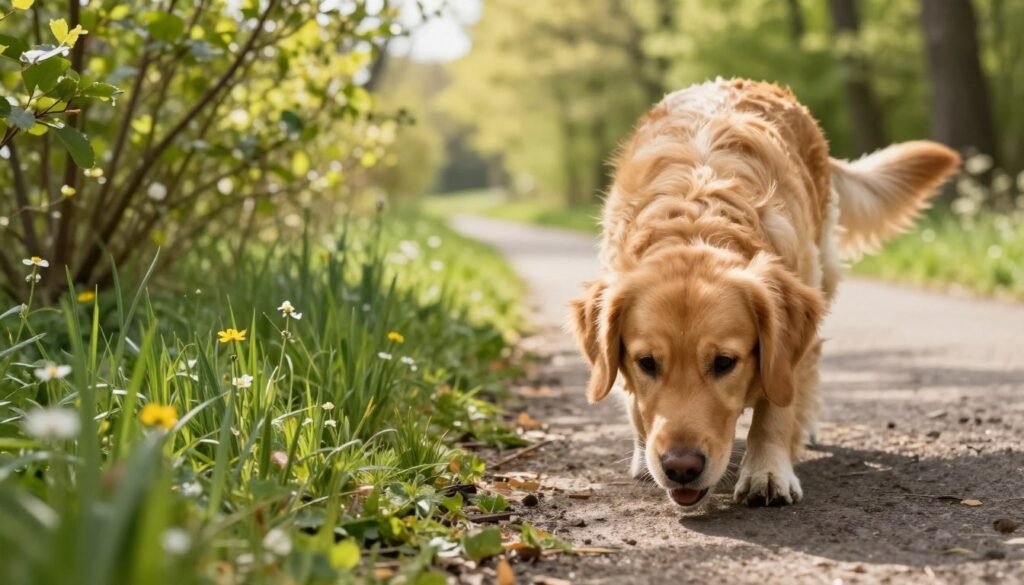
Give your dog time to investigate safe scents instead of treating every walk as a march. A sniffari is a relaxed dog walk that lets your pet follow scents and explore at its own pace.
Give your dog time to investigate scents
Dogs have roughly 200–300 million smell receptor sites in the nasal cavity, compared with about 6 million in humans. Their sense of smell helps them recognize individuals, make choices, and learn about the world around them.
Scents can also tell a dog what has passed through an area. A slow stop beside a post or patch of grass may hold plenty of information for your pet, even if it seems ordinary to people.
A review of canine olfaction and behavior describes how dogs use scent to gather information about their surroundings. Allow sniffing when the spot is safe and you can keep control of the leash.
Dog walking does not have to mean moving at a constant pace. Keep a steady route while making room for sniffing stops, and let your dog explore safely. This gives walks variety and supports your pet’s everyday enrichment and quality of life.
Protect Paws and Keep Walks Safe in Every Season
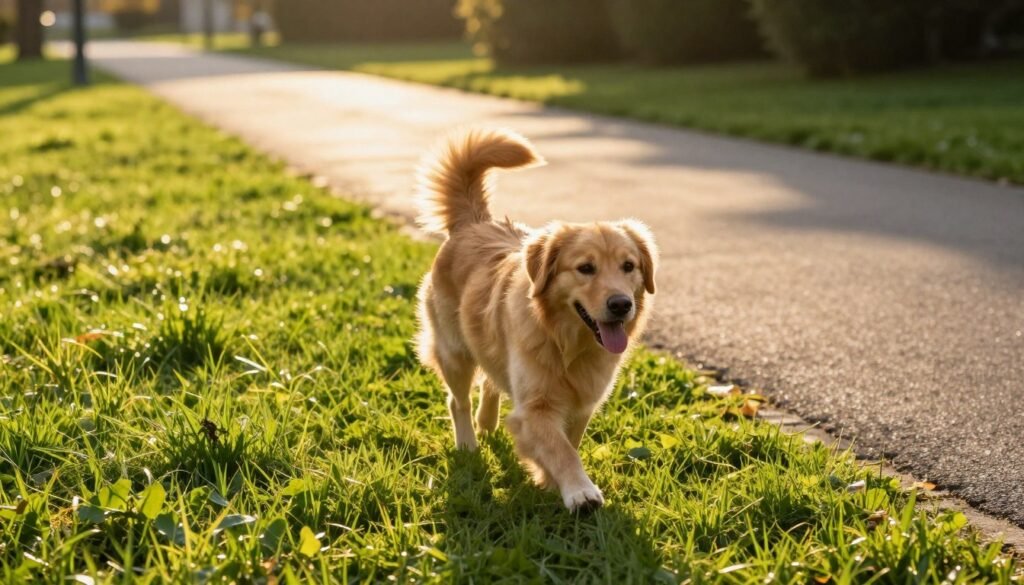
Check the walking surface before you set out, especially on sunny days when pavement can heat up quickly. A quick check helps you avoid exposing your dog’s paws to hot ground.
Press the back of your hand against the pavement for about 5 to 7 seconds. If it feels too hot for your hand, choose a cooler route for your dog. Grass, dirt, or dog booties can help protect paws.
Check the route and ground before leaving
Check the weather, route, and visibility before you go. Heat, rain, poor light, and traffic can change which path is safe for dog walking. In winter, look out for ice and sidewalk deicer. Rinse your dog’s paws after exposure when needed, or use paw protection on rough or treated ground.
Carry water when the weather or route calls for it. Conditions can change between walks, even on a familiar path, so pay attention to your pet’s comfort throughout the outing.
Choose control and paw protection
A standard six-foot leash generally offers closer control in public than a retractable leash. Choose a leash and clip you can hold securely. Bring waste bags, water as needed, and identification in case you become separated.
Before leaving, check:
- Leash, clip, and identification.
- Waste bags and water as needed.
- Weather, visibility, and route conditions.
- Ground temperature and possible ice or deicer.
Scan the first stretch of the route for construction, broken glass, or loose debris. These hazards can make a usual walk unsafe for dogs. Make sure the route suits your pet’s needs, especially during extreme weather or as their health changes over the years. Good care includes choosing a safer surface or shortening the walk when conditions call for it.
Dog Walking Can Help You Meet Weekly Activity Goals
Regular walks can help you work toward the CDC recommendation of at least 150 minutes of moderate activity each week. Moderate activity includes a brisk walk that raises your breathing while still allowing you to talk.
Walking with your dog adds movement to your routine. Your pace and total activity still matter for your health.
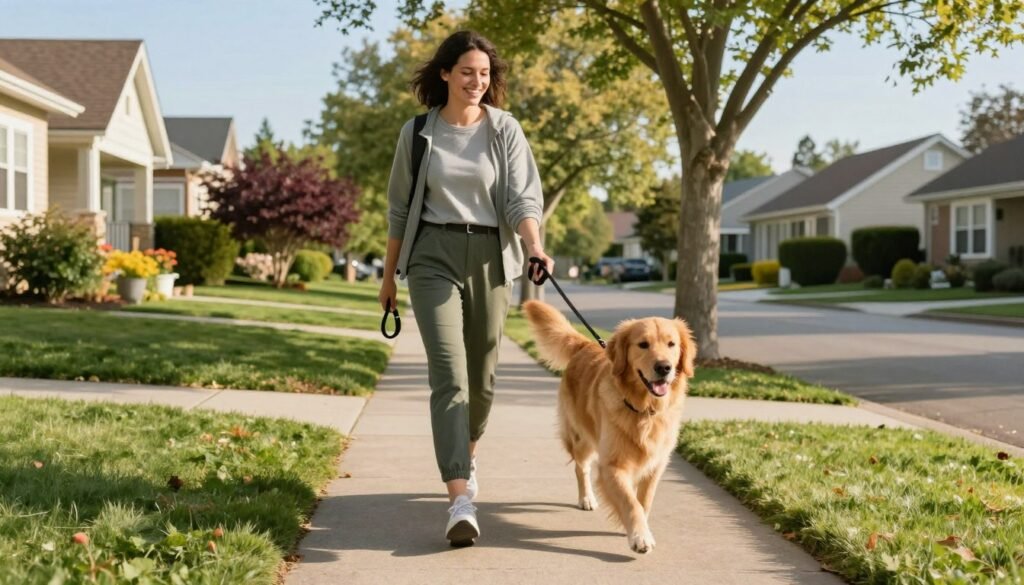
A shared dog-walking routine gives you a regular reason to get outside. Walking with a friend or another family member can also help people keep a weekly habit.
In one study, 60.7% of dog owners who walked their dogs reached the weekly activity level, compared with 37.7% of owners who did not walk their dogs. Dog owners who walked had 2.74 times the odds of reaching that level, with a 95% confidence interval of 2.09–3.60. Link these figures to the original study.
The results show an association, not proof that dog walking caused the difference. Other habits could also affect participants’ activity.
Count walks as one part of your movement throughout the week; other exercise counts toward the CDC goal, too. If your dog needs a slower pace, add your own activity at another time. Your exercise plan should not push your pet beyond a comfortable level. A brisk walk may feel moderate for you, while sniffing stops keep the outing comfortable for your dog.
Build a Routine Around Your Household and Your Dog
A routine is easier to maintain when walks fit predictable parts of the day, such as before work or after dinner. Daily anchors help the schedule fit around home and family life.
Use a walk for movement and exploration, and a potty break for a brief bathroom outing. Both are important parts of pet care, but they serve different needs.

Healthy adult dogs commonly need bathroom opportunities about every four to six hours while awake. Puppies, senior dogs, and pets with health needs often need more frequent outings. A new dog may also need extra chances to go outside while settling into a home. The Humane Society of the United States recommends consistent routines for feeding, walks, and departures during this adjustment.
Keep the plan simple enough for everyone in your household to follow. If several people share care, agree on who handles each outing so your dog knows what to expect.
Use three anchors for a typical day
A morning walk can start the day before work or school. Schedule a midday potty break, then take an evening walk after dinner. Short training practice can fit around meals and play; consistent routines support learning over the years.
Use these sample anchors to organize your week:
- Workday: morning walk, midday potty break, evening walk.
- Weekend: morning outing, flexible afternoon break, evening route.
- When a household member is unavailable: arrange a trusted friend or service for the midday break.
Keep the midday outing brief when your dog only needs a bathroom break. Schedule a separate walk when your dog needs more movement and your household has time.
Work, school, errands, and travel can disrupt the usual schedule. Arrange backup care before a conflict comes up, especially if your dog cannot wait comfortably. Make sure everyone knows the plan, and give your dog a routine they can look forward to.
A dog walk in the U.S. often costs about $10–$20; local rates vary by walk length and service. See this Rover and Wag pricing overview for more information.
Choose a Dog Walker With a Clear Care Plan
Choose a walker who can explain how they will follow your dog’s routine and care needs. Before booking, talk through your schedule and what your pet needs at home.
Reviews are useful, but speak with the walker to see whether their experience fits your dog. Ask about the care that matters most to your family.
Check experience and fit
Look for experience that matches your dog’s needs, such as puppy care, handling a large dog, or following medication instructions. Ask how the walker responds if a dog feels nervous or refuses to move. Reviews can reveal patterns in communication, but they do not replace a conversation. Check that the walker’s availability fits your schedule.
Dog-walking services vary, from brief potty breaks to longer outings. Confirm the walk length, whether your dog will walk alone or with others, and what the booking includes. If you need pet sitting as well, clarify those arrangements separately.
Ask about logistics and emergencies
Ask who will walk your dog and who provides backup, how pickup and drop-off work, and how the walker handles emergencies. Discuss cancellations, payment, and how they will follow your written care instructions. A clear handoff should cover the leash, keys, entry details, and anything your dog needs before leaving.
Compare walkers’ experience, reviews, services, and communication style. Ask whether they send updates or photos, then arrange a meet-and-greet before regular walks begin. Choose a reliable person who gives your pet attentive care and fits your household routine.
More About Dogs’ Sense of Time and Smell
A dog’s sense of time and ability to detect scents are interesting topics, but they are separate from choosing a walking routine. Learn more in dedicated guides about how time feels to dogs and how far a dog can smell you.

For this guide, focus on the dog’s daily care: choose walks that suit your pet’s age, health, and energy. A comfortable routine helps dogs enjoy their time outside and supports their well-being through the years.
Conclusion
Build a steady walking routine that fits your dog’s needs, then adjust it as their age, health, and energy change. Notice how your dog moves during walks and recovers afterward. When pain, illness, or a change in mobility affects the plan, ask your veterinarian what exercise is appropriate.
Short walks and bathroom breaks can fit into a dog’s day alongside longer outings. Choose a routine your family can maintain through the week, and make changes when it no longer works for your pet. If work or other commitments disrupt the schedule, a trusted walker or pet-care service can help with daily care. Check experience, reviews, and communication before arranging regular help.
For more practical advice, read Pawsmilo’s positive reinforcement training plan and build simple routines your dog can follow.