

A new kitten needs six basics before settling in: food and water, a litter setup, safe transport, a comfortable place to rest, play and scratching outlets, and a veterinary-care plan. Which supplies matter on day one, and which can wait? For a first-time owner, kitten essentials are a practical way to prepare a home without filling it with gear. Start with the basics your kitten will use right away, then learn what feels comfortable as you get to know each other.
The AAFCO nutritional adequacy statement is the label statement showing that a food is formulated to meet recognized nutrition standards for a stated life stage. Your kitten’s first days also depend on a calm space, steady care, and time to explore. A shelter or breeder may share useful details about familiar food and routines, so ask before pickup. A few safe choices can do more for your kitten than a pile of unfamiliar products.
Use this checklist as a starting point, not a demand to buy every possible accessory on day one. Your kitten may prefer a blanket over a plush bed or a cardboard scratcher over a tall tree. Start with the essentials your kitten will use on its first day, then add extras as you learn its preferences.
What Belongs on a Kitten Essentials Checklist?
You can prepare for a new kitten with a short checklist of six needs and a few practical supplies for each. A kitten home is easier to set up when you separate daily basics from optional additions, rather than treating every cat product as urgent.
A useful free kitten starter kit can be a checklist you assemble yourself, not a bought bundle. A cat essentials list works best when each item has a clear job and fits your kitten’s first-day routine.

The six essentials to have ready
Think in needs first: food and water, litter, transport, rest, play and scratching, and health care. This keeps the kitten essentials supplies focused on care your kitten will need from the start.
Food and water support daily meals and drinking. A litter box, litter, and scoop make toileting easier to manage. A cat carrier gives you a safe way to travel, while a bed or blanket offers a resting place.
Play and scratching supplies give your kitten safe outlets for movement and clawing. Health care includes an initial vet visit and the records or questions that help you plan follow-up care.
Ten useful items for your first setup
These are 10 things your cat needs for a simple first setup. Choose practical, easy-to-clean items rather than extras you are not sure your kitten will use.
- Kitten food
- Food bowl
- Water bowl
- Litter box
- Litter
- Scoop
- Cat carrier
- Bed or blanket
- Scratching surface
- A few safe toys
What can wait until you know your kitten
Some products depend on your kitten’s habits and your home. A fountain can be a useful addition, but keep a standing-water bowl available even if you add one. Bowls should be stable enough not to tip easily and simple to wash.
A large stock of unfamiliar food is a mistake to avoid. First confirm what the kitten already eats, then buy enough of that food to make a calm transition possible. You can add a larger bed, a cat tree, or more toys after you see how your kitten uses its space.
Keep the first shopping trip focused on items the kitten can use safely from day one.
How Do You Make Your Home Safe for a New Kitten?
A quiet, kitten-proofed room gives your new arrival a manageable place to explore while you check the rest of the home. Start with one room that has food, water, litter, and a resting place, then open up more space as your kitten settles.
Check your home from a kitten’s level, where loose cords, small objects, and plant leaves can be easy to miss. Lilies can cause severe kidney damage, even from small amounts of pollen, leaves, or flowers.
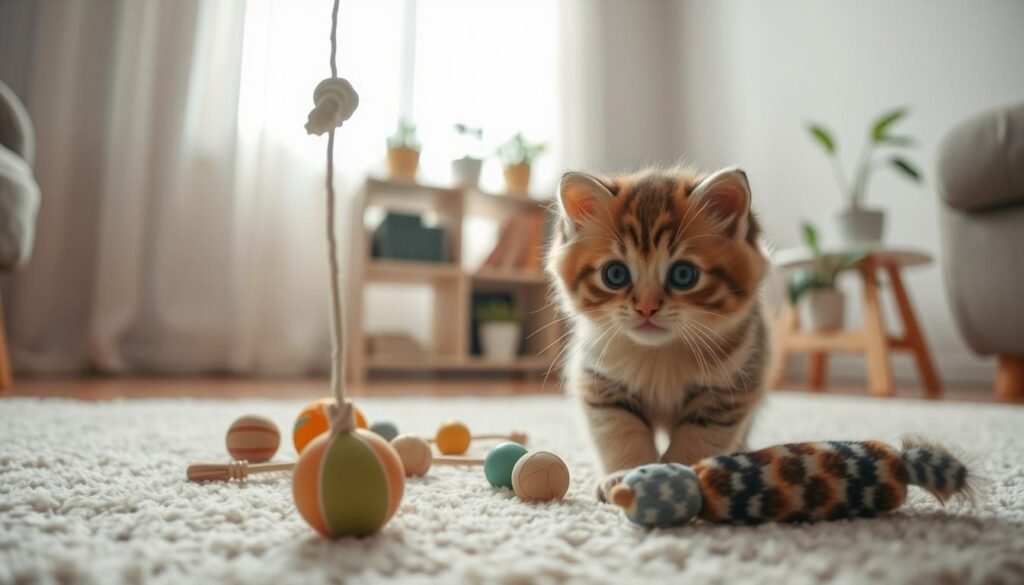
Set up one quiet room
Pick a room where your kitten can rest without constant foot traffic or loud activity. Set the food and water apart from the litter area, and include a soft place to hide or nap.
Keep the room’s door closed while you finish checking other spaces. Secure window screens and keep windows closed whenever your kitten is unattended. A screen alone may not stop a curious kitten from pushing at an opening.
Check for hazards at kitten level
A cat essentials list for safety should cover risks that sit close to the floor or hang within reach. Use this room-by-room sweep before your kitten arrives:
- Secure electrical cords or move them out of reach.
- Tie up blind and curtain cords.
- Remove toxic plants, especially lilies.
- Store medications and cleaning products behind closed doors.
- Put away small chewable or string-like objects.
Check behind furniture and under low shelves, too. A kitten may squeeze into a narrow gap or pull at anything that dangles. A tidy floor also makes it easier to spot small items before your kitten does.
Let your kitten explore safely
Keep the first room simple, with clear paths to food, water, litter, and a resting spot. Close off spaces where your kitten could become trapped, and supervise early trips into other rooms.
Look over the home again after moving furniture or bringing in a new item. A loose cord can slip behind a chair, and a small object can roll under a cabinet. Keep lilies out of the home entirely rather than relying on a high shelf to protect a curious kitten.
What Food and Feeding Schedule Does a Kitten Need?
Choose a food labeled for kitten growth, then use age, weight, and body condition to guide measured meals. A kitten food label should include an AAFCO nutritional adequacy statement for the kitten life stage.
Kittens can begin exploring solid food at about 5-6 weeks and are typically ready for an all-solid-food diet by 7-8 weeks. Keep a newly adopted kitten on its current food at first, since a sudden change can upset its stomach.

Choose food for growth
Look for food made for kittens or growth, rather than adult cat food. The AAFCO nutritional adequacy statement says the food is formulated to meet recognized nutrition standards for a stated life stage.
Wet food, dry food, or a mix can fit a kitten’s diet when the label supports growth. For example, Wellness CORE Kitten Classic Paté Wet Cat Food is a protein- and calorie-rich canned option with a soft pâté texture.
Use the package directions as a starting point, not a fixed rule for every kitten. Appetite, growth, activity, and body condition can affect how much food your kitten needs.
Match portions and meals to age
The examples below give average daily calories and meal counts for kittens at different ages and weights. A veterinarian can help adjust portions based on growth and body condition.
- 2 months, 2 pounds: about 150 calories in three meals.
- 3 months, 3 pounds: about 200 calories in three meals.
- 4 months, 4.5 pounds: about 300 calories in three meals.
- 5 months, 5.5 pounds: about 340 calories in two meals.
- 6 months, 6.5 pounds: about 400 calories in two meals.
- 7 months, 7 pounds: about 420 calories in two meals.
- 8 months, 7.5 pounds: about 440 calories in two meals.
- 9 months, 8 pounds: about 460 calories in two meals.
- 10 months, 9 pounds: about 500 calories in two meals.
- 11 months, 10 pounds: about 540 calories in two meals.
Move through food transitions gradually
When you do change food, introduce the new food over a few days by mixing it with the familiar food. Increase the new food in small steps while watching for changes in appetite or stool.
Most kittens are ready to transition to adult cat food around 12 months. Your veterinarian can help you choose the right time for your kitten, especially if growth or body condition raises questions.
Check your kitten’s weight and body condition with your veterinarian before making a lasting portion change.
How Should You Set Up Litter Boxes as a Kitten Grows?
A kitten can use the litter box reliably only if it is easy to enter, roomy enough to turn around, and kept clean. Young kittens need a low entry and enough floor space to move without brushing against every side.
Use one litter box per cat plus one extra, and choose a box your kitten can enter without climbing. For one kitten, that means two boxes, placed in separate, quiet spots.
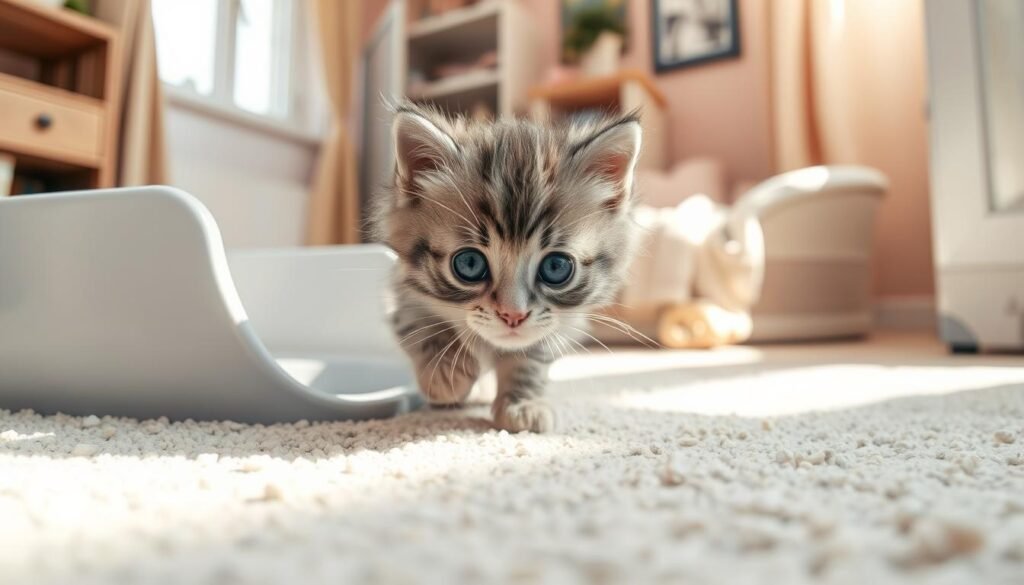
Choose a box your kitten can enter
Use these age-based box sizes as a starting point, then check whether your kitten can step in and turn around comfortably:
- From 0-3 months: an open tray with an entry no higher than 3 inches and a length of 14-16 inches.
- From 3-6 months: an entry height of 3-4 inches and a length of 18-22 inches.
- From 6-12 months: an entry height of 4-5 inches and a length of 22-26 inches.
These age-based litter box sizes can help you pick a starting fit as your kitten grows. A box with a hood or high sides may be hard for a small kitten to enter, even if it looks roomy.
Pick litter for your kitten’s age
Very young kittens should use unscented, non-clumping litter because they may taste it. Around 8-10 weeks, you can consider switching to unscented clumping litter.
Start with about 1 inch of litter for a small kitten. As your kitten grows, use about 1-3 inches, keeping enough depth for digging without making the box hard to enter.
Place and clean each box
Choose quiet, low-traffic places where your kitten can reach a box without passing through a busy part of the home. Keep boxes away from loud appliances and avoid putting them all together in one spot.
Scoop waste daily. Change non-clumping litter once or twice a week, and change clumping litter about once a month. Wash each box monthly with soap and water.
For a home with more than one cat, place boxes in separate, accessible locations so each cat can reach one without competition. If your kitten struggles to step over the edge or turn around, size the setup to its current abilities rather than waiting for it to grow.
Which Toys and Scratching Supplies Suit Kittens?
A small selection of toys can give your kitten ways to chase, bat, pounce, and play without turning hands and feet into targets. Choose a mix of toys for shared play and safe solo activity.
Offer both vertical and horizontal scratching surfaces, and keep string toys for supervised play only. A stable vertical scratching post should be at least 32 inches high and covered in sisal.

Choose toys for chasing and solo play
The Frisco Moppy Ball measures 3 x 3 x 3 inches and uses polyester and synthetic fabric. Its light shape makes it useful for batting and chasing across the floor.
The KONG Kickeroo Cuddler Cat Toy measures 6 x 4 x 2 inches and contains crinkle material and catnip. Its shape gives a kitten room to bunny-kick and scratch.
For supervised chasing, the Cat Dancer Cat Charmer Wand Toy has a flexible polycarbonate wand and a long felt ribbon. Move it along the floor rather than waving it near your kitten’s face.
SPOT Doc & Phoebe’s Hunting Snacker for Cats is a food-dispensing toy for solo play. It can turn a small portion of food into an activity when your kitten is awake and ready to play.
Give scratching and climbing safe outlets
A tall, stable sisal post gives your kitten a place to stretch and scratch upright. A cardboard scratcher offers a horizontal option, which may appeal to kittens that prefer to claw near the floor.
A short cat tree can give a young kitten a low place to climb and look around. Pick a steady base and an easy route up, especially while your kitten is still learning to climb.
The ASPCA’s general cat-care guidance recommends a sturdy scratching post at least three feet high. Place a scratcher near a spot your kitten already visits, rather than expecting it to cross the room to find one.
Keep yarn, thread, rubber bands, hair ties, and wire twist ties out of reach because kittens may chew or swallow them. Put away string toys as soon as interactive play ends.
What Carrier and Comfort Supplies Should You Have?
A familiar carrier and a quiet place to rest make routine travel and downtime easier for a new kitten. Choose a secure cat carrier that fits your kitten and can be closed safely for car rides and vet visits.
A hard-sided plastic carrier is easy to clean, and some models open from the side and top. A washable bed or blanket gives your kitten a familiar place to rest in a quiet spot.

Make the carrier familiar
Leave the cat carrier open at home with a soft blanket inside. This lets your kitten investigate it between trips instead of seeing it only when travel begins.
Keep the carrier in a calm area and let your kitten approach at its own pace. The blanket can carry a familiar smell, which may make the carrier feel less strange.
Set up a comfortable resting place
Place a washable bed or blanket in a quiet spot where your kitten can nap without being disturbed. A simple folded blanket may work as well as a special bed, so you can learn what your kitten prefers.
A practical kitten starter pack can include a carrier, washable bed or blanket, soft brush, cat nail trimmers, and cat-specific toothbrush and toothpaste. These basics support transport, rest, and care without needing a packaged bundle.
Build a small grooming kit
Use a soft brush for brief, gentle strokes, stopping if your kitten seems uneasy. Start by letting the kitten sniff the brush before you touch its coat.
Get your kitten used to gentle paw handling before trimming nails. Use cat nail trimmers and ask your veterinarian to show you where to trim if you are unsure.
For oral care, choose a toothbrush and toothpaste made for cats. Never use human toothpaste for a cat, since it is not made for feline use.
Keep grooming sessions gentle and brief so your kitten can get used to being handled.
Which Veterinary Care Should You Arrange First?
Arrange an initial veterinary exam within the first week so your kitten’s health history and next preventive-care steps can be reviewed. Bring any treatment records from a shelter or breeder, since they help the veterinarian decide what is due next.
Keep vaccine and medication decisions with your veterinarian because timing depends on your kitten’s history and local rules. Ask about testing for feline leukemia, FIV, and intestinal parasites when appropriate.

Book an initial health exam
At the first visit, the veterinarian can review your kitten’s health history and make a care plan. Bring notes about any signs you have noticed, along with shelter or breeder records.
Use this appointment checklist to guide the conversation:
- Bring shelter or breeder health and treatment records.
- Ask what health checks or tests are appropriate.
- Review which vaccines are due and when.
- Ask which parasite prevention fits your kitten.
- Discuss microchipping and registration details.
- Plan spay or neuter timing with the veterinarian.
Plan vaccines and parasite prevention
FVRCP is given every 3-4 weeks until a kitten is at least 16 weeks old. In most areas, rabies vaccination can be given at 12 weeks.
The FeLV vaccine series starts at 8 weeks and includes two doses given 3-4 weeks apart. Your veterinarian can check which vaccines fit your kitten’s age, history, and local requirements.
Ask about parasite prevention and testing, including feline leukemia, FIV, and intestinal parasites when appropriate. Do not give medication without veterinary direction.
Arrange identification and spay or neuter care
A microchip can help reunite a lost cat with its family only when its registration details stay current. Update your contact information if your phone number or address changes.
Spaying or neutering by five months is widely recommended. Ask your veterinarian how that timing fits your kitten’s health and care history.
Bring any shelter or breeder health records to the appointment.
How Long Can a Kitten Stay Alone?
A healthy, weaned 8-week-old kitten can usually manage a two-hour absence, while a kitten still taking milk replacement needs more frequent care. Set up food, water, a safe room, and a clean litter box before you leave.
Healthy, weaned kittens should not be left alone for longer than 4 hours. Very young kittens still receiving kitten milk replacement should not be alone for more than 2-3 hours.

Milk-replacement kittens need feeding within that shorter window, so plan a caregiver visit if your schedule runs longer. A kitten’s age and feeding stage matter more than the time that feels convenient for your day.
For a short absence, keep the kitten in a room without access to hazards or open windows. Leave the room at a comfortable temperature and make sure your kitten can reach its supplies.
If you will be away for more than 24 hours, arrange a pet sitter and at least one check-in per day. Ask the sitter to confirm that your kitten has eaten, drunk water, used the litter box, and seems well.
Arrange a person to check in if your absence will last beyond 24 hours.
How Can You Help a New Kitten Settle In?
A calm first day and a predictable routine give a new kitten space to adjust without being overwhelmed. Let the kitten leave its carrier and explore at its own pace.
Keep the first days quiet and preserve familiar food and litter at first where possible. Cats may hide, explore cautiously, play, scratch, or seek familiar routines as they respond to a new home.
Keep the first days calm
Give your kitten time to sniff the room and choose where to rest. Avoid inviting many people over or carrying the kitten from place to place before it is ready.
Keep the daily pattern simple, with meals, play, and quiet time at steady points. Familiar food and litter can make the change feel less abrupt while your kitten learns the new space.
Hiding and cautious exploration are common during an adjustment. Play, scratching, and returning to familiar routines can also be normal. Contact your veterinarian about persistent concerns or changes that worry you.
Introduce resident pets gradually
Introductions between pets should happen over days to weeks, not all at once. Keep the kitten in its own room at first, with its own food, water, litter, and a place to hide.
Swap bedding or soft cloths so the animals can learn each other’s scents without direct contact. You can also feed them on opposite sides of a closed door, then move to brief visual contact when both seem calm.
Keep early meetings short and supervised, with a clear way for each animal to leave. A nervous pet may need more time at an earlier stage, so do not move forward just to meet a schedule.
For a fuller plan on introducing a new cat to resident cats, keep separation and scent exchange before visual contact. Slow an introduction down if either animal is hiding, growling, or unable to relax.
Conclusion
A kitten’s first days go more smoothly when the basics are ready and the home feels calm. A safe first room and a few well-chosen supplies are enough to begin; you can add more as you learn what your kitten likes.
Your veterinarian can shape a care plan around your kitten’s age, health, and history. Before pickup, set up the safe room and save the veterinarian’s contact information.