

To introduce a new cat to your existing cat, keep them separated at first and move through scent, sight, and supervised contact only as both stay calm. What if the best outcome is simply sharing a home without fear? A slow, staged process gives each pet time to adjust without pressure.
Site swapping means temporarily letting each cat explore the other cat’s area while keeping them physically separated. Bringing new cats together can take days or months, and friendship is not the only measure of success. The goal is a home where both cats can eat, rest, and move around safely. Their comfort, not your calendar, sets the pace.
Some cats become close companions; others prefer a little distance. Either can be a good fit if both feel secure and can reach what they need. Treat calm eating, resting, and normal litter-box use as more useful progress checks than a fixed calendar.
Before the New Cat Arrives: Health, Fit, and Home Setup
Before arrival, reserve a quiet room with a door that closes securely and gives the new cat a complete, calm base. Keep the cats completely separated for at least a week before beginning the introduction process. Use that time to settle routines and confirm that each cat has safe access to food, water, and a litter box.

Check health and temperament before arrival
Arrange a recent veterinary check for both cats, including the resident cat. Ask your veterinarian whether the newcomer needs screening for contagious diseases before entering the shared home. A health issue can affect behavior, so mention any change in appetite, energy, or bathroom habits.
Choose a cat whose temperament and energy level may suit the resident cat. Looks, breed, or gender alone cannot tell you whether two cats will share space well. Think about each cat’s age, play style, and comfort around other animals.
A quiet adult cat may struggle with a nonstop kitten, while two playful cats may enjoy similar activity. Still, no match guarantees an easy introduction. For more help weighing household fit and the number of cats your home can support, see this guide to choosing how many cats suit your home.
Prepare a secure transition room with separate resources
The transition room is the new cat’s separate settling space. Set it up before arrival so the newcomer can hide, rest, and explore without meeting the resident cat. Use this checklist:
- Place food and water apart from the litter box, with bowls in separate spots.
- Offer hiding places, plus a covered carrier where the cat can retreat.
- Add bedding, scratching surfaces, and a few safe toys.
- Provide elevated perches, such as a stable cat tree or shelf.
- Secure the door and remove hazards, including cords, toxic plants, and dangling strings.
Each cat needs separate access to essential resources throughout the cat home. Provide one litter box for each cat, plus an extra litter box, and spread the boxes around the home. Keep food, water, scratching surfaces, and resting places apart rather than clustering everything in one corner.
Plug in feline synthetic pheromone diffusers in the main living area and transition room 24-48 hours before the new cat arrives. These products do not replace separation or a careful introduction. Make sure the door latches firmly and that other pets or children cannot open it by accident.
Check the room at the cat’s level for gaps, loose screens, and small items that could be swallowed. Keep the route to food, water, and the box easy to use, even when the cat feels shy. Avoid placing the transition room in a busy passage where either cat is repeatedly disturbed.
A Step-by-Step Plan to Introduce a New Cat to Your Existing Cat
A familiar scent paired with a meal or favorite treat gives each cat a low-pressure first association with the other. Move ahead only when both cats can stay calm at the current step. American Humane Society recommends gradual, staged introductions, with no need to rush toward a face-to-face meeting.

Set up the process so each cat can leave or move away. A closed door lets them notice scent and sound without direct contact. Keep the resident cat’s usual routine steady while the newcomer learns the transition room.
Start with scent and positive associations through a closed door
Begin by exchanging bedding or toys between the cats. Place a blanket or toy that one cat has used near the other cat’s resting area. Let each cat investigate at its own pace, and remove the item if either avoids the space or seems unsettled.
Next, offer meals or treats on opposite sides of the closed door. Start far enough away that both cats will eat comfortably. The goal is to pair the other cat’s scent with something pleasant, not to make either cat approach the door.
As the cats remain relaxed, move the bowls a little closer during later meals. Watch whether each cat still eats at a normal pace and can turn away from the door. If either cat will not eat nearby, move the food farther from the door and try again there.
Keep these closed-door play sessions brief, around 5-20 minutes. Use a toy each cat enjoys on its own side, such as a wand toy or soft ball. End before interest fades, and let each cat return to quiet time.
If one cat stops eating, hides, or guards the doorway, increase the distance again. A meal should not become a test of courage. Each cat should be able to enjoy food without feeling trapped by the other cat’s presence.
Swap territories without allowing a meeting
When scent and meals near the door go well, try site swapping. Secure one cat in a separate room, then let the other explore that cat’s area. Keep the cats physically separated throughout the change.
Allow the exploring cat to sniff bedding, furniture, and other familiar items. Do not carry a cat toward the other’s belongings or block its path back. Let the cat decide how much of the space to inspect.
Then return that cat to its own area and let the other cat explore. This gives each cat a chance to learn the other’s territory without seeing its owner. Avoid swapping both cats at once, since they could cross paths during a door change.
Room rotation can continue daily for at least 2-3 days. Some cats need more time before a brief view feels safe. Keep the transition room available as the newcomer’s base, even after territory exchanges begin.
During each change, check doors before opening them and keep the cats behind a secure barrier. A helper can hold a door while you move one cat, but do not rely on an unlatched door or a quick handoff. Small gaps can turn a planned exchange into an unwanted meeting.
Add short visual sessions behind a secure barrier
When both cats handle scent and room changes calmly, allow a brief view through a secured screen or tall pet gate. Start with only a few seconds of sight, then cover the barrier again. Repeat only if both cats can look away and move off easily.
A covered visual barrier can reveal just a small amount at first. Drape a towel over part of the screen or gate, then uncover more as the cats stay relaxed. Keep treats or toys on each side to give them something else to focus on.
A baby gate may not be tall enough to stop a cat from jumping over. If needed, stack a second gate securely above it, with no open gap between the gates. Check that the setup cannot tip, slide, or leave room for either cat to squeeze through.
Keep the sessions short and end while both cats remain settled. Do not wait for growling or frantic attempts to leave before stopping. A calm ending helps preserve the easy association with seeing the other cat.
Progress can look uneven. One cat may watch from a distance while the other explores the room or plays. Keep the barrier secured so neither cat can rush through or climb into the other’s space.
What Cat Body Language Says During Introductions
Relaxed movement and the ability to disengage are more reassuring than a cat that stays fixed on the other animal. A brief hiss or cautious look does not prove that the match has failed. Persistent tension means the current stage is too hard, even if the cats have been there for several days.
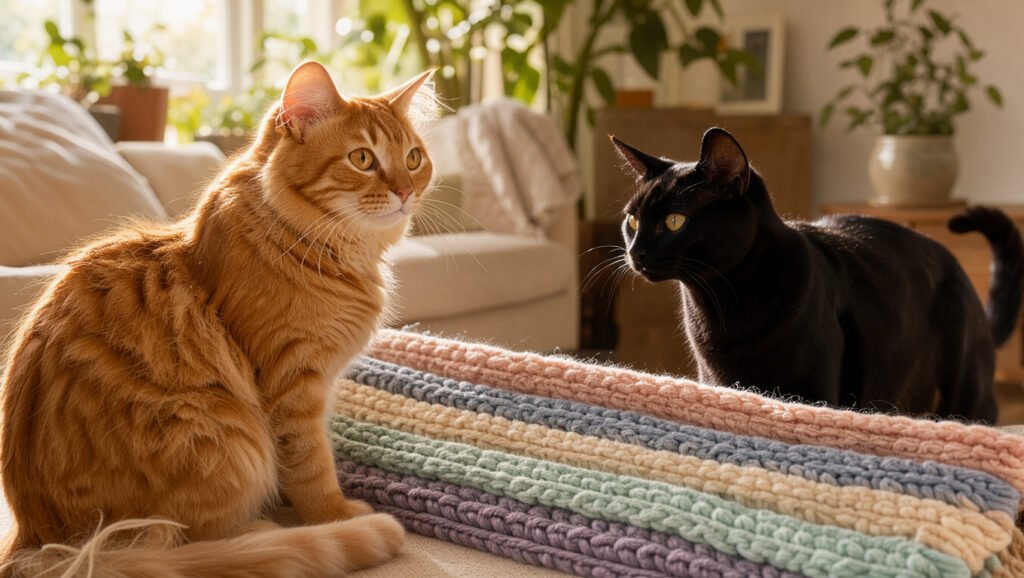
Look at the whole cat, not one signal in isolation. The AAFP Intercat Tension Guidelines were published in 2024 and describe signs that can help people notice strain between cats. Cats have more than 20 ear muscles, so small changes in ear position can carry useful clues.
A cat may turn its ears toward a sound, then look away and return to eating. That is different from staying fixed on the other cat with a stiff body. Tail movement, posture, gaze, and sounds all add context.
Five changes can suggest that a cat is unhappy:
- Hiding more than usual.
- Eating less or refusing food.
- Avoiding the other cat or an important resource.
- Growling or repeated hissing.
- Changes in normal litter-box behavior.
Look for patterns across the day, not one moment alone. A cat that hides after a loud noise may soon come out, while ongoing hiding after each exposure suggests the pace is too fast. Reduced appetite or changed litter use can also point to a health concern.
Persistent growling, repeated hissing, flattened ears, a puffed or lashing tail, stalking, or chasing call for more distance or an earlier step. Refusal to eat, hiding, or pacing during exposure also shows that the setup is too intense. Stop the session instead of waiting for the cats to settle in front of each other.
More reassuring signs include a loose posture, eating, playing, looking away, or choosing to leave. These actions show that a cat can shift attention and make its own choices. A cat does not need to approach the barrier to make progress.
Hissing can be a warning that a cat wants more space, not an invitation to push closer. Do not punish the sound or use treats to lure a cat toward the other animal. If tension rises, block the view and give each cat enough distance to settle before trying again.
How to Build Safe, Supervised Time Together
Begin the first unbarriered visit when both cats are calm, not when they are already watching or vocalizing at the door. Keep the first contact brief and end it while both cats remain calm. Even a few quiet minutes can be a useful first meeting.

Choose a spacious area with more than one route away from the other cat. A calm room gives each animal room to move without being cornered. Ask a helper to join you when possible, so one person can focus on each cat.
Make the first face-to-face meeting short and purposeful
Have each person engage one cat with a favorite toy or treats. Keep the cats at a comfortable distance, and let them notice each other without asking them to approach. A wand toy can direct play away from the other cat and help ease a pause.
Keep the door open toward a clear exit, and avoid placing either cat between people or furniture. Do not hold a cat in your arms or carry one toward the other. Let each cat choose whether to look, play, eat, or leave.
Start with a few minutes, then guide each cat back to its own space before tension builds. End the visit while both are still able to focus on you or their toys. Calm endings matter more than extending a meeting to reach a set time.
If the cats ignore each other, that can be a good first result. They do not need to sniff noses or play together. Keep the visit ordinary, with a toy or treat in each cat’s own area.
Plan the meeting for a calm part of the day, not after noisy visitors or an energetic play session. A predictable routine can help both cats know what to expect. Keep the number of people low so the room stays quiet.
Increase shared time before allowing unsupervised access
Repeat short visits and extend them gradually when both cats stay comfortable. Add time in small steps instead of jumping from a few minutes to a long stretch. If either cat struggles, return to the last easy stage.
The 3-3-3 rule describes a broad adjustment timeline of three days, three weeks, and three months. It is not a deadline for finishing an introduction, since each cat adjusts differently. Cats commonly need a few weeks to share a home, and some need months.
Look for steady comfort across different times of day before giving the cats more freedom. Keep their routes to food, water, resting spots, and litter boxes open during shared visits. A tight hallway or a single doorway can make an otherwise calm meeting feel trapped.
Use supervised time to learn how each cat handles normal household activity. A doorbell, a dropped toy, or a person walking through may change the mood. Keep the visit simple until the cats can recover from small distractions without focusing on each other.
Do not leave the cats together overnight or when nobody can watch until they have spent 4-5 hours together routinely without incident. If they have only had calm visits in one room, keep supervising in other shared areas too. Keep supervising until the cats routinely share space without tension for 4-5 hours.
What to Do When Tension or Conflict Appears
If the cats clash, calmly create distance with a solid barrier instead of reaching between them. Never put your hands between fighting cats or pick them up during a tense moment. A piece of cardboard, a cushion, or a blanket can block their view while you guide them apart.
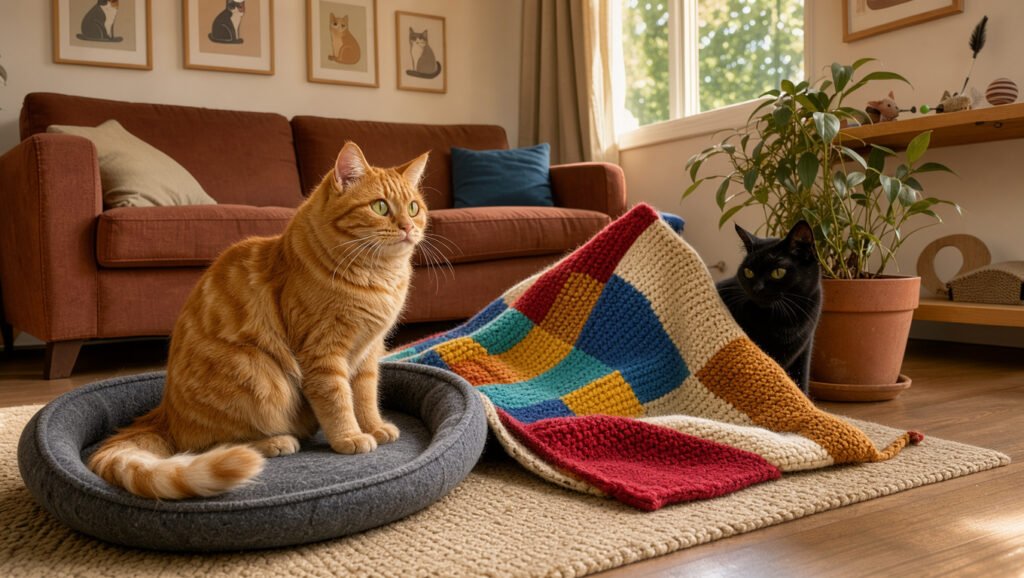
Move slowly and use the object as a shield, not as a way to strike or scare either cat. Once the cats cannot see each other, guide them into separate rooms and close the doors. Give each one quiet access to water, food, and a litter box.
Separate safely and restart at an easier stage
After a scuffle, separate the cats and wait three to six days before restarting the introduction more slowly. Do not reopen the door just because both cats seem quiet a few minutes later. They need time away from the event before another exposure.
Check each cat for wounds or signs of pain. A veterinarian can assess injuries and help rule out health problems that may affect behavior. Keep a note of what happened, including the location and what each cat was doing beforehand.
When you restart, return to the last stage that felt easy, or go back one step further. Shorter sessions and more distance can help lower pressure. Do not repeat the same setup if it led to a chase or fight.
Leave a clear path to retreat in any shared area. A cat that cannot move away may defend itself, even if it had seemed calm moments earlier. Keep doors and gates ready so you can end an exposure without reaching toward either cat.
Reduce competition and support peaceful coexistence
Spread litter boxes, food and water stations, scratching surfaces, perches, and hiding places around the house. Separate locations help prevent one cat from guarding several essentials at once. Keep safe retreat areas open even after the cats spend more time together.
High-energy cats can benefit from two or more play sessions every day, for at least five minutes each. Use a toy that lets a cat chase, pounce, and catch, then put the toy away safely. A regular play routine can give busy cats another outlet for energy.
A healthy cat environment has five parts: safe places, separate core resources, play and hunting activity, predictable positive time with people, and respect for smell. Keep familiar bedding and resting spots in place when possible. Sudden changes to a cat’s scent-filled space can add strain.
Support does not mean making the cats share every room or activity. Some resident cats and newcomers do best with separate resting areas and planned time apart. If both can eat, sleep, and use their boxes without being blocked, distance can be part of a workable home.
For practical care and behavior tips, browse these cat care guides. Repeated injury, escalating aggression, or persistent inability to relax calls for advice from a veterinarian or qualified feline behavior professional. Seek professional help if repeated setbacks leave either cat injured, persistently fearful, or unable to reach essential resources.
Conclusion
A successful introduction means both cats can feel secure in the same home, whether or not they become friends. Calm coexistence is a valid result; close companionship is not required. Give each cat room to choose distance and keep daily routines steady.
Small, calm gains matter more than reaching a date on the calendar. If sharing space remains hard, a veterinarian or feline behavior professional can help you decide what support fits your household. Start by choosing the transition room and setting it up before the new cat comes home.