A cat that trusts us may show it by relaxing nearby, blinking slowly, or returning to familiar routines, rather than by seeking constant contact. What does that quiet behavior tell us about the bond we share?
We can look at everyday moments as a small case study. In 2020, researchers tested slow blinking, and shelter staff observed cats during human interaction.
Neither a blink nor a greeting proves love on its own. We learn more by noticing how a cat responds over time, in familiar settings and with familiar people.
We will look at posture, scent-sharing, grooming, proximity, and vocal cues. These signs can help us understand a cat’s comfort without expecting every cat to show affection the same way.
We get the clearest picture by looking for several comfortable signals across ordinary days.
What Do Trust and Affection Look Like in Daily Life?
A relaxed behavior means more when it appears alongside other easy, voluntary interactions. Trust is best read as a repeated pattern, not a single gesture.
Domestic cats, known scientifically as Felis catus, communicate through visual, vocal, tactile, and olfactory signals. A cue’s meaning can shift with the setting, the cat’s routine, and what usually happens next.
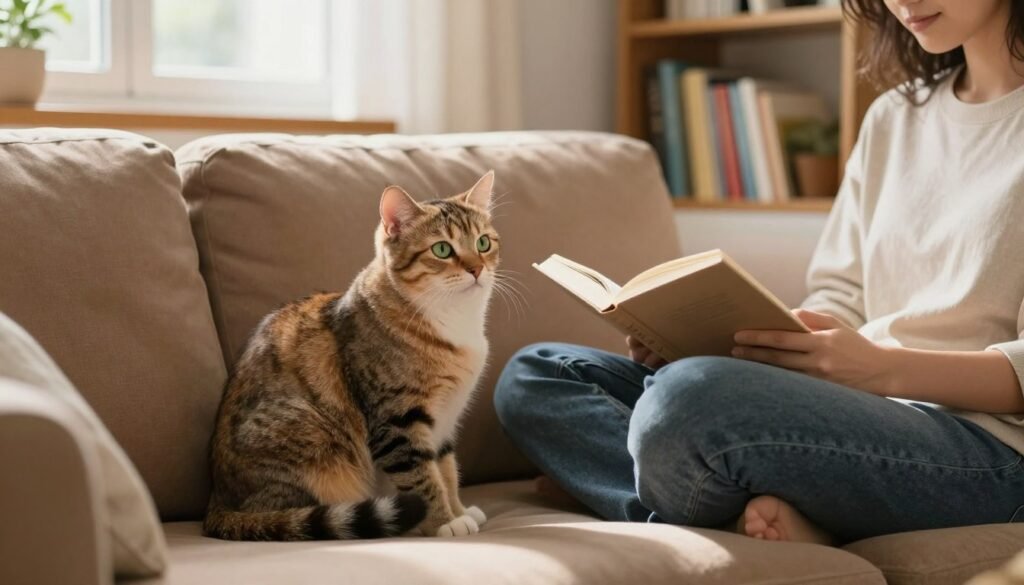
For example, following us toward the kitchen may fit a feeding routine. The same cat might follow us into a quiet room at another time, which could suggest a wish for company.
Our own habits also shape cat behavior and body language. A cat that purrs during familiar petting may be comfortable, while a purr during a stressful event can have another meaning.
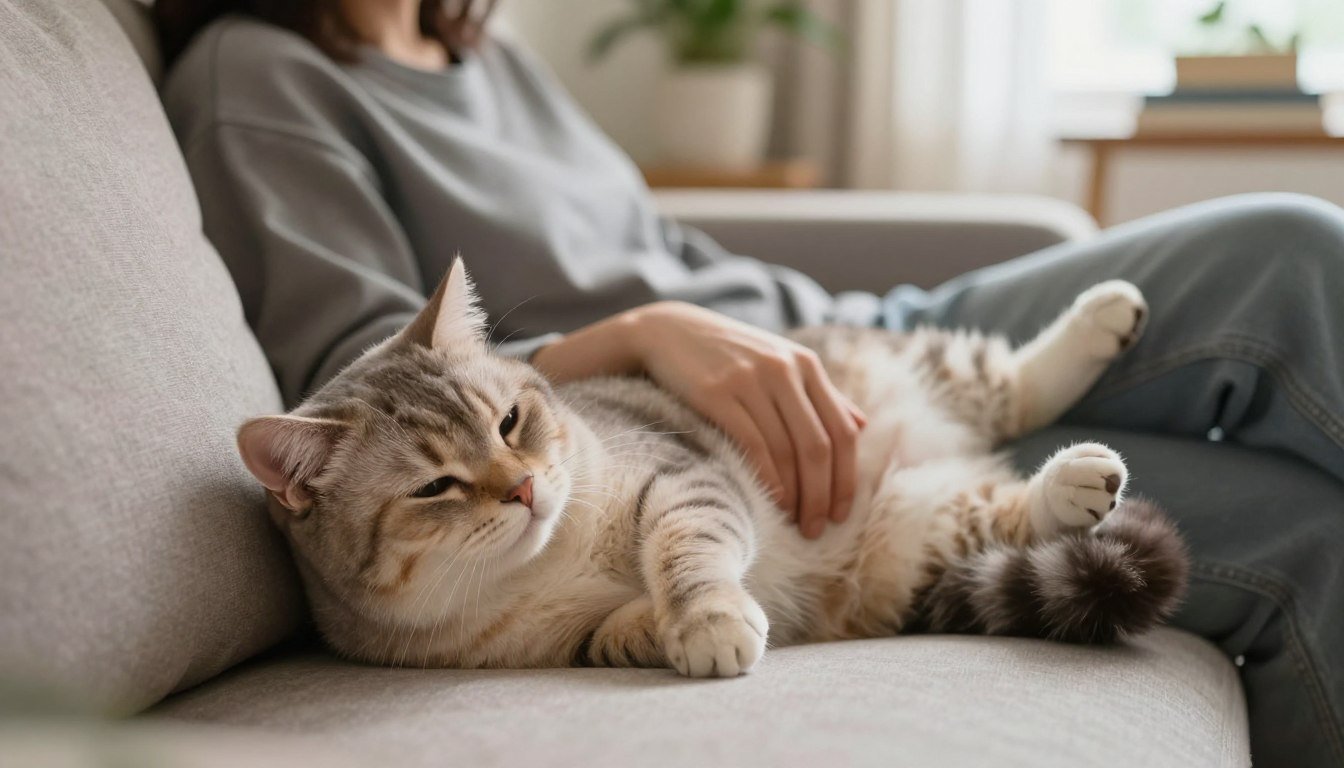
A belly display can occur when a cat feels safe, but it does not promise comfort with touch. We should treat both purring and belly exposure as clues, not permission.
| Signal | Possible affiliative meaning | Another possible explanation | Context to check |
|---|---|---|---|
| Slow blink | Calm social exchange | Brief eye comfort | Whether the body stays loose |
| Purring | Comfort near a person | Stress or discomfort | Posture and the setting |
| Belly exposure | Ease in a familiar place | Stretching or cooling off | Whether the cat welcomes contact |
| Following a person | Interest or company | Food or access to a room | Time and familiar routines |
Comparing several signals can help us tell a passing response from a settled habit. Changes in a cat’s usual habits can also reflect household stress or health needs, not a need for another cat.
Compare the behavior with that cat’s own usual pattern before assigning it a meaning.
What Are the Signs Your Cat Trusts You?
A 2020 experiment found that cats responded to owners’ slow blinks with more half-blinks and eye narrowing than when no interaction took place. Slow blinking can be an affiliative signal, but it cannot prove what one cat feels.

What the Slow-Blink Experiments Found
In another 2020 experiment, cats were more likely to approach an unfamiliar experimenter after a slow-blink interaction. They approached less often after the person held a neutral expression.
These findings offer one useful example of how cats show trust and social interest. They do not mean every cat will blink back, or that a cat who looks away feels unsafe.
To try a slow blink, soften your gaze, briefly close your eyes, then open them without staring. Keep your face relaxed and allow the cat to choose its next move.
What the Shelter Study Adds
A 2020 shelter study followed 18 cats. Cats that gave more and longer eye closures in response to human slow blinks were rehomed faster.
The same study found that cats identified as nervous around people tended to produce longer slow-blink sequences. This was compared with cats not identified as needing desensitization.
The shelter findings show an association, not cause and effect. Faster rehoming does not prove blinking caused adoption or define an individual cat’s personality.
A cat’s response may also depend on its setting and past experience. We can offer the signal without expecting a reply or reading too much into one look.
The 2020 slow-blink experiment also found that cats approached an unfamiliar person more often after a slow-blink exchange than after a neutral expression.
Offer the slow blink once, then leave the cat free to look away or approach.
What Does Relaxed Body Language Look Like?
A cat greeting us with a loose body and upright tail is showing a more comfortable picture than one greeting with a crouch and tucked tail. We should read several posture cues together.

Reading the Tail, Ears, and Posture Together
Loose muscles, neutral ears, and an upright or gently curved tail can accompany a comfortable greeting. A cat may pause nearby, move with ease, or choose to stay as we enter the room.
One cue can be hard to read by itself. A tail may move for several reasons, so its position matters more when we notice the cat’s ears, body, and movement too.
- Loose posture rather than a tense, low crouch
- Neutral ears rather than ears pressed flat
- Upright or gently curved tail during a greeting
- Willingness to remain nearby without being held
When a Relaxed-Looking Cat May Be Uncomfortable
Some cats remain still when uneasy, so a quiet body does not always mean comfort. Changes from a cat’s normal posture deserve attention, especially when they happen suddenly.
A cat that usually walks toward us may begin to crouch or keep its tail tucked. The shift tells us to slow down and check the setting rather than assume the cat’s mood has changed toward us.
These feline stress signals can be subtle at first. A familiar greeting may look different after a loud noise, a change in the room, or an unfamiliar person enters.
Give the cat more space if its posture tightens as we approach.
Does Showing the Belly Mean Your Cat Wants a Rub?
A belly-up cat may be showing comfort without asking us to rub its stomach. Showing the belly is not a reliable invitation to touch.
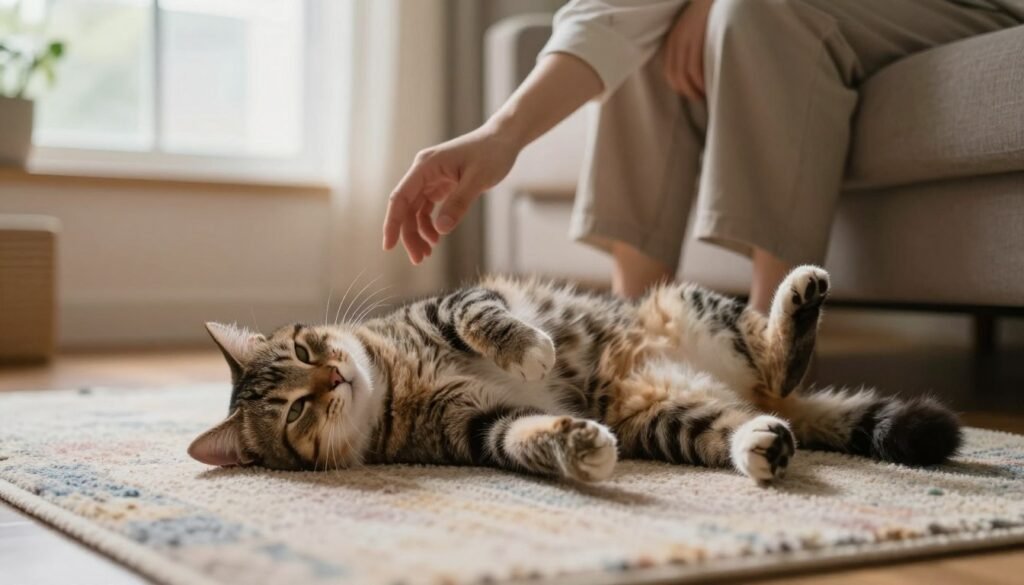
A cat’s abdomen holds vital organs, so it is a vulnerable area. A cat may feel safe enough to expose it and still prefer that we keep our hands away.
Touch preferences differ from cat to cat and can change with the moment. Whiskers, also called vibrissae, are sensory hairs, and many cats value gentle contact around the face.
| Body area | Common preference | Gentle approach | Sign to stop |
|---|---|---|---|
| Cheeks and chin | Often welcome | Offer one finger to sniff | Head turns away |
| Shoulders and back | Often accepted | Use a light stroke | Body stiffens |
| Belly | Often sensitive | Admire without touching | Cat moves to leave |
| Paws and tail | Often sensitive | Avoid unless needed | Cat pulls away |
A cat may welcome a brief cheek rub but dislike a longer touch along its back. We can learn its preference by pausing and watching what it chooses.
Pause when the cat turns away, stiffens, or moves to leave. Let the cat choose whether to return for more contact after we pause.
How Do Cats Use Scent Marking to Include You?
A cat that rubs its cheek against our leg is leaving familiar scent as well as making contact. Bunting is cheek or forehead rubbing against a person or object, a behavior that deposits scent and can serve as a social signal.
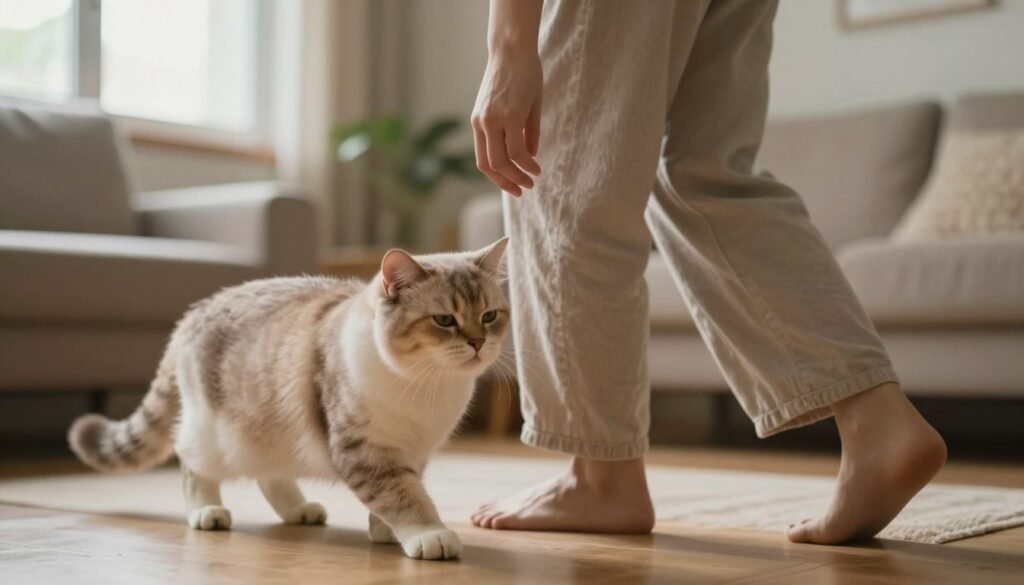
Cats have scent glands around their cheeks and chin. When a cat rubs its face on us, it shares familiar facial scent in an ordinary social behavior.
A cat may also rub on a chair, doorway, or bag. This can be part of everyday scent-sharing, not only a greeting directed at a person.
Urine marking is separate from bunting. A cheek rub does not mean a cat is claiming exclusive ownership of us or forming an exclusive attachment.
These scent marking habits help make a familiar person or place recognizable. A cat can repeat them in several rooms without asking for touch or attention each time.
Let the cat initiate the rub instead of reaching into its path.
What Do Grooming and Kneading Communicate?
Grooming and kneading are easier to interpret when the cat’s posture stays loose and the interaction remains voluntary. Neither behavior has just one meaning.
Social Grooming and Shared Care
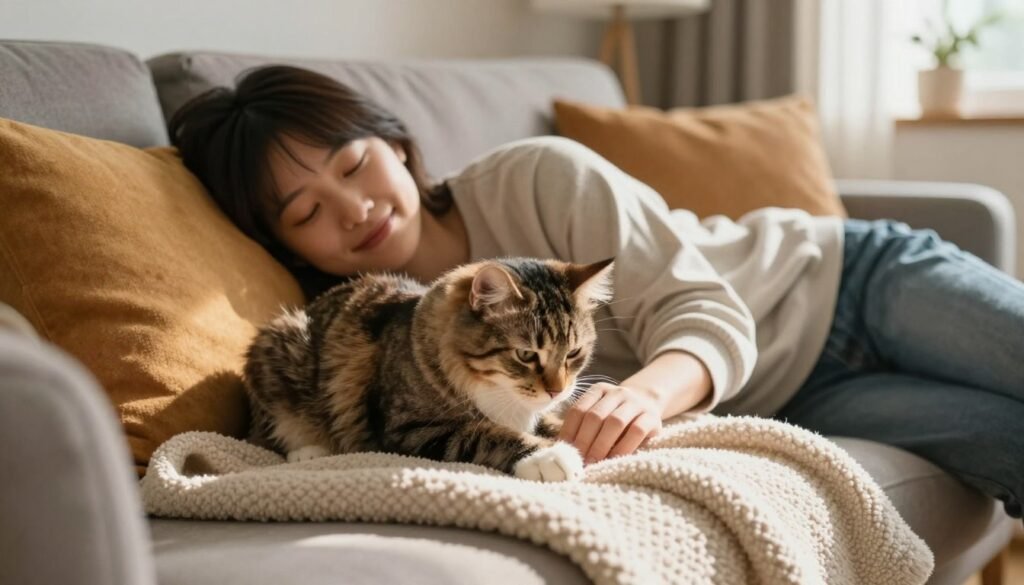
Allogrooming is social grooming between cats. Cats may groom each other around the head and neck, and some also lick a trusted person’s hair or skin.
A lick can be part of social contact, but it may also reflect the taste or texture of skin or hair. We can observe the wider interaction instead of treating each lick as a clear message.
For everyday care and grooming needs, our cat care guides cover a range of topics for living with cats.
Kneading as a Sign of Comfort
Kneading with paws is rhythmic pushing against a soft surface. A cat may knead a lap, blanket, or cushion while settling down.
Notice three details before interpreting it:
- Whether the cat’s body stays relaxed
- Whether the cat kneads a person or an object
- Whether the cat can stop and move away
Claws can make kneading uncomfortable without making it a sign of aggression. A typical adult cat has 30 permanent teeth, and most domestic cats have 18 claws; polydactyl cats may have more.
Place a thick blanket between our lap and kneading paws if the claws feel uncomfortable.
Why Does Your Cat Choose to Sleep or Stay Near You?
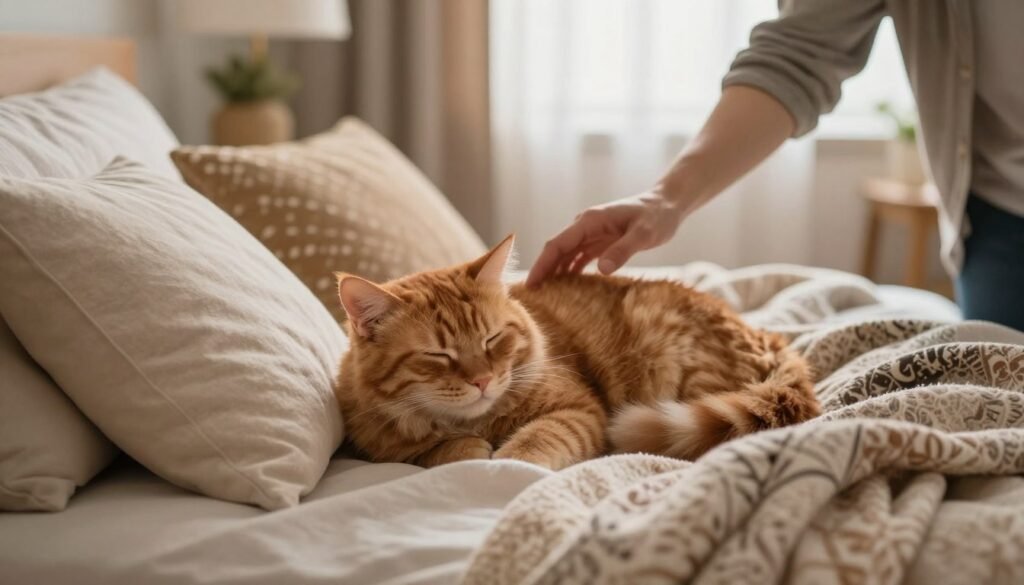
A cat that settles nearby is choosing proximity, even if it does not choose our lap. Resting close to us can show comfort without requiring direct contact.
Resting Near a Person
Cats typically sleep about 12-16 hours a day, though age, health, and activity affect each cat’s pattern. Cats are often more active around dawn and dusk.
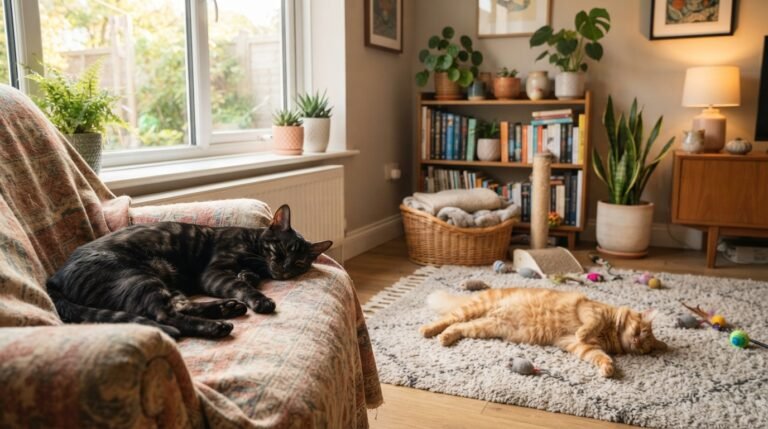
A cat may choose a bed, chair, or sunny window instead of our lap. That choice can still place it near familiar people and sounds.
Following and Lap-Seeking
Following us may mean a cat wants company, or it may reflect a feeding routine. One episode cannot tell us the motive with certainty.
Not all cats are lap cats, and each cat’s interest in laps differs. Some settle briefly, while others prefer a nearby cushion or a high perch.
We can make a lap easy to approach without drawing the cat onto it:
- Sit quietly and keep our hands relaxed
- Place a soft blanket across our lap
- Let the cat leave freely at any time
A cat’s familiar resting places can matter as much as our lap. Keep a comfortable resting spot available beside us as well as on us.
What Do Purring and Meows Tell You?
A soft purr beside us can accompany contentment, but the sound alone cannot tell us how a cat feels. We need to compare vocal cues with the cat’s usual behavior.

Cats can purr in relaxed situations and under stress. A purr beside a familiar person may fit a comfortable moment, while the same sound can occur when a cat feels unwell.
Meows can serve different purposes, including greeting, seeking access, or asking for food. Changes in timing and tone may tell us more than the sound alone.
Siamese and Oriental Shorthair cats are commonly known as vocal breeds, though individual cats vary. A quiet cat may be chatty at home, while a vocal cat may be less talkative with strangers.
A cat may bring us a toy, bug, or hunted item. The gesture’s meaning is uncertain, so we should notice when and where it happens.
Notice whether a change in vocalizing appears alongside a change in appetite, posture, or routine.
How Can You Find an Affectionate Cat or Lap Cat?
The best clue to an affectionate match is the individual cat’s behavior during calm, voluntary interaction. Coat color and breed labels cannot guarantee affection or lap-seeking.
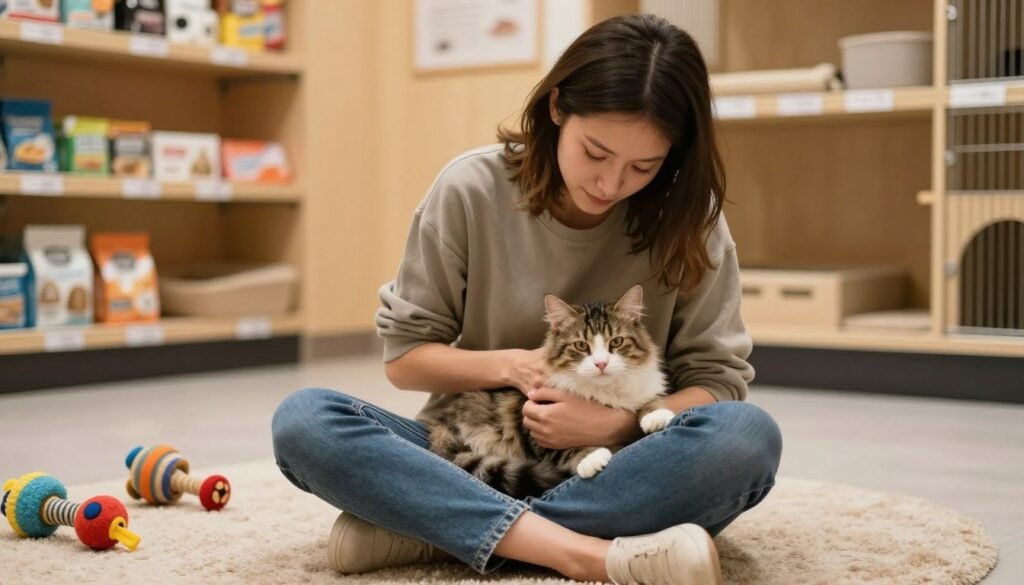
Observe the Individual, Not Just the Label
An orange cat is commonly called an orange tabby or a ginger cat. The name describes its coat, not whether it will seek a person’s lap.
Domestic shorthair describes a coat type, not a personality. Breed labels can offer context, but an individual cat’s behavior gives us a better view of its social preferences.
The kitten socialization period is commonly described as roughly 2-7 weeks. Early experience matters, but it cannot promise a kitten’s adult temperament.
Make a Calm Meet-and-Greet Count
During a calm visit, observe how the cat responds to quiet company, gentle attention, and play. Ask the shelter or foster caregiver about the cat’s established routine.
| Meet-and-greet moment | What to observe | What it may help us assess |
|---|---|---|
| Greeting | Approach or watch from afar | Comfort with a new person |
| Quiet sitting | Stay, rest, or move away | Ease with calm company |
| Gentle play | Engage or lose interest | Interest in shared activity |
| Voluntary contact | Lean in or avoid a hand | Preference for touch |
An adult cat’s established behavior can be easier to assess than a young kitten’s developing personality. A calm meeting still offers only a small view of how a cat acts at home.
Ask the caregiver what the cat chooses when no one is trying to engage it.
How Can We Build Trust and Spot Stress Signals?
Trust grows more readily when our approach is predictable and the cat can end an interaction. Consistent, low-pressure contact gives a cat room to choose how close to come.
Make Everyday Contact Predictable
Keep daily routines steady when possible, and approach in a calm way. Let the cat start contact, then pair shared moments with familiar, pleasant experiences.
Short, quiet interactions can be easier to accept than sudden reaching or loud play. Familiar timing also helps us notice when a cat’s habits change.
Recognize When to Pause or Get Help
Flattened ears, a tucked tail, crouching, and dilated pupils can signal unease. Several signs together give us more reason to pause than one sign alone.
A veterinary review of feline stress and health describes how behavior changes can relate to stress, pain, or illness. The veterinary review also discusses cues such as crouching, hiding, and ears turned back.
When a cat seems uneasy, use this quick checklist:
- Give the cat space
- Stop touching
- Allow an exit
- Note whether the behavior is new or persistent
Hiding, less play, or changed habits do not by themselves mean a cat needs another companion. A calmer routine or a health check may fit better.
Sudden or continuing changes in behavior should be discussed with a veterinarian rather than read as a change in affection. Contact a veterinarian about a sudden or persistent behavior change.
Conclusion
We can understand our cat more accurately when we notice what it chooses to do repeatedly. Several comfortable signals over time tell us more than one dramatic or unusual gesture.
Respecting a cat’s boundaries is part of building trust. A cat that can leave, pause, or decline contact can also choose to return.
We do not need to ask for a response to learn something useful. Choose one calm moment today to observe your cat without asking it to respond.