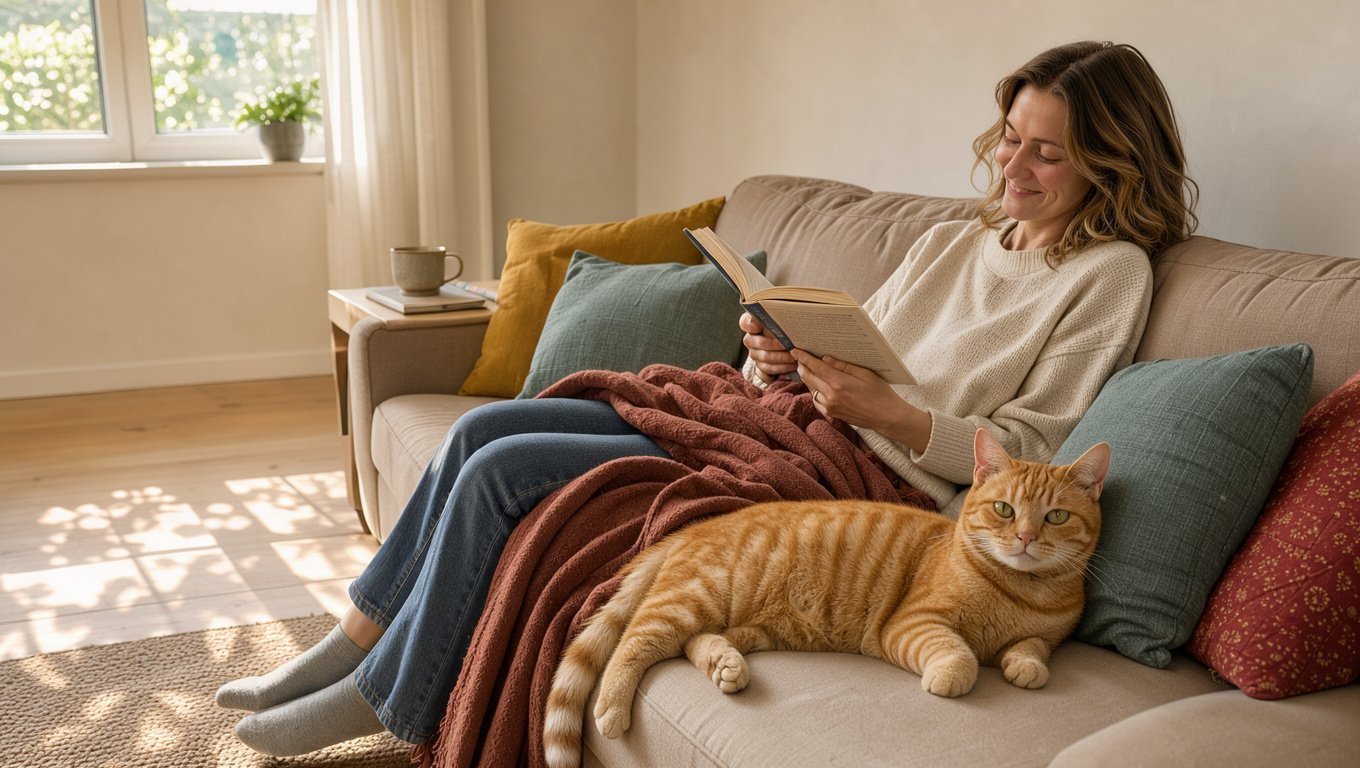
An orange coat cannot tell us exactly what a cat’s personality will be. Each cat’s behavior reflects individual biology, experience, and environment. The familiar online stereotype can make a ginger cat seem like a built-in comedian, but a cat at home may be affectionate, quiet, bold, or reserved. We know how easy it is to hope a new friend will fit a certain picture. This article separates entertaining stories from evidence, so we can enjoy the jokes without treating them as a forecast. Meet an orange cat as an individual rather than expecting the coat to supply a personality profile.
How Does Orange Cat Personality Get Its Reputation?
“Orange cat behavior” is a cultural shorthand for memorable antics, not a scientific personality category. People’s expectations help keep the story alive, even when a cat’s actions do not fit it.
A survey can measure what people believe about cats without proving that coat color causes a personality difference. That distinction matters when we hear owners describe an orange cat as especially friendly.

A 2012 survey asked 189 people to rate cats with different coat colors. Participants were more likely to describe orange cats as friendly. That result tells us about human perception, not how the cats behaved in a controlled test.
People may see a friendly orange cat and treat it as proof of the stereotype. They may overlook an orange cat that keeps to itself or a gray cat that seeks company. The mistake is treating an owner’s impression of friendliness as proof of a biological difference.
Why Do Anecdotes Feel Convincing?
Our memories are selective. When an orange cat climbs into a grocery bag or interrupts a video call, the moment feels worth sharing. A quiet afternoon spent napping rarely becomes a story.
This is confirmation bias: we notice and share events that fit an idea, while ordinary or conflicting moments slip from memory. Repeated stories can make a pattern feel proven even when no one has shown that color caused it.
That habit can shape the way owners interpret the same action. A cat that knocks over a cup might seem silly to one person and restless to another. The cat’s coat can color the story people tell about the behavior.
What About the “Single Brain Cell” Joke?
The online joke that orange cats share one “single brain cell” is humor, not evidence about intelligence. It turns clumsy or impulsive moments into a funny group trait.
Fiction and social posts make a simple story easy to repeat. They rarely show the full range of a cat’s daily behavior, much less test how coat color relates to learning or problem-solving.
A familiar story can be entertaining without being a dependable way to predict an individual cat.
When we meet a cat, we can enjoy the joke and still watch the animal in front of us. A familiar story can be entertaining without being a dependable way to predict an individual cat.
How Orange Coat Color Is Inherited
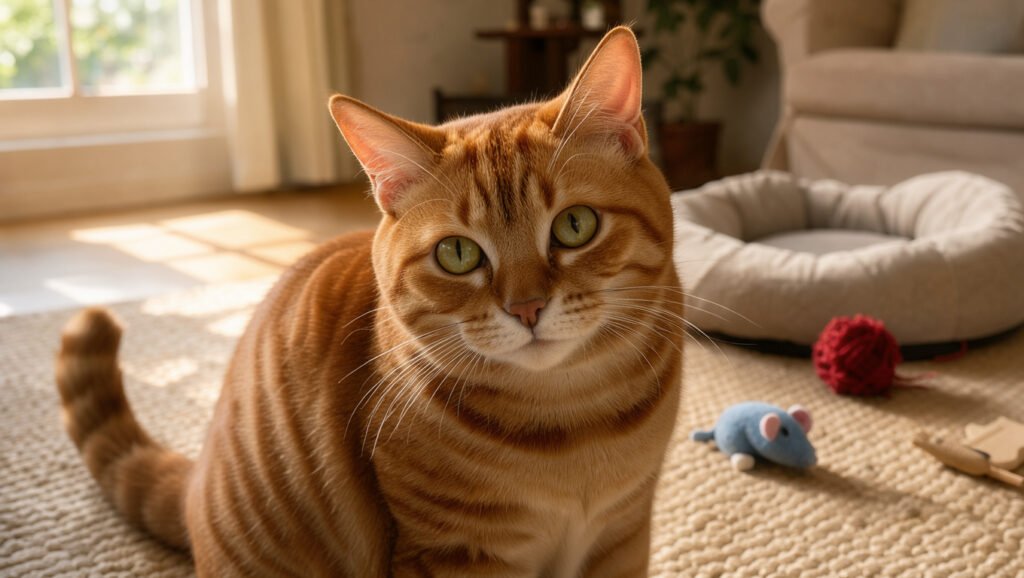
Roughly four out of five orange cats are male because one copy of the orange variant on the X chromosome can produce an orange coat in a male cat. That pattern comes from inheritance, not from a breed or a personality trait.
Orange identifies coat color, not breed; coat color alone cannot name a cat’s breed. A sex-linked trait is a trait associated with a gene on a sex chromosome, which can be inherited differently by male and female cats.
The X-Chromosome Inheritance Pattern
Cats have two sex chromosomes. A male cat usually has one X chromosome, so one orange variant on that chromosome can make his coat orange. A female cat usually has two X chromosomes and needs the orange variant on both to have a fully orange coat.
This difference helps explain why orange females are less common. A female with an orange variant on one X chromosome and a different color variant on the other may show both colors. Her coat can appear calico or tortoiseshell.
Researchers found a small deletion associated with orange cats. It increases activity of a nearby gene called Arhgap36, allowing that gene to be expressed in pigment cells where it is not expressed in non-orange cats.
In orange cats, Arhgap36 expression inhibits a later step in the molecular pathway that controls coat color. Researchers found no difference in Arhgap36 expression in the kidney, heart, brain, or adrenal gland tissues they tested.
The finding links the orange coat to pigment cells, not to a general change in every body tissue. It also does not show that the gene sets a cat’s temperament.
Orange Females and Calico Patterns
When a female cat inherits different color variants on her two X chromosomes, patches of orange and another color can form. That mix helps create calico and tortoiseshell coats.
Fully orange female cats can still occur when both X chromosomes carry the orange variant. Their color follows the same basic inheritance pattern, even though the combination is less common.
Orange coloring appears in mixed-breed cats and across breeds. Many orange cats receive the everyday label domestic shorthair, a common term for mixed-breed cats with short coats.
Tabby Markings, Freckles, and Color History
Orange cats have tabby markings, including the familiar M shape on the forehead. Tabby pattern is separate from orange coat color, and it can be mackerel, ticked, spotted, or classic.
The orange pigment is linked to pheomelanin, a pigment that also contributes to reddish and yellow tones. Some orange cats develop lentigo, dark freckles that may show around the nose or gums.
New or changing freckles deserve a veterinary check, since a change in a mark should not be judged by color alone. A small deletion near the orange-color gene is part of the genetic finding on orange coloring.
The word tabby traces back to striped silk from Iraq. Paintings from the 12th century show calico cats, a clue that the sex-linked orange mutation is at least that old.
When describing a cat, record coat color and pattern separately from breed.
What Studies Say About Orange Cat Behavior
A survey of 1,274 cats found no significant aggression difference between orange tabbies and cats of other colors. That result limits claims that orange coat color predicts how a cat will act.
Behavior research can point to patterns, but it does not establish a personality rule for orange cats. Study methods matter because owner reports and genetic tests answer different questions.
What People Perceive as Friendliness
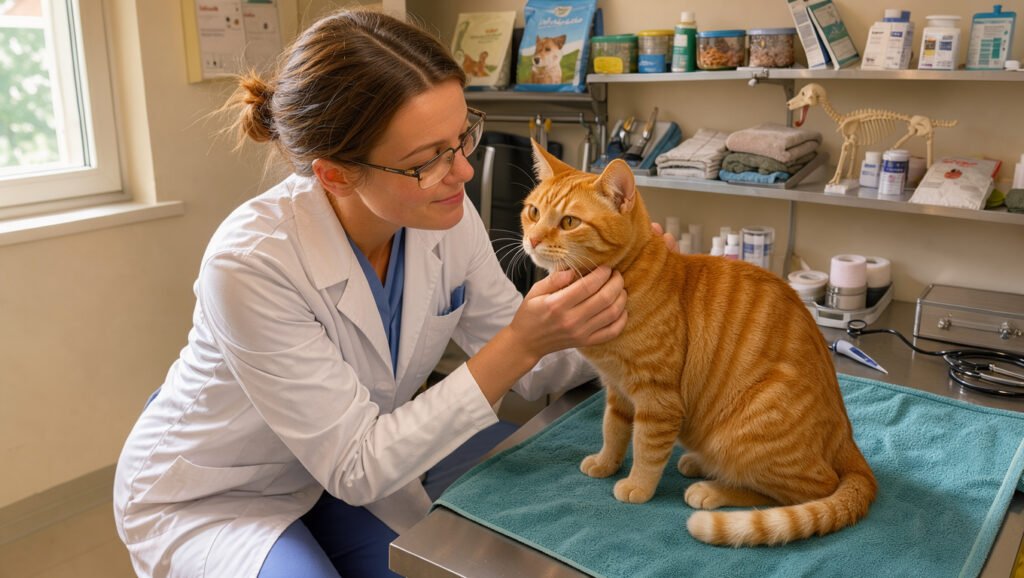
People may call orange cats friendly, but a perception survey measures people’s views, not the cats’ actions. Those impressions can shape how owners describe the same behavior across coat colors.
A report of friendliness can reflect many things, including a cat’s comfort with a familiar person. It does not show that orange coloring causes the cat to seek human contact.
Aggression Findings and Their Limits
In 2016, a University of California, Davis survey asked guardians of 1,274 cats about aggression toward people. It covered handling and visits to the veterinarian, and orange tabbies did not differ significantly from other colors.
The answers came from owners, rather than direct observations by researchers in a shared setting. Owner reports can reflect memory and interpretation, so they cannot settle every question about cat behavior.
The study reported small differences for some other colors. Those findings also relied on owner reports and do not support a broad claim that one coat color makes a cat aggressive.
A cat may resist being picked up or feel uneasy at a clinic for reasons that have little to do with its coat. One survey cannot explain every individual response.
What the 2025 Japanese Study Measured
A 2025 Japanese study examined 280 spayed or neutered cats through owner questionnaires and DNA samples. The researchers studied a short androgen receptor gene variant, not an orange-coat gene.
Cats with the short variant purred more often than cats with a longer variant. Male cats with the short variant scored higher for vocalizations directed at people, such as meowing to be fed or let out.
Female cats with the short variant showed more aggression toward strangers. The longer, less active androgen receptor variant was more common in pedigree cats.
These results describe associations within the cats studied. They do not show that orange fur caused purring, meowing, or aggression, and they cannot predict how any one cat will behave.
Orange cat personality in male cats and orange cat personality in female cats cannot be defined by these findings. The variant associations do not establish a general personality difference between orange males and orange females.
The Japanese study’s gene associations suggest questions researchers can test in other cats. Treat a questionnaire association as a clue about a possible pattern, not proof that coat color causes a behavior.
Traits People Commonly Notice in Orange Cats
The traits most often associated with orange cats are sociability, playfulness, vocalizing and enthusiasm around food, but cats of any color can show them. These are anecdotes, not traits every orange cat shares.
“Friendly,” “playful,” and “talkative” describe behavior we observe, not a diagnosis or a promise. A cat’s actions can change with its age, past experience, and surroundings.
Sociability and Attachment
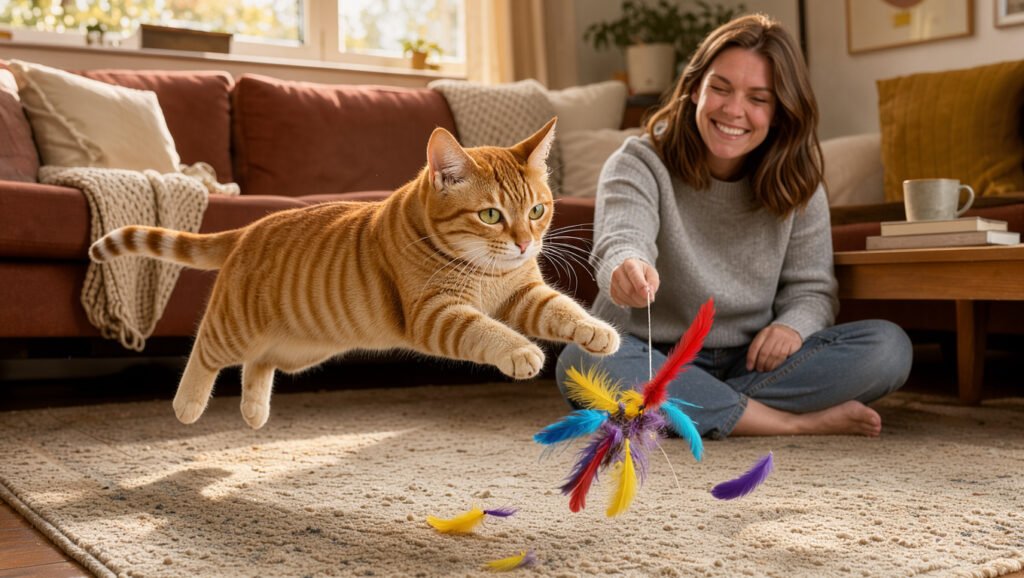
Orange cat personality traits often include sociability and attachment to people. Owners may describe an orange tabby cat personality as outgoing, but another orange cat may prefer more space.
Some cats greet visitors or follow a favorite person from room to room. Others stay nearby without asking to be held. Those different styles can both reflect comfort and trust.
Garfield is a familiar fictional orange cat whose appetite and comic impatience help make the stereotype memorable. Jonesy, the orange cat in Alien, is a calmer screen presence, showing how stories can give orange cats more than one role.
Fiction helps us recognize a familiar image, but it does not tell us how a real cat will respond to a household. A cat’s relationship with people grows through its own experiences.
Playfulness and Curiosity
Many people describe orange cats as curious or playful. A cat that explores a box or chases a toy may simply enjoy that activity, regardless of coat color.
Play aggression is the most common type of aggression cats direct at owners. It is normal in kittens and cats under 2, so rough play alone does not make an orange cat unusually aggressive.
Play needs can differ between cats. One may chase a moving toy, while another prefers to stalk it from behind a chair. Watching what holds a cat’s attention gives us a clearer picture than a coat-color label.
Vocalizing and Food Motivation
Some orange cats vocalize often or show strong interest in food. Those habits can come from an individual cat’s routine, past rewards, or preference for attention.
A cat that begs before meals may have learned that meowing brings food or company. Owners can mistake a learned routine for a fixed personality trait when the behavior repeats at the same time each day.
Food interest varies among cats of every color. The same is true of how much a cat talks, explores, or seeks human company.
Describe the action you actually see instead of using a stereotype to predict what the cat will do.
What Shapes an Individual Cat’s Behavior
Two cats raised in different conditions can develop very different habits even when their coats look alike. Experience and setting shape behavior alongside each cat’s own temperament.
A cat’s actions make more sense when we consider sex, age, past experience, and daily routine together. Coat color alone cannot explain why a behavior starts or changes.
Sex and Individual Variation
Sex can be one influence on behavior, but it is not a personality verdict. Cats of the same sex can differ widely in how they respond to handling, people, and other animals.
Petting-induced aggression is more common in male cats. That pattern does not mean every male cat will react that way, or that an orange male has a set personality.
Health, past learning, and the situation also affect a cat’s response. A cat may tolerate handling at home but feel tense in a busy room or unfamiliar place.
Early Socialization and Life Stage
The early socialization window is roughly 2-7 weeks of age. Positive, gentle handling during this time can help kittens become comfortable with people and ordinary home sounds.
The 2021 AAHA/AAFP feline life-stage guidelines classify kittens through age 1 and young adults from 1-6. Play needs and daily habits can shift as cats grow and mature.
Predictable play gives a cat a chance to use energy in a safe way. We can offer toys and climbing spots that suit the cat’s age and interests.
Owners can find more practical cat care and behavior advice for everyday needs. A calm first room and steady routines can also help a new kitten settle in.
A kitten essentials checklist can help us prepare a space before a young cat arrives. A kitten may hide or explore cautiously while learning a new home.
Reading Signals and Adjusting Routines
Petting overstimulation often comes with small warning signs. We can watch for a quick head turn toward the hand, a twitching or flipping tail, flattened or rotating ears, restlessness, and dilated pupils.
Stop petting at the first cue, keep sessions brief, and let the cat leave. A cat that chooses to return can decide when contact starts again.
- Quick head turn toward the hand
- Tail twitch or flip
- Flattened or rotating ears
- Restlessness or dilated pupils
A longstanding habit differs from a sudden behavior change. A sudden increase in yowling or a voice change merits a veterinary visit, especially in an older cat.
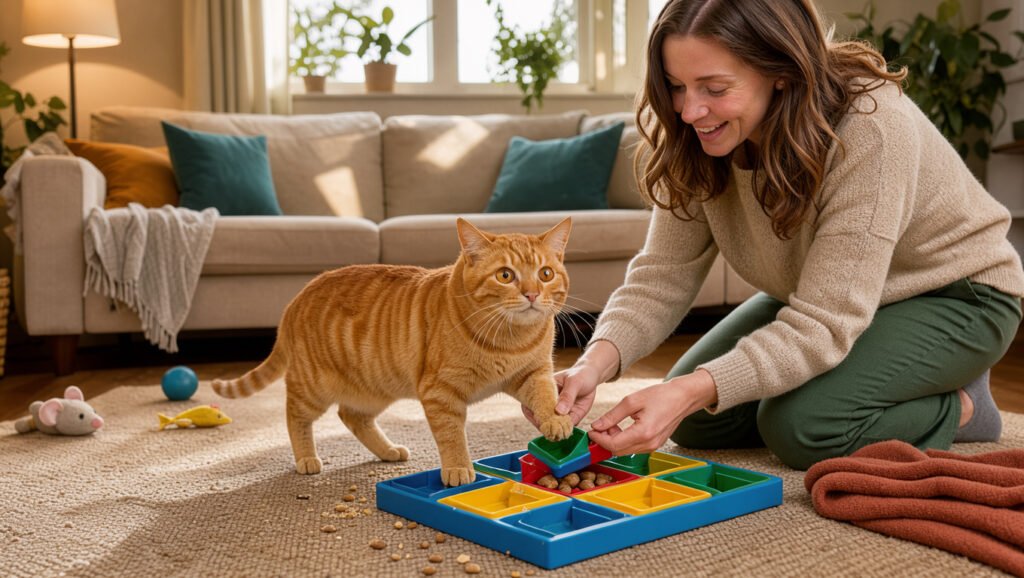
For persistent food begging, puzzle feeders can make meals more engaging, while set mealtimes create a clear routine. If a cat’s behavior or voice changes suddenly, contact a veterinarian rather than dismissing the change as an orange-cat quirk.
Meeting and Living With an Orange Cat Without Stereotypes
At a first meeting, an orange cat’s actual response to people and play tells us more than its coat does. Observe the individual before deciding how well a cat might fit your home.
A good match depends on a cat’s observed temperament and a household’s real routines, not its color. A brief meeting can offer useful clues, though a cat may act differently after settling in.
Observe the Cat You Meet
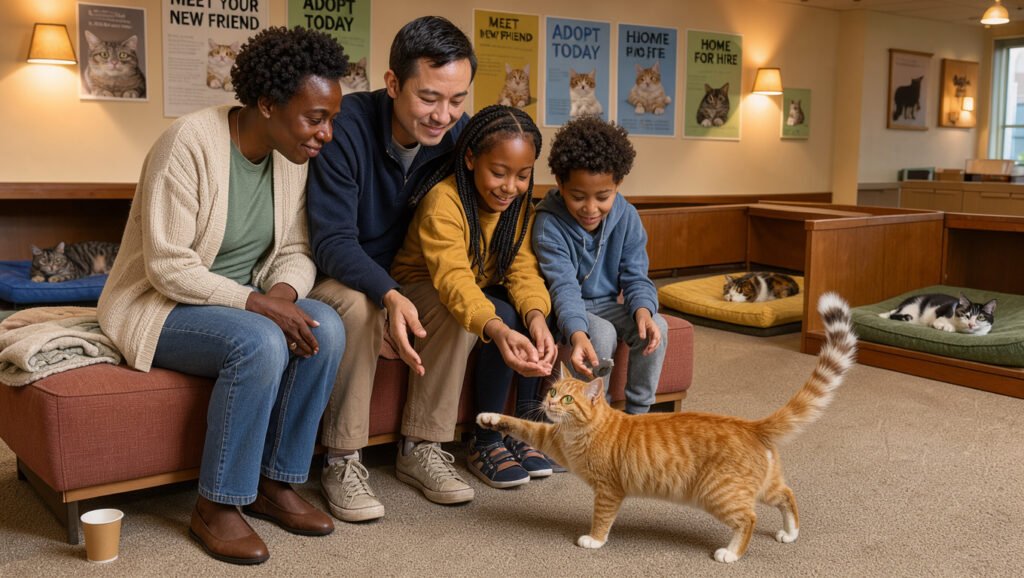
During a visit, notice how the cat responds to a calm approach and whether it chooses to engage. We can learn more by watching the cat’s actions than by asking whether it fits an orange-cat stereotype.
A short meeting cannot show every side of a cat. Shelter staff or foster caregivers may know how the cat behaves in familiar spaces and around daily activity.
Use a few clear points to guide your first impression:
- Response to a calm approach
- Preferred play style
- Comfort with household activity
- Recovery after an unfamiliar sound or object
These observations are clues, not a score. One cat may need time to warm up, while another may be ready to explore right away.
Match Temperament to Your Household
Think about the people, pets, and routines in your home. A cat that enjoys busy rooms may suit a lively household, while a more cautious cat may do better with a quiet place to retreat.
In 2025, 4.2 million dogs and cats found new homes through U.S. shelters and rescues. Across shelter entries that year, 59% of animals arrived as strays and 30% were surrendered by their owners.
Those figures describe dogs and cats overall, not orange-cat adoption rates. A cat’s history may be known in detail or only in part, so we should weigh observed behavior and household needs.
People deciding whether to add another cat can weigh their home’s space, time, budget, and routines. A guide to how many cats suit your home can help frame that choice.
Support a Good Fit After Adoption
Adjustment after adoption takes patience. A cat may hide, explore at night, or take time to accept new people and sounds, especially during its first days at home.
Give the cat time to learn the household’s rhythm. A quiet place to rest and a steady routine can make new surroundings feel less uncertain.
When another cat lives in the home, gradual introductions can help both animals adjust. Separate spaces and supervised meetings let each cat move at a manageable pace.
Our guide to introducing a new cat to a resident cat covers that process. With dogs, careful introductions, supervision, and a safe retreat for the cat also matter.
Choose for your household’s real routines, not for an imagined color-coded personality.
During the adjustment period, consider behavior in context rather than calling every surprising act “classic orange.” The same action can mean different things in a new place than it does in a familiar one.
Conclusion
An orange coat can make a cat instantly recognizable, but it cannot tell us whether that cat will be bold, cuddly, quiet, or mischievous. Color describes appearance, while sex, early experiences, environment, and individual temperament all shape behavior.
We can enjoy the jokes and still let each cat show us who it is. Spend time observing the cat’s preferences and adjust play, affection, and routines to the individual in front of you.