
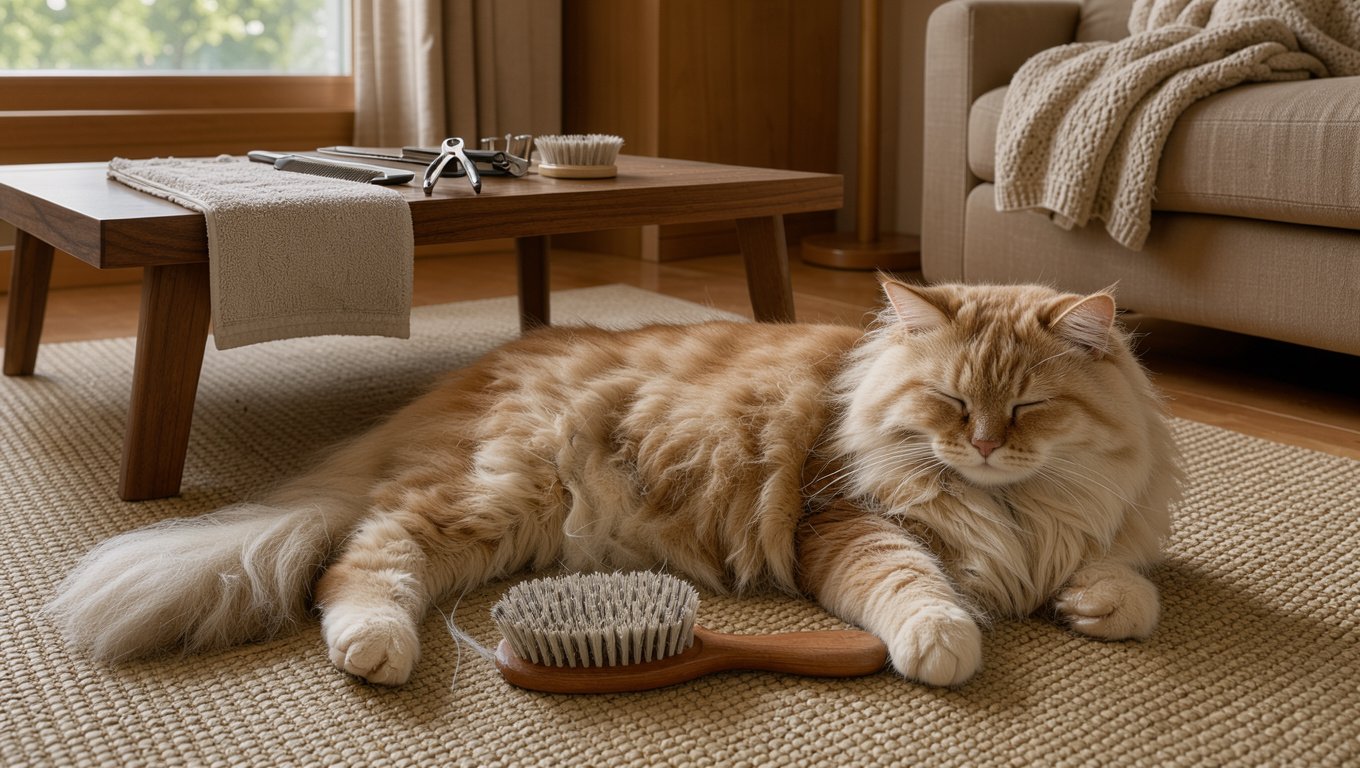
You can handle most routine cat care at home with the right tools, gentle handling, and a willingness to stop when your cat is uncomfortable. What if a few calm minutes matter more than finishing every task? Cat grooming basics at home can help keep your cat’s coat, claws, and basic hygiene in good shape, even if you are new to it.
The quick is the pink, sensitive tissue inside a cat’s claw that contains blood vessels and nerves. You do not need to master every task in one sitting. With patience and suitable tools, you can start small and keep care comfortable. A health concern belongs with a veterinarian, not a home grooming session. For more everyday advice, explore cat care tips suited to life with cats.
Let your cat leave the first session with a positive experience, even if you complete only one task.
What Tools Do You Need for Cat Grooming at Home?
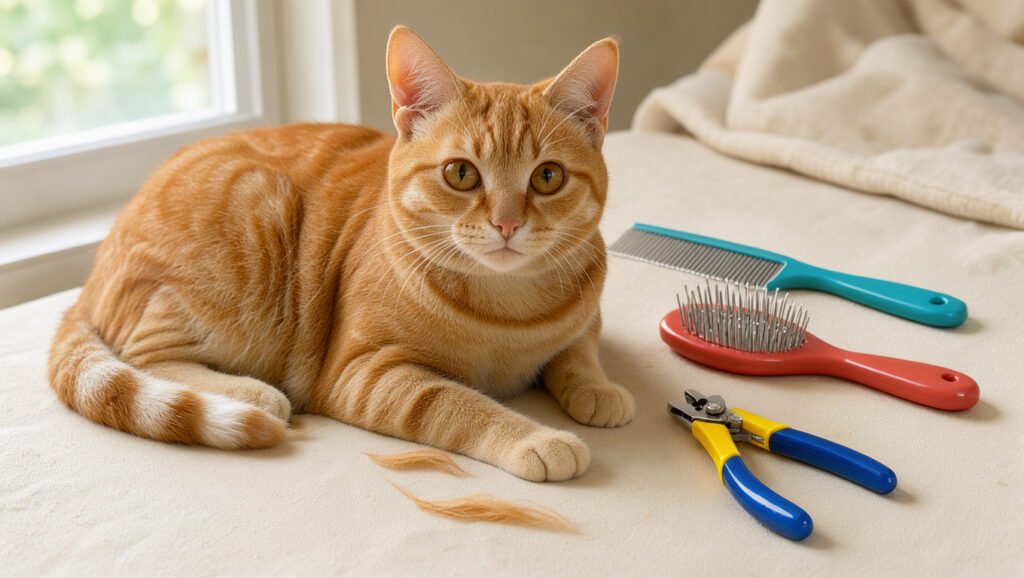
A short-haired cat may need only a few basic tools, while a long-haired cat usually benefits from both a brush and a comb. A basic kit can start with three core tools: a brush, a comb, and cat nail clippers. The best cat grooming tools fit your cat’s coat type and move comfortably through the fur.
Pick a tool that moves through the coat without scraping or pulling at the skin.
Choose a brush for your cat’s coat length
A rubber brush or slicker brush can work well on short-haired coats. The rubber brush lifts loose fur, while a slicker brush can loosen light tangles. For long-haired coats, try a pin brush and a metal comb. The comb helps you check whether loose fur and tangles reach down to the skin.
Coat length is a useful starting point, though texture and your cat’s comfort matter too. A comb should pass through the coat with little resistance. If it catches, do not force it through.
Build a small, useful grooming kit
Keep a few basics together so you can start without searching for supplies mid-session:
- A brush suited to your cat’s coat
- A comb for checking the coat
- Cat nail clippers
- Cat-safe shampoo for occasional baths
- Soft cloths for simple cleanup
Cat grooming at home prices depend on which tools you already own, your cat’s coat length, and whether you need specialized equipment. A long coat may call for more than one brush, while a simple starter kit can stay small. For broader advice about coat and bath care, visit these pet grooming guides.
Choose a tool with smooth edges and a handle you can hold steadily. A comfortable grip makes it easier to use light pressure and keep each pass controlled.
Brush Your Cat and Work Through Mats
A short-haired cat usually needs a weekly brushing, while a long-haired cat generally needs brushing at least 3 times a week. Match your routine to coat length, shedding, coat condition, and your cat’s tolerance. A schedule is a starting point, not a reason to keep brushing when your cat needs a break.
Set a brushing schedule by coat length
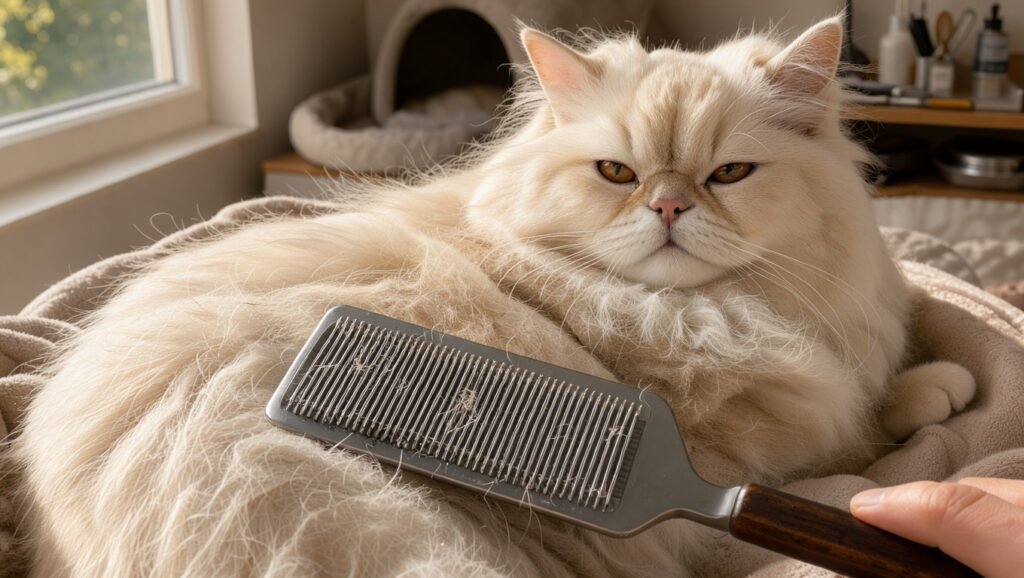
Short-haired cats generally benefit from brushing once a week, or twice a week during heavy shedding. Long-haired cats generally need brushing daily or at least 3 times a week. Shedding, changes in coat condition, and your cat’s response can call for adjustments.
The best cat grooming at home routine uses tools and brushing frequency that suit your cat’s coat. Deshedding tools remove loose undercoat, while a slicker brush helps work through surface fur and light tangles. Use deshedding tools gently; repeated pressure does not make them more effective.
Brush in short, gentle passes
For how to brush a cat, begin with short passes over the coat, then work gently toward the skin. Pay close attention to the chest, neck, armpits, belly, and base of the tail. These areas often trap fur and develop tangles, so check them without tugging.
Try this simple sequence:
- Let your cat inspect the brush.
- Start on an easy-to-reach area.
- Brush in the direction of hair growth.
- Check the coat with a comb.
- Pause before your cat becomes restless.
A comb can reveal whether loose fur has gathered near the skin. Keep your movements light, especially where the coat is dense or your cat is sensitive. One gentle pass can be more useful than several rushed strokes.
Treat tangles differently from loose shedding fur
Loose shedding fur separates easily and often comes away with a brush. A mat is a tangled clump of fur that holds together, and it may pull on the skin. Small, loose tangles can sometimes be eased apart with your fingers and a comb.
Tight mats close to the skin need an experienced groomer or veterinarian. Pulling can hurt, and cutting close to the skin can cause an injury. Brushing should feel like a check, not a tug of war.
Stop brushing if the comb catches repeatedly or your cat shows pain.
Trim Claws Without Hitting the Quick
Most cats need their claws checked regularly, and a typical trim removes only the sharp tip. Claws commonly need trimming about every 2-4 weeks, depending on growth and wear. Most cats have 18 claws, with five on each front paw and four on each rear paw, but some have more.

Inspect each paw instead of assuming your cat has the usual count. Hold one paw gently and press lightly to extend a claw. Find the pink quick, then use cat nail clippers to remove only the sharp tip.
Use this order for nail trimming:
- Choose a calm moment.
- Handle one paw at a time.
- Remove only the tip.
- Pause if your cat resists.
- Reward cooperation.
For how to trim cat nails, take off less rather than risking the quick. If you cut the quick, apply styptic powder to the tip. Contact a veterinarian if bleeding does not stop or the injury concerns you.
Some cats accept one claw at a time more easily than a full trim. You can stop after a small amount of progress and try again later. Keep styptic powder nearby before you begin a trim.
Bathe a Cat Only When It Is Necessary
Most healthy cats do not need regular full baths, so start by deciding whether a bath solves a real cleaning problem. A full bath may help when your cat is soiled with something sticky or cannot clean itself adequately. A bath is not a routine task for every cat.

Decide whether a full bath is needed
For a minor mess, cat grooming wipes or a waterless product may be enough. Check the directions and make sure the product is safe if your cat licks its coat. If you are unsure about an ingredient, ask your veterinarian before using it.
Do not bathe your cat at home if it has a medical problem or its coat may hold a toxic substance. Contact a veterinarian for guidance instead. A wash can spread a harmful substance or add stress when your cat needs medical care.
Set up and wash your cat safely
Gather everything before bringing your cat to the wash area. A simple setup includes:
- A non-slip mat
- Towels within reach
- Cat shampoo
- A cup or gentle sprayer
- A warm, draft-free drying area
Use shallow lukewarm water and shampoo made for cats. Wet the coat gently, then wash from the neck toward the tail. Keep shampoo away from the eyes, ears, and nose. Human shampoo and dish detergent can harm or irritate a cat’s skin, so do not use them.
Move slowly and keep one hand near your cat to steady it without squeezing. A cup can help you wet and rinse the coat with more control than a strong spray. If your cat becomes highly distressed, stop and seek help rather than forcing the bath.
Dry your cat with towels and keep it in a warm area until the coat is no longer wet. Avoid a hot hair dryer, which can frighten or burn your cat. Rinse until no shampoo remains in the coat, since residue can irritate the skin.
Clean Ears and Eyes Safely
Keep ear and eye care to the visible outer areas, using a soft, damp cloth and a light touch. Check the visible outer ear about once a week, and never insert a cotton swab into the ear canal. Routine ear cleaning means wiping dirt from the ear flap, not reaching inside.
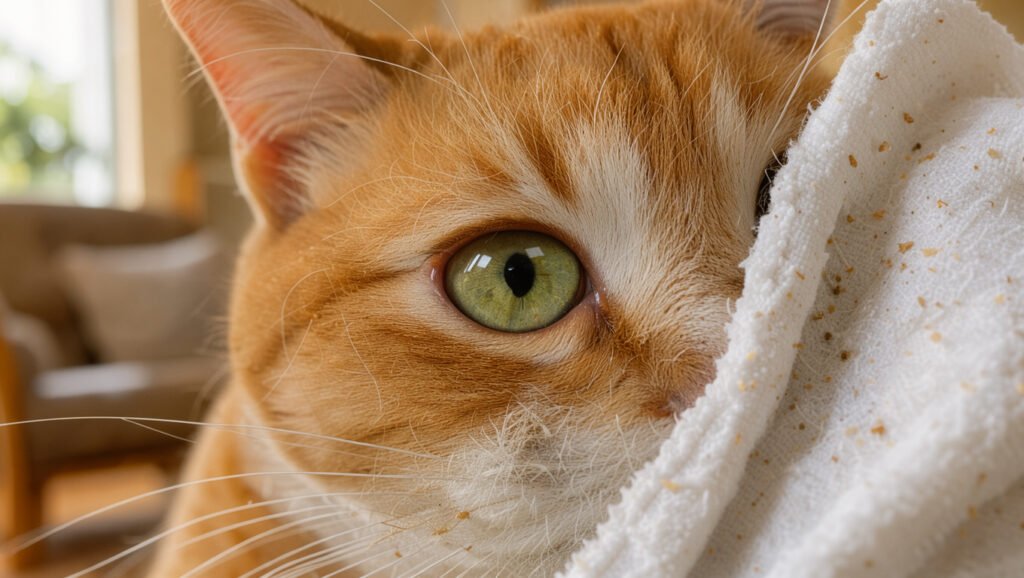
Use a damp cotton ball or soft cloth to wipe visible dirt from the outer ear. Do not push into the canal, even if you see debris just inside. Deep cleaning can hurt the ear or push dirt farther in.
A damp, soft cloth can remove minor debris from the corners of the eyes. Wipe gently, and use a separate clean area of cloth for each eye. This helps avoid carrying debris from one side to the other.
Redness, swelling, odor, discharge, or repeated scratching calls for veterinary advice. Persistent eye watering also needs a vet’s attention instead of more wiping. These signs can point to a problem that home cleaning cannot fix.
Ask a veterinarian about persistent odor, discharge, redness, or eye irritation instead of trying drops or deep cleaning.
Add Feline Dental Care to the Routine
Regular tooth brushing with cat toothpaste is the most useful home habit for reducing plaque on the teeth. Daily brushing is ideal when your cat will tolerate it. Adult cats typically have 30 permanent teeth, so oral care is part of keeping the whole mouth in good shape.
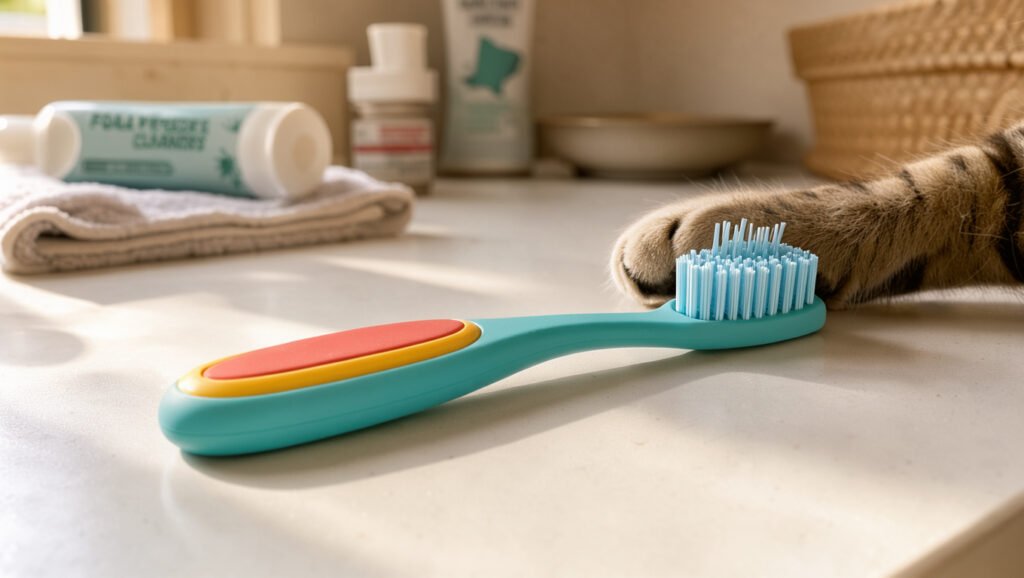
Use a cat toothbrush or an appropriately sized soft brush with toothpaste made for cats. Human toothpaste is not suitable for cats. Cat toothpaste comes in flavors designed for pets, and your cat can swallow a small amount during brushing.
Introduce the brush in steps instead of placing it in your cat’s mouth at once. Let your cat smell the brush, then offer a small taste of cat toothpaste. When your cat seems calm, try brief contact with the teeth and end before it becomes upset.
Daily brushing is the ideal routine, but any amount your cat tolerates gives you a place to start. Build up the time slowly as your cat gets used to the feel of the brush. A short attempt is better than holding your cat still for a long one.
Bad breath, drooling, difficulty eating, or visible mouth pain calls for a veterinary dental check. Brushing harder will not solve pain or a dental problem. Stop if your cat shows mouth pain and arrange a veterinary dental exam.
Keep Grooming Sessions Calm and Short
A quiet, brief session is more useful than trying to finish every grooming task while your cat is tense. Aim for sessions of about 5-10 minutes, and pause when your cat turns away, flattens its ears, or lashes its tail. Your cat’s response to touch is individual, so let its signals set the pace.
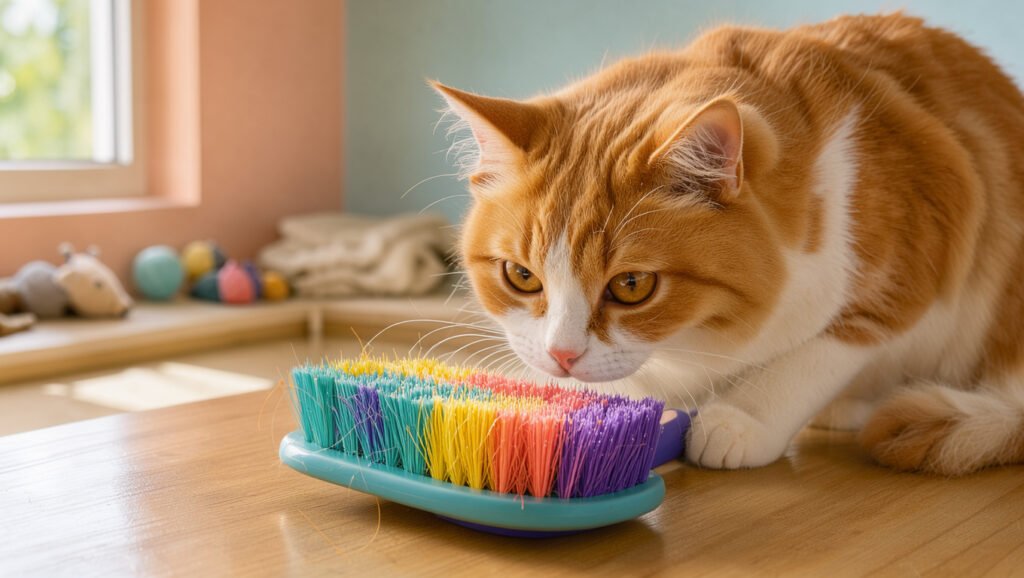
Read your cat’s body language
A cat that pulls away, crouches, flattens its ears, or lashes its tail may need a break. Attempts to bite are a clear sign to stop. Many cats dislike touch around the belly, paws, tail, or face, but each cat has its own preferences.
Give your cat a choice about how close to sit and when to move away. The 2022 AAFP/ISFM Cat Friendly Veterinary Interaction Guidelines stress tailored handling and a sense of control. Forced restraint can increase fear and make safe handling harder.
These signs of stress in cats can help you notice when your cat needs more space. Watch for changes in posture and attempts to avoid contact, not only loud reactions. A quiet cat may still be uncomfortable.
Build tolerance one small task at a time
Let your cat investigate a tool before you use it. Touch one comfortable area, then reward calm behavior before trying a full task. Repeating this small step can help your cat learn what to expect.
Use this short routine checklist:
- Choose a quiet place.
- Prepare tools first.
- Work on one task.
- Offer a break or reward.
- Stop at the first clear stress signs.
Short sessions help beginners keep care predictable and give your cat time to adjust. Forcing restraint can make future handling harder. You may need several calm tries to complete a task, and that is still progress.
End the session when your cat first asks for space, not after its patience is gone.
When Home Grooming Needs a Professional
A tight mat, a painful skin problem, or a cat that cannot be handled safely is a reason to get professional help. Do not cut tight mats or restrain a cat with severe resistance at home. Contact a veterinarian or an experienced feline groomer when a task could hurt your cat.
For a mat tight against the skin, arrange help rather than reaching for scissors.

Know when a veterinarian or groomer should take over
A painful skin problem needs veterinary attention, not brushing over the sore area. Severe resistance can make home care unsafe for both you and your cat. If a substance on the coat may be toxic, contact a veterinarian for guidance before trying to wash it off.
Do not cut your cat’s hair with scissors near the skin. Loose skin can fold into a mat, making it hard to see where the fur ends. Leave severe mats and substantial coat clipping to a qualified professional.
Choose a service that fits your cat
Professional cat grooming may include brushing, bathing, nail trimming, and coat trimming. Two common settings are mobile or in-home grooming and a grooming facility. A mobile cat grooming at home service can reduce transport for some cats if one operates locally.
A facility may suit a cat that tolerates travel and handling. When looking for cat grooming near you, choose a provider with experience handling cats. Cat grooming at home near you may mean an in-home or mobile service, so confirm its service area, handling approach, and what the appointment includes.
Tell the provider about your cat’s health, coat, and past reactions to handling. That gives the groomer a chance to plan a safe visit and explain whether a veterinarian should see your cat first.
Conclusion
The easiest routine to keep is the one your cat can tolerate consistently. Choose one manageable task and fit it to your cat’s coat and comfort level. A few calm minutes can make care easier to repeat than one long session that leaves your cat wary.
Place the appropriate brush and cat nail clippers where you can prepare a calm, short first session. Let your cat inspect the tools before you begin, and keep the plan simple. Set out one suitable tool today and let your cat approach it at its own pace.